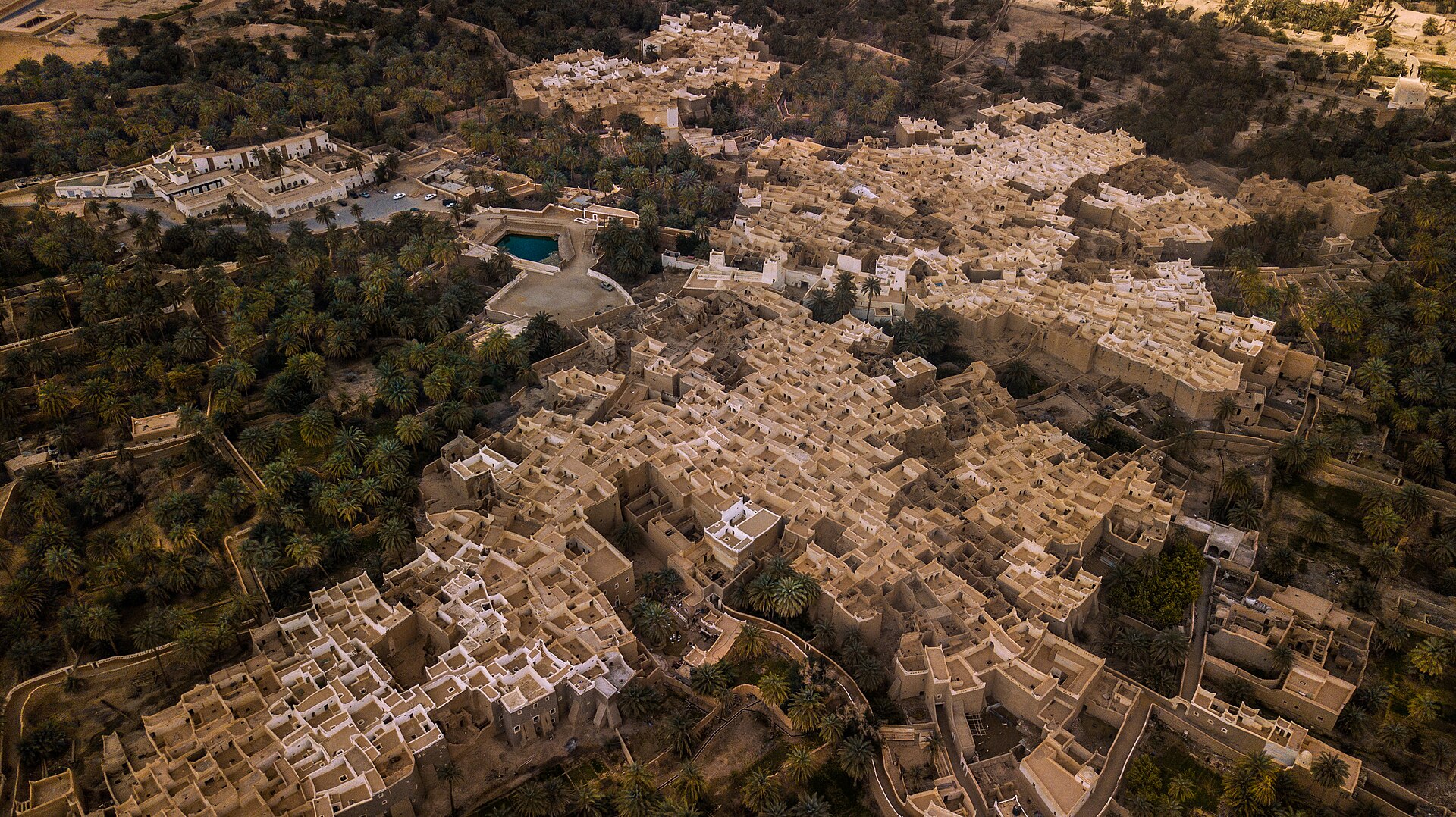
Ghadames is often called the pearl of the desert, and that’s more than just a poetic turn of phrase. The old town here feels like a place where time has stood still, where life unfolds according to rhythms long forgotten by the modern world. Tucked away in western Libya, near the borders with Algeria and Tunisia, Ghadames has for centuries been a vital stop on the trans-Saharan trade routes. Caravans laden with salt, gold, slaves, and spices once paused here, resting before the grueling journey across the lifeless sands. Today, the echoes of that bygone era linger in every alleyway, every mud-brick house, and the quiet rustle of palm fronds overhead.
The old town of Ghadames is a maze of narrow passages, covered walkways, and secluded courtyards where sunlight barely filters through the lattice of beams and woven mats. The architecture here was designed with one purpose in mind: to defy the relentless heat. Houses were built from clay mixed with straw, their thick walls absorbing the cool of the night and releasing it during the scorching days. The rooftops connect to form a continuous network of pathways, once used by women to move through the town unseen by men. That tradition has faded, but the passages remain, inviting visitors to wander and imagine the lives of generations past.
The town is divided into seven districts, each once belonging to a different tribe. Names like Zriba, Aggar, and El-Mahbas still carry meaning for locals, symbols of identity and history. At the heart of each district stood a mosque, surrounded by homes, workshops, and small markets. Some of these mosques still function today, though most residents have moved to the new town of Ghadames, built a few kilometers away. The old city now feels like an open-air museum, yet it’s far from abandoned— a handful of families still live here, preserving the traditions of their ancestors.
One of the most striking features of Ghadames is its underground spaces. Many houses have cellars where people once sought refuge from the summer heat and stored food during the winter. Some still contain old granaries, wells, and even small workshops. Water has always been precious here, and the people of Ghadames learned to cherish every drop. The wells are deep, and the oasis that sustains the town is one of the largest in the Sahara. The palm groves stretch for kilometers, their green a surreal contrast against the golden sands.
Life in the old town was once governed by strict customs. Men handled trade and crafts, while women managed households and raised children. Each tribe had its own traditions, festivals, and even secrets. In the Aggar district, for instance, stories persist of hidden tunnels leading beyond the city walls, used in times of siege. Whether true or legend, the atmosphere of Ghadames lends itself to such tales. The cracked walls, creaking wooden doors, and the scent of spices and fresh bread baked in traditional ovens all whisper of the past.
Ghadames isn’t just about architecture and history—it’s a way of life. There’s no rush here, no modern distractions, just the slow, steady flow of time, like water in the ancient irrigation channels that have nourished the palm groves for centuries. Even those who’ve moved to the new town often return to the old city to spend time with family, celebrate festivals, or simply sit in the shade of an old tree. For visitors, Ghadames offers a chance to touch something authentic, a world that has remained unchanged for generations. Electricity and the internet have arrived, but they feel out of place against the backdrop of ancient walls.
A trip to Ghadames is a journey through time. In the early morning, when the sun is just beginning to warm the air, the town feels deserted. But peek into a courtyard, and you’ll see women preparing breakfast, children playing in the shade, and elders sipping tea as they discuss the day’s news. By midday, life slows to a standstill—everyone retreats from the heat—only to stir again in the evening. The streets come alive with vendors selling dates, olives, and fresh bread, music drifting through the air, and the distant sound of laughter. At night, Ghadames transforms into something magical. The stars shine so brightly it feels like you could reach out and touch them, and the silence is so deep you can hear the whisper of palm leaves.
The old town of Ghadames is unlike anywhere else in the world. It doesn’t clamor for attention or try to dazzle visitors with grandeur. It simply exists, as it has for centuries. There are no tourist trails, no crowds, no souvenir shops—just silence, history, and the sense that you’ve stepped into another world. That’s why Ghadames draws those weary of modern life, those searching for something real. Here, you can forget about time, about problems, about the noise of the outside world. It’s a place where everything is governed by the timeless laws of the desert and the wisdom of its people.