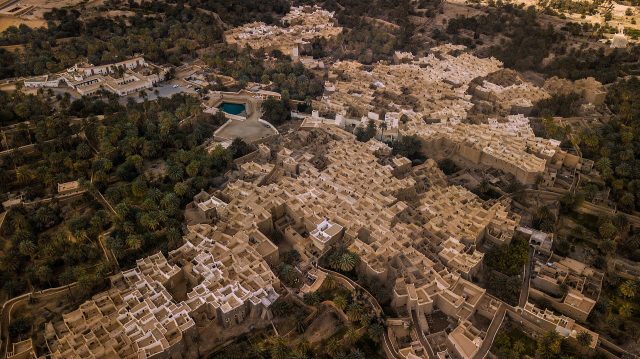
Ghadames has long been called the pearl of the desert, and it’s easy to see why. This ancient city in northwestern Libya feels suspended in time, a place where the rhythms of medieval Saharan life still linger in its labyrinth of narrow streets and sunbaked alleyways. At its heart stands the Al-Kubba Mosque, a structure that is as much a part of the city’s identity as the shifting sands that surround it. More than just a place of worship, it is a quiet testament to Ghadames’ enduring history, a building that has witnessed centuries of trade, conflict, and daily life in one of the world’s most unforgiving landscapes.
The mosque sits deep within the old quarter, where houses press so closely together that the streets become dim, sheltered corridors. Its name, Al-Kubba, means "the dome," and that is precisely what defines it—a single, unassuming dome rising above the low-slung rooftops. Unlike the grand mosques of Cairo or Istanbul, with their towering minarets and intricate tilework, Al-Kubba is modest in scale. Yet there is a dignity in its simplicity, a sense of harmony with the city around it. The dome, slightly flattened at the top, is a shape repeated throughout Ghadames, a form born of necessity and refined over generations.
The architecture here is pure Saharan practicality. The walls are built from sun-dried mud bricks and palm trunks, materials that have served the region for millennia. They keep the interior cool during the day and retain warmth when temperatures plummet at night. Inside, the mosque is spacious but unadorned. The mihrab, the niche indicating the direction of Mecca, is marked by a few understated geometric patterns, while the floor is covered with woven mats. Light filters through small, high windows, casting a soft glow that contrasts with the harsh glare outside. There is no ostentation, only a sense of purpose—this is a place designed for reflection, not spectacle.
Ghadames itself is a city shaped by its environment. Founded over two thousand years ago as an oasis along the trans-Saharan trade routes, it became a crossroads where Berber, Arab, and even Roman influences converged. The Al-Kubba Mosque likely dates back to the medieval period, when Islam had already taken root in the region. Like many mosques of its time, it was more than a religious site; it was a communal hub where disputes were settled, news was exchanged, and travelers found shelter. In an era when cities were few and far between in the desert, such places were vital, offering not just spiritual guidance but a sense of belonging in an otherwise isolating landscape.
Today, the mosque remains an active part of daily life, though visitors rarely get the chance to step inside. Even from the outside, however, it holds a certain magic. Ghadames is a city where time moves differently. The streets are so narrow that two people can barely pass each other, and the houses, with their thick mud walls and wooden beams, seem to grow out of the earth itself. Al-Kubba fits seamlessly into this world, its dome a natural extension of the city’s skyline. There is no grand entrance, no ornate facade—just a quiet presence that feels as though it has always been there.
The best time to experience Ghadames is in the early morning or late afternoon, when the sun is less relentless and the shadows stretch long across the sand-colored walls. The city comes alive in these hours, filled with the sounds of wooden doors creaking open, the murmur of voices, and the occasional call to prayer echoing through the alleys. At such moments, the mosque feels less like a building and more like a living part of the city, its dome catching the golden light of sunset and glowing as if lit from within. It’s easy to understand why travelers have been drawn to this place for centuries—not for its grandeur, but for its authenticity.
Ghadames is not an easy place to reach. There are no luxury resorts or crowded markets here, just the raw, unfiltered reality of life in the desert. Yet that is precisely what makes it special. The Al-Kubba Mosque is more than a landmark; it is a symbol of resilience, a reminder of how people have adapted to one of the harshest environments on earth. Its beauty lies in its simplicity, in the way it blends into the landscape rather than dominating it. There are no sweeping statements here, no attempts to impress—just a quiet confidence that speaks volumes about the culture that created it.
For those who make the journey, the mosque is only one of many reasons to fall in love with Ghadames. The city is a living museum, where every corner tells a story. The ancient walls, the intricately carved doors, the way the buildings seem to breathe with the desert—all of it feels timeless. But Al-Kubba lingers in the memory longest. It doesn’t demand attention; it earns it, not through spectacle, but through the quiet weight of history. Standing beneath its dome, one can’t help but reflect on the fragility and strength of human civilization, how it persists even in a place as vast and indifferent as the Sahara.