Perched on a hill overlooking Pretoria, the Voortrekker Monument is more than just a towering structure of pale granite—it’s a place where history feels tangible, where the past lingers in the air like dust from an old road. Built to honor the Great Trek of the 1830s and 1840s, when thousands of Dutch-descended Boers migrated inland to escape British rule, the monument stands as a testament to an era that shaped South Africa in ways still felt today. Its meaning shifts depending on who you ask: for some, it’s a symbol of resilience and pioneering spirit; for others, a reminder of the conflicts that continue to echo through the country’s identity.
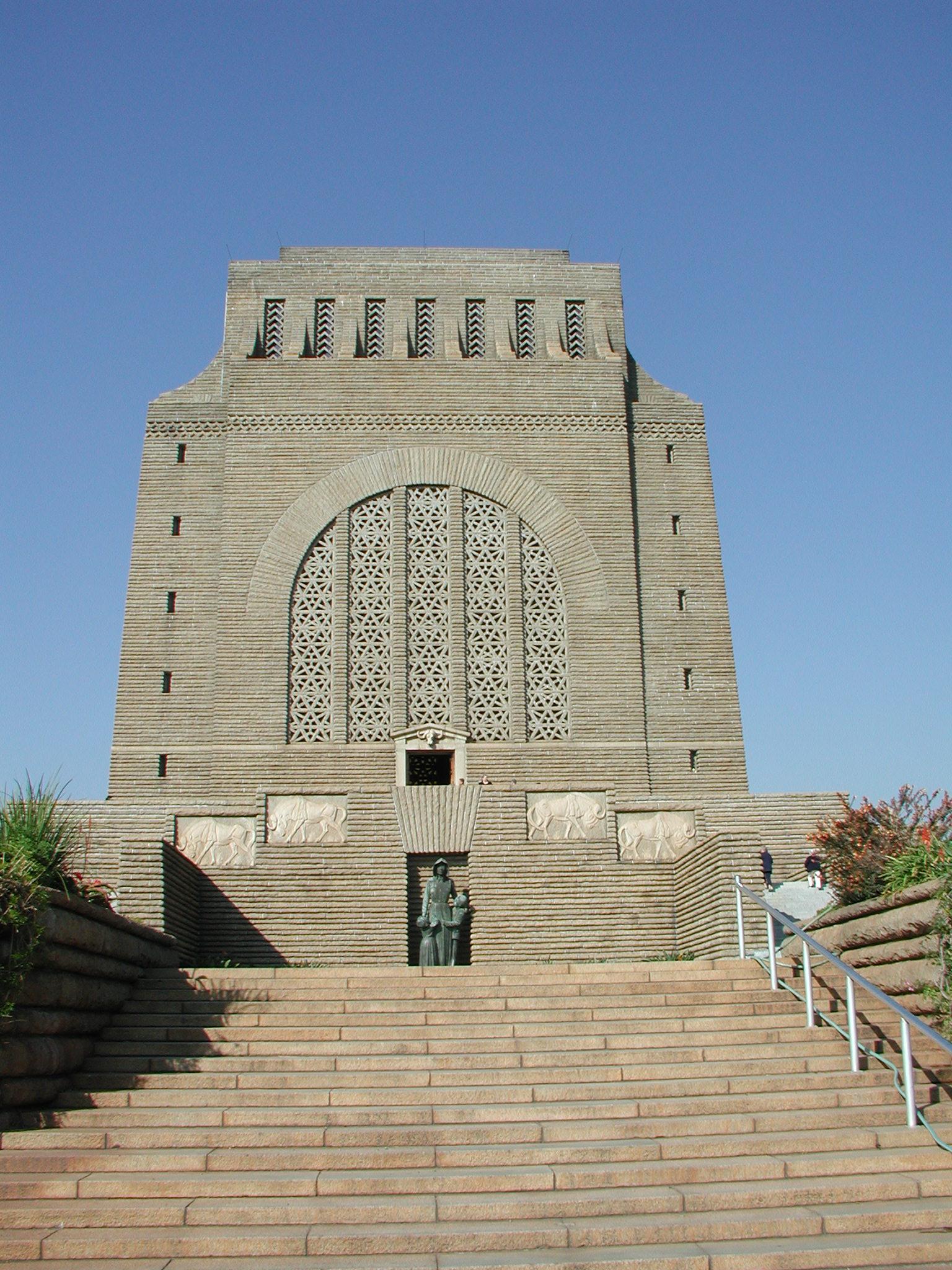
Construction began in 1937, decades after the events it commemorates, when the idea of preserving the memory of the Voortrekkers took physical form. The architect, Gerhard Moerdijk, drew inspiration from ancient Egyptian temples and European memorials of the time, designing a structure that was meant to be more than a monument—it was to be a sanctuary. The massive cube, measuring forty meters on each side, is crowned by a statue of a woman holding a child, a representation of protection and hope. Inside, the space unfolds like a storybook, with marble friezes depicting scenes from the Great Trek and a central sarcophagus where, every year on December 16th, a shaft of sunlight falls precisely at noon. That date marks the Battle of Blood River, when a small group of Boers defeated a much larger Zulu force, an event that became a cornerstone of Afrikaner mythology.
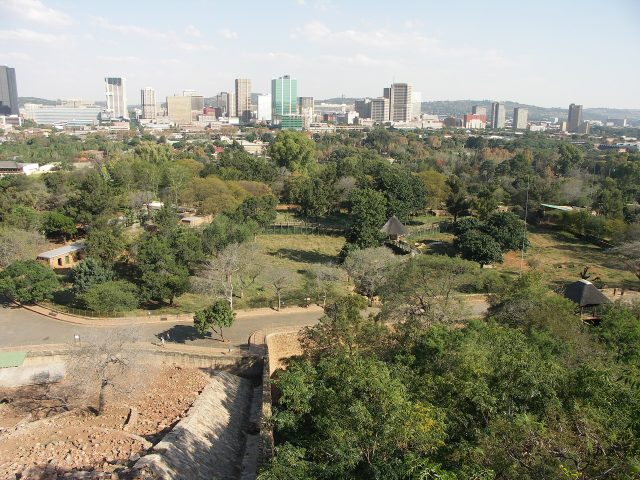
The approach to the monument is deliberate, a slow ascent up broad steps that gradually distance you from the city below. Pretoria’s orderly streets and green spaces fade into the background, replaced by the quiet of the hilltop. The location wasn’t chosen at random—from here, you can see the valley where the Voortrekkers once traveled, where ox-drawn wagons rolled across the land, and where the modern city now sprawls. It’s easy to imagine the exhaustion of those early settlers, the way they must have paused to take in the horizon, unsure of what lay ahead. The monument itself, with its stark lines and imposing scale, doesn’t romanticize their journey; it simply stands as a marker of where they went and what they endured.
Stepping inside, the atmosphere shifts. The vast hall, with its high ceilings and dim lighting, feels like a space suspended in time. The marble friezes lining the walls are a visual chronicle of the Great Trek—crossing rivers, building settlements, defending against attacks. Each panel tells a fragment of the story, from the mundane to the momentous. The Battle of Blood River takes center stage, its depiction reinforcing the idea of divine intervention in the Boers’ victory. For generations, December 16th was celebrated as the Day of the Covenant, a reminder of what many saw as their providential destiny. Today, it’s known as the Day of Reconciliation, a name that reflects the country’s efforts to reframe its past.
The monument’s legacy is complicated. During the apartheid era, it became a rallying point for those who saw the Voortrekkers as symbols of white nationalism, a narrative that cast their struggle as heroic and inevitable. After apartheid ended, the monument found itself at the heart of debates about how to remember the past. Some argued it should be torn down as a relic of oppression; others insisted it should remain as a historical artifact. In the end, it stayed, but with added context—informational displays that acknowledge multiple perspectives. This tension between preservation and reinterpretation makes the monument more than just a tourist attraction; it’s a place where history is actively negotiated.
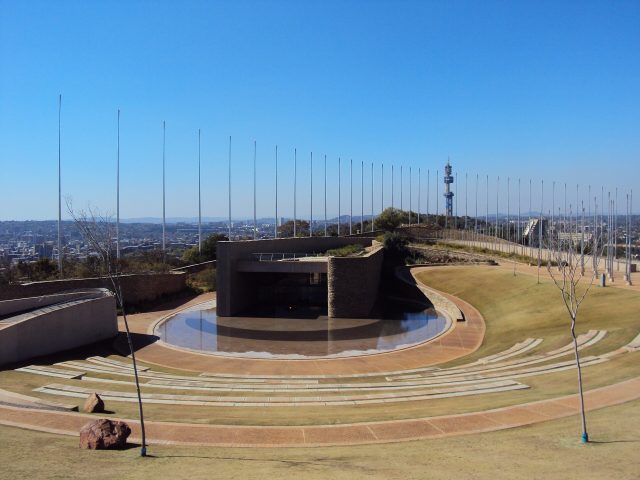
Surrounding the monument is a park dotted with sculptures and pathways, offering a quieter counterpoint to the grandeur of the main structure. Nearby, a museum houses artifacts from the era: rifles, household items, maps of the trekkers’ routes. The exhibits don’t shy away from the complexities of the past, showing both the determination of the settlers and the violence that accompanied their expansion. Documents detail conflicts with indigenous peoples, while displays explain how the Voortrekkers established republics that would later become part of South Africa. It’s a reminder that history is rarely straightforward, that even the most celebrated narratives have shadows.
Visiting the Voortrekker Monument isn’t like stepping into a history textbook. It’s more personal than that. The place doesn’t offer easy answers, but it does invite reflection on how the past shapes the present. The monument’s sheer size could be overwhelming, yet it doesn’t feel oppressive. Instead, it feels like an invitation—to look closer, to question, to understand. That might be why it remains significant not just for visitors, but for South Africans themselves. People come here to trace their roots, to grapple with the stories they’ve inherited, and to consider what comes next.
Standing on the hill, looking out over the city, it’s hard not to think about how much has changed—and how much hasn’t. The Voortrekker Monument was built to remember a specific moment in time, but its meaning has evolved, just as the country has. It’s a place where history isn’t static, where every visitor brings their own perspective, and where the past is never really past. Whether you see it as a tribute, a warning, or something in between, the monument endures, a silent witness to the complexities of memory and identity.