Kuang Si Falls isn’t just a place you visit—it’s somewhere you carry with you long after you’ve left. Tucked into the jungle thirty kilometers south of Luang Prabang, it feels like a world apart from the quiet streets of the old royal city. The journey there is part of the experience: the slow rattle of a tuk-tuk over dusty roads, the hum of a rented motorbike cutting through the heat, and then the final stretch on foot, where the air thickens with the scent of damp earth and the rustle of leaves underfoot. There’s no rush here, only the steady rhythm of the forest, the distant chatter of birds, and the way the mind begins to slow in response.
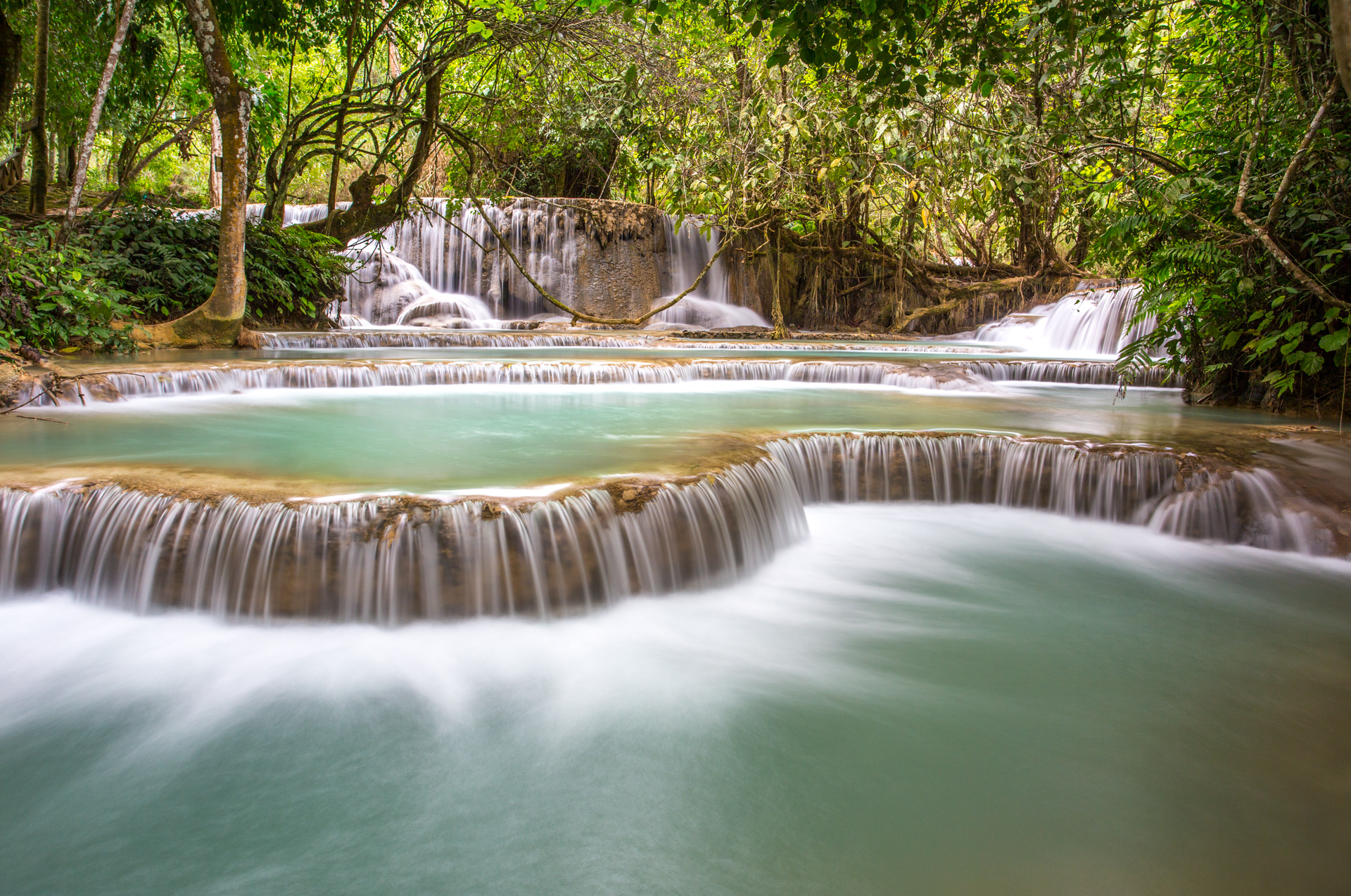
What makes Kuang Si different from other waterfalls is its structure—a series of cascades rather than a single dramatic drop. The main fall, where water crashes down from a height, draws the eye first, but the real magic lies in the smaller tiers below. Here, the water pools into natural basins of startling clarity, their surfaces shifting between turquoise and deep blue depending on the light. The falls change with the seasons: in the rainy months, they roar with force, churning white against the rocks, while in the dry season, they soften into gentle streams, the water so clear you can see the stones beneath. It’s not just about swimming—though that’s part of the appeal—but about sitting on the sun-warmed rocks, watching the way the light fractures through the mist.
The pools are the heart of Kuang Si. The water is cool but never cold, the perfect temperature for easing the heat of the day or the stiffness of a long journey. Some visitors climb to the upper cascades, where the drops are higher and the plunge more thrilling, but most linger in the lower pools, where the water is deep enough to swim but shallow enough to stand. There are no railings or signs warning of danger, just the occasional slippery rock or sudden current, a reminder that this is a place where nature sets the rules. That sense of openness is part of what makes it feel so freeing.
For locals, Kuang Si is more than just a scenic spot. It’s a place tied to tradition and belief, where the land itself is thought to hold a kind of power. You’ll find small shrines tucked among the trees, adorned with flowers, fruit, or strips of cloth—offerings to the spirits that are said to dwell here. Even those who don’t share these beliefs can sense the reverence in the way people move through the space, the quiet respect for the water and the forest. It’s a different kind of tourism, one that doesn’t demand anything of you except that you pay attention.
The area around the falls is a protected zone, home to rare plants and wildlife. The forest is alive with the calls of birds and the occasional rustle of monkeys in the branches. Butterflies drift between the trees in flashes of iridescent blue and orange. If you’re lucky, you might even spot a wild elephant, though sightings are rare. Nearby, a small bear rescue center offers a glimpse into the region’s conservation efforts, housing Asiatic black bears rescued from poachers. It’s a sobering reminder of how fragile this ecosystem is, and how much it depends on the care of those who visit.
What’s striking about Kuang Si is how unspoiled it feels. There are no crowds, no blaring music, no vendors pushing souvenirs. Even in peak season, when more people gather at the pools, the atmosphere remains calm. The small cafes and stalls near the entrance are run by locals who greet visitors with warmth but don’t pressure them to buy. You can sit on a wooden deck with a cup of strong Lao coffee, brewed the traditional way with sweetened condensed milk, or try a bowl of noodle soup while looking out over the trees. The food is simple, the prices fair, and the pace unhurried.
The time of day changes the mood of the falls entirely. In the early morning, when mist still clings to the water, the place feels almost dreamlike, the light soft and diffused. By midday, when the sun is high and the heat presses down, the pools become a refuge, the water a cool relief against the skin. As evening approaches and the last of the day-trippers leave, the forest grows quieter, the sound of the falls more pronounced. It’s then, in the hush of dusk, that Kuang Si feels most like its own world—a place where the only agenda is to be still and listen.
Kuang Si isn’t the kind of destination that dazzles with sheer scale or adrenaline-pumping activities. It doesn’t have the fame of Niagara or the dramatic cliffs of New Zealand’s waterfalls. What it offers instead is something quieter but just as powerful: the chance to step out of time, to let the rhythm of the water and the forest reset your own. Maybe that’s why people keep coming back—not for the thrill, but for the way it lingers in the memory long after the swim is over. It’s the kind of place that doesn’t just fill a photo album, but stays with you, a reminder of how rare it is to find somewhere that feels both wild and welcoming.