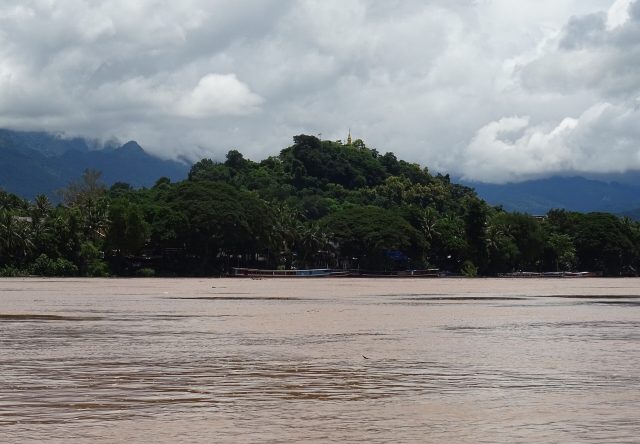
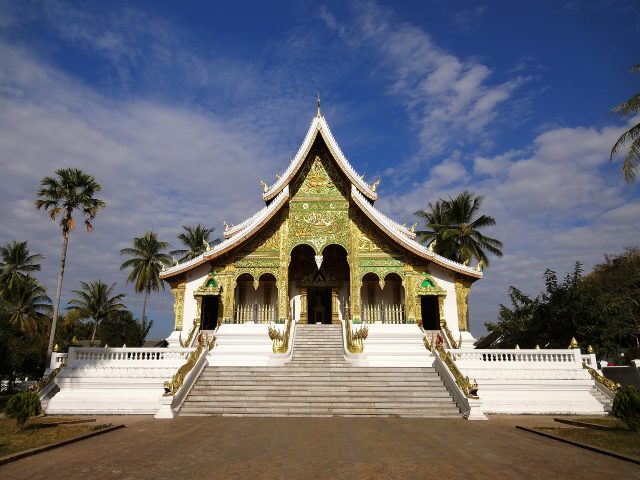
Wat Xieng Thong stands at the heart of Luang Prabang, a town that seems suspended between past and present. Built in the sixteenth century under King Setthathirat, the temple has long been more than a place of worship—it is a cornerstone of Lao identity, where faith, history, and daily life intertwine. Its location at the confluence of the Mekong and Nam Khan rivers was no accident. For centuries, the waters here have been considered sacred, and the temple itself was believed to shield the city from misfortune, its presence a quiet guardian over the land.
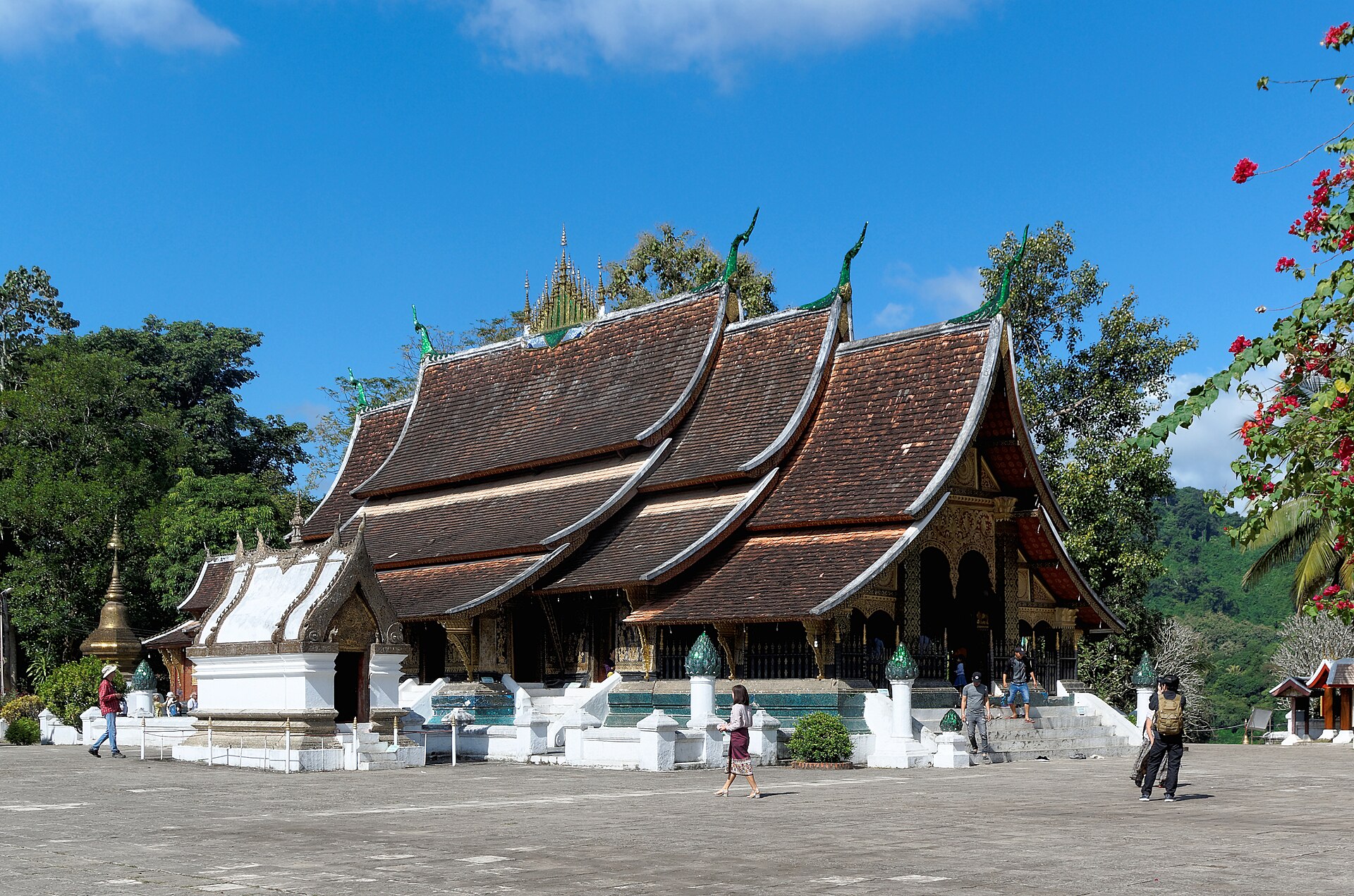
The architecture of Wat Xieng Thong is a study in elegance, distinct from the imposing structures found elsewhere in Laos. There are no towering spires or fortress-like walls here. Instead, the temple’s sweeping roofs descend almost to the ground, their curves resembling the petals of a lotus in bloom. The edges of the roofs lift slightly, echoing the shape of traditional Lao boats, while intricate carvings and gilding catch the light at different angles throughout the day. The main hall, *sim* or ordination hall, lives up to its name—*Xieng Thong*, meaning Golden City—as sunlight spills across its surfaces, turning wood and gold into a shimmering whole.
Inside, the temple feels like a sanctuary apart from the world. The walls are adorned with murals depicting the life of the Buddha, their colors softened by time. The ceiling is a lattice of patterns, evoking a night sky, while the air carries the faint scent of incense and aged wood. At the center of the hall sits a revered Buddha statue in meditation, one of the most sacred in Luang Prabang. Around it, offerings of flowers, fruit, and candles are arranged with care, each small act of devotion adding to the sense of stillness. Time here doesn’t rush; it lingers, as if the temple itself slows the hours.
Wat Xieng Thong is more than a religious site—it is a living archive of Lao culture. Major ceremonies unfold within its walls, including the annual That Luang Festival, when monks and pilgrims gather to honor the Buddha. The temple has also served as a royal mausoleum, housing the remains of Lao monarchs, which deepens its significance for locals. For many, it is a bridge between generations, a place where the past is not just remembered but felt in the quiet rustle of robes, the murmur of prayers, and the weight of centuries in every carved detail.
The temple grounds extend into a garden where nature and spirituality merge seamlessly. Ancient trees, their roots twisting into the earth, provide shade along winding paths. Small pavilions dot the landscape, offering spaces for monks to meditate or converse. There is no grand design here, just an organic harmony, as if the garden grew alongside the temple, each shaping the other over time. Even the stones and the way the light filters through the leaves seem to carry stories, though they are never spoken aloud.
Visiting Wat Xieng Thong is less about ticking off a landmark and more about stepping into the rhythm of Lao life. There are no crowds jostling for space, no loud tour groups breaking the silence. Even when the temple is busy, it absorbs the presence of visitors without losing its sense of calm. The early mornings are particularly magical, when monks walk barefoot through the streets for alms and the first light of dawn touches the golden roofs. It is a moment when the temple feels most alive, yet most at peace—a paradox that defines Luang Prabang itself.
The temple has endured its share of hardships. Wars and political upheavals have threatened its existence more than once, yet each time, it has been restored with meticulous care, its original form preserved. Today, Wat Xieng Thong stands not only as an architectural masterpiece but as a testament to the resilience of the Lao people. For locals, it remains a place of solace, a refuge where one can seek quiet reflection or simply sit in the presence of something greater than oneself.
If you find yourself in Luang Prabang, take your time at Wat Xieng Thong. Sit on the temple steps, listen to the wind in the trees, and watch how the light shifts across the gilded roofs. There is no need to rush. The temple has waited centuries for visitors; it can wait a little longer for you to absorb its quiet power. In a world that often feels hurried, this is a place where time slows, where the past lingers in the air, and where the simplest moments—sunlight on gold, the scent of incense, the sound of distant chanting—can feel like a revelation.