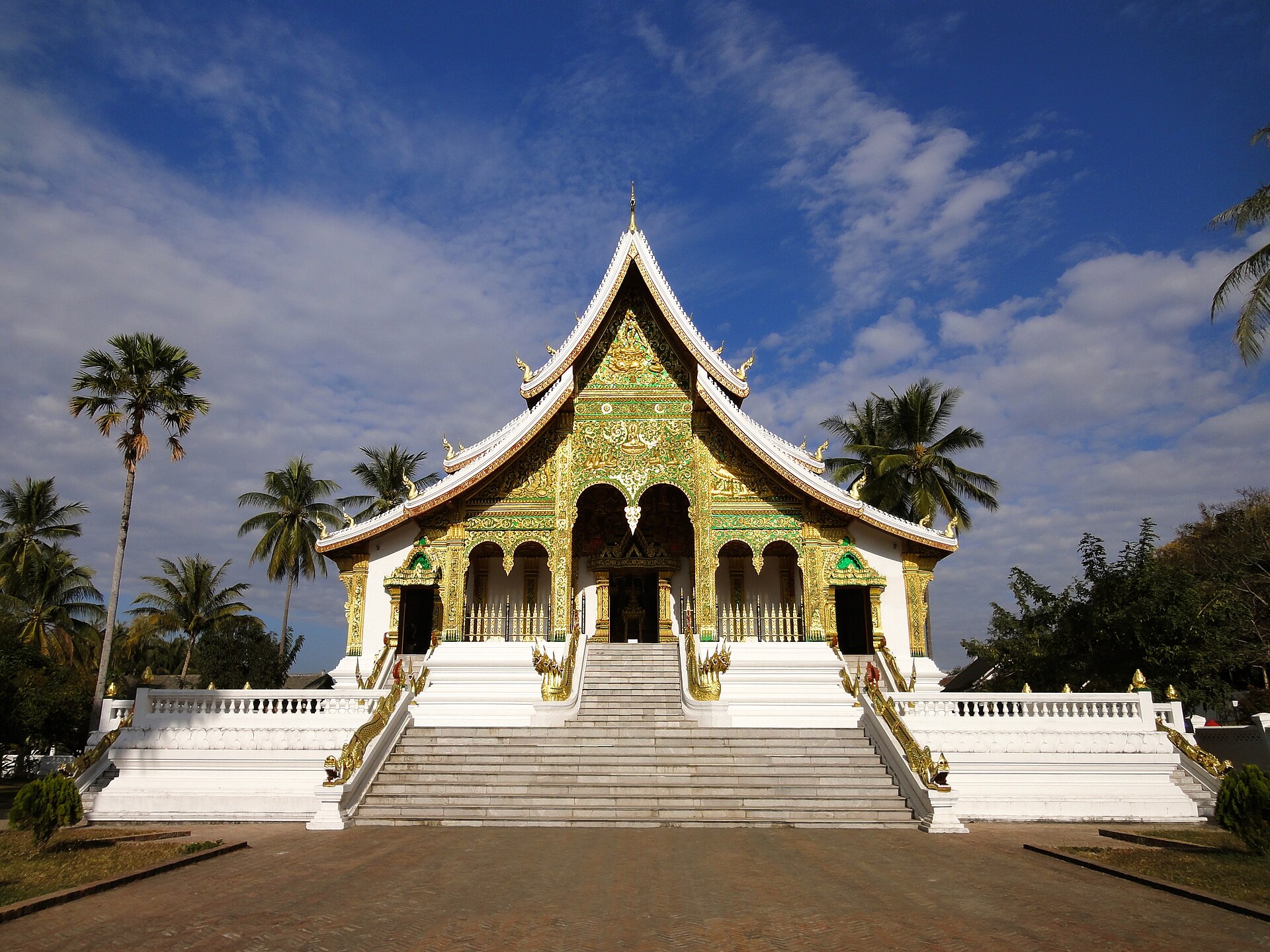
Luang Prabang’s Royal Palace, known locally as Haw Kham, stands as a quiet witness to Laos’ brief but vivid chapter of independence. Built in the early 20th century when the city was still the capital of the Lao monarchy, the palace was commissioned by King Sisavang Vong as a residence that would reflect both the nation’s heritage and the influences of its colonial past. The result is a building that balances elegance with restraint—its whitewashed walls adorned with delicate gold motifs, its sweeping roofs curving upward in the traditional Lao style, while inside, European furnishings and marble floors hint at the broader world beyond the kingdom’s borders.
The palace today functions as a museum, its rooms preserving fragments of a vanished era. Visitors can see the personal belongings of the royal family, from everyday objects to gifts presented by foreign dignitaries. The throne room remains the most striking space, where a portrait of the last king, Savang Vatthana, still hangs, flanked by ceremonial regalia and intricately embroidered silk costumes. Nearby, a collection of traditional instruments—xylophones, drums, and bamboo flutes—offers a glimpse into the music that once filled these halls. Each item, whether a simple wooden chest or a jewel-encrusted sword, carries the weight of a monarchy that ended abruptly in the 1970s, leaving behind only echoes of its former presence.
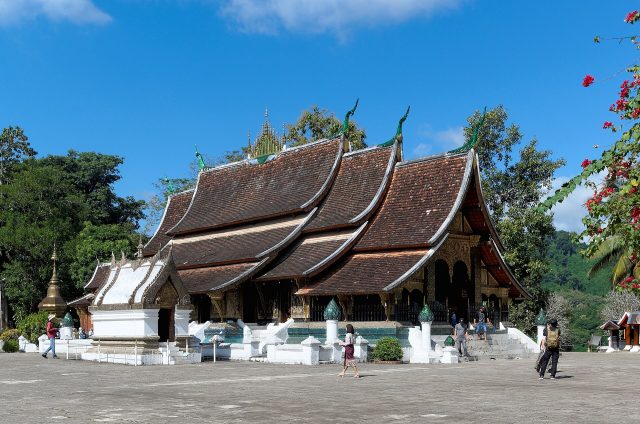
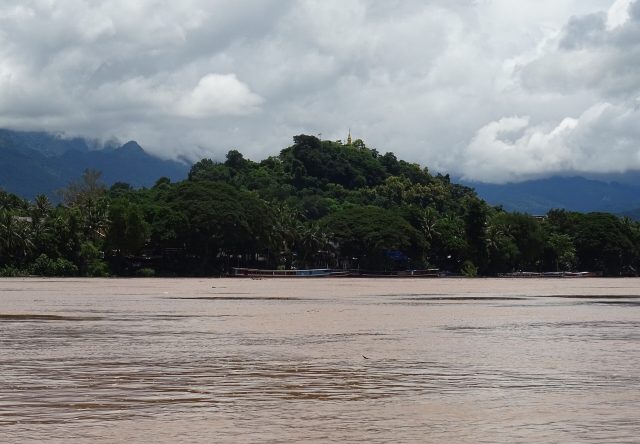
The palace sits on a gentle rise overlooking the confluence of the Mekong and Nam Khan rivers, a location chosen for its symbolic significance. In Lao culture, water has always been sacred, and the meeting of two rivers was seen as a powerful omen of unity. The surrounding grounds, shaded by frangipani and palm trees, provide a peaceful contrast to the grandeur of the building itself. Just steps away stands Wat Xieng Thong, a 16th-century temple that shares the same hill and completes the picture of Luang Prabang’s spiritual and historical heart. Together, the palace and temple form a kind of dialogue between the secular and the sacred, a theme that runs through much of the city’s architecture.
Inside, the atmosphere is one of hushed reverence. The high ceilings are painted with murals depicting scenes from Lao mythology, their colors still vibrant despite the passage of time. Heavy wooden doors, inlaid with mother-of-pearl, lead from one chamber to another, while in the reception hall, the original chandeliers and furniture—imported from France—remain in place. The room where the king once received foreign guests feels frozen in time, its thick drapes and antique photographs evoking the formalities of a bygone era. It’s easy to imagine the murmur of diplomats’ voices or the rustle of silk as courtiers moved through the space, though now the only sounds are the soft footsteps of visitors and the occasional creak of floorboards.
For Laos, the palace is more than a museum; it’s a place where national identity is still being negotiated. While the monarchy no longer exists, the building remains a site of cultural significance, hosting ceremonies during festivals and occasional performances of traditional dance and music. Locals often speak of it with a quiet pride, as if the walls themselves hold the memory of a time when Laos stood apart from its neighbors. For outsiders, the palace offers a rare opportunity to step into that history, not as a spectator but as someone who can almost feel the weight of the past in the air.
A visit here is best paired with a walk through Luang Prabang’s old quarter, where the city’s layered history reveals itself in unexpected ways. The narrow streets, lined with teak houses on stilts, lead past gilded temples and bustling markets where vendors sell handwoven textiles and fragrant spices. The pace is slow, unhurried, as if the city itself is reluctant to let go of the past. The palace, in many ways, serves as an anchor—a starting point from which to explore the rest of Luang Prabang, where every corner seems to hold another story.
What makes Haw Kham unusual among tourist sites is its lack of pretension. There are no crowds jostling for photos, no vendors hawking trinkets at the gates. Instead, there’s a sense of stillness, as if the building is waiting patiently for visitors to approach on its own terms. The respect shown by locals is palpable; this is not a place to be rushed through but one to be absorbed slowly. The palace doesn’t just display history—it embodies it, in the way the light falls through the windows or the way the wooden floors groan underfoot. It’s a reminder that some stories aren’t just told; they’re lived in, even long after the people who shaped them are gone.
Perhaps that’s why the palace continues to draw those who seek more than just a pretty facade. It offers something rarer: a connection to a past that still feels alive, even if only in the details—the worn edges of a throne, the faint scent of old wood, the way the afternoon sun turns the gold leaf on the walls into liquid fire. In a world where so much is disposable, Haw Kham stands as a testament to endurance, a place where history isn’t just remembered but still lingers, waiting to be discovered by those willing to listen.