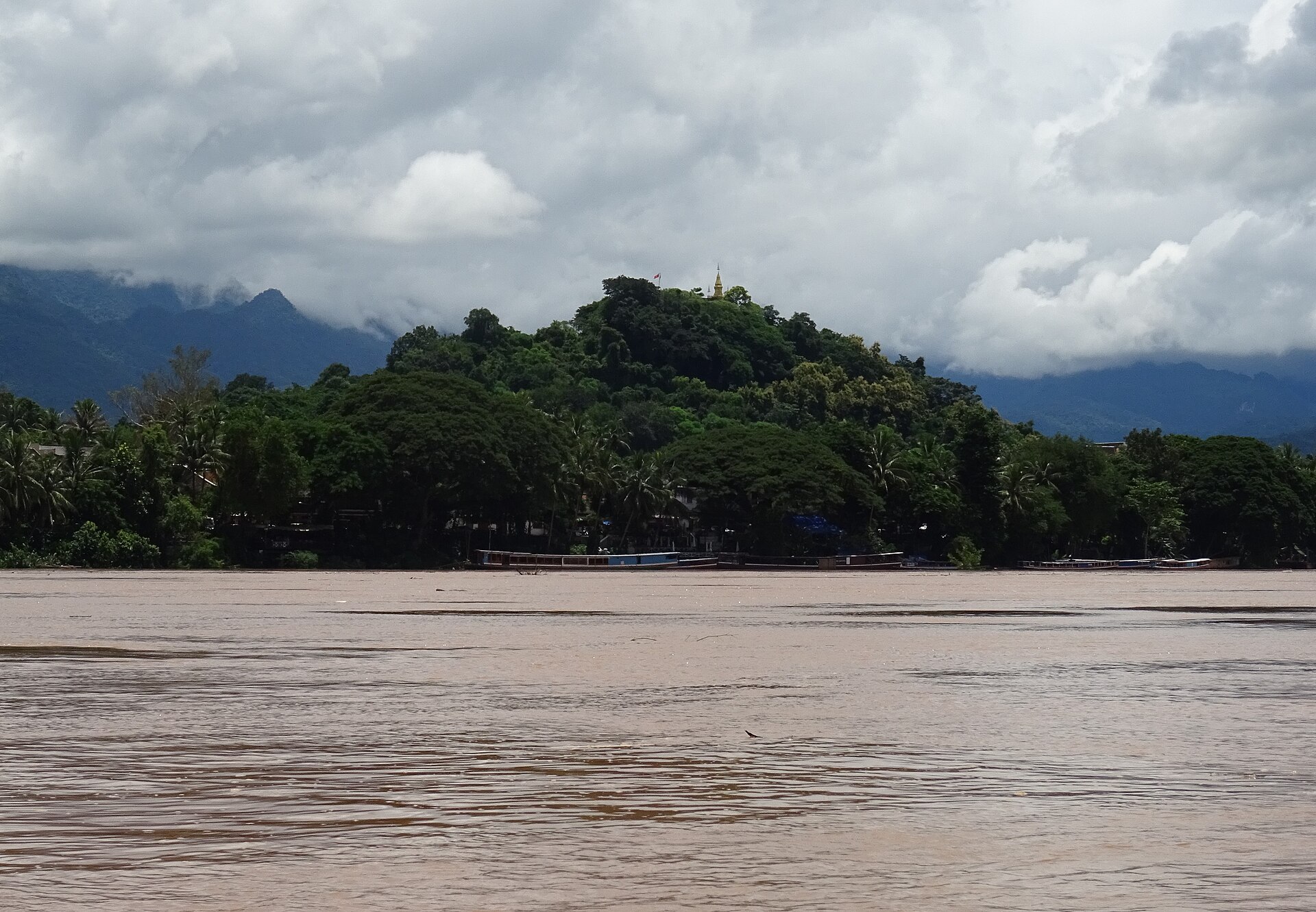
Phousi Mountain rises quietly at the heart of Luang Prabang, a silent guardian that has watched over the city for centuries. Its slopes, thick with greenery, climb above the rooftops and temples, creating a natural divide between the hum of the streets and the stillness of the landscape. From the summit, the view draws both locals and travelers—a winding Mekong River cutting through the hills, the red-tiled roofs of temples nestled among trees, and distant mountains softened by mist. On clear days, the horizon stretches far, but even when clouds linger, the scene holds its own quiet magic, as if the city is holding its breath, waiting for the fog to lift and reveal its secrets.
The climb up Phousi is more than just a walk; it feels like a small pilgrimage. The staircase, with its 328 steps, encourages you to slow down, to notice the details—the way the light filters through the leaves, the sound of your own footsteps on the worn stone. Along the way, small shrines and temples appear, offering places to rest in the shade or pause for a moment of reflection. Locals often come here in the early hours, leaving offerings or murmuring prayers to the spirits of the mountain. The air carries the scent of incense mingling with damp earth and fresh foliage, while birdsong and the rustle of leaves break the silence.
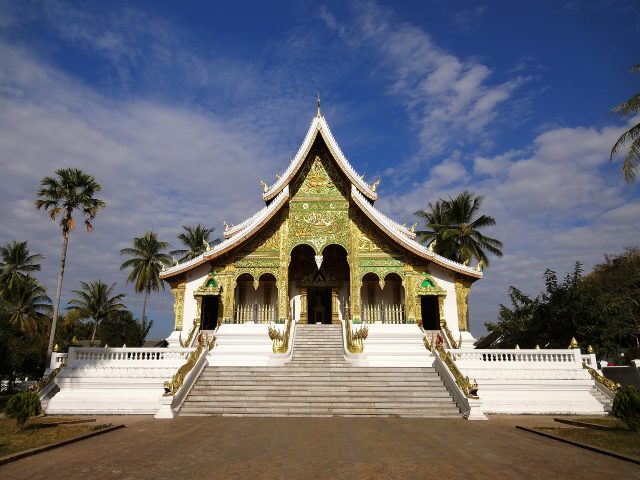
At the top stands Wat Tham Phousi, a modest temple built in the traditional Lao style. Its walls are adorned with intricate carvings, and the red-tiled roof glows under the sun. Inside, the dim light of flickering candles illuminates Buddha statues, casting long shadows that add to the sense of tranquility. Monks in saffron robes move quietly, performing rituals or speaking softly with visitors. Many come here not just for the view but for the atmosphere, a place where the sky feels closer, where the weight of the world seems to lighten.
Phousi is more than a landmark; it’s a living part of Luang Prabang’s identity, a bridge between the city and its spiritual roots. Legends say the mountain was once home to protective spirits, and even now, locals believe it holds a special power. Festivals and ceremonies often center around it—during Buddhist New Year, processions wind up the slopes, and on full moon nights, hundreds of candles flicker in the darkness, turning the hillside into a sea of light.
Sunset is when Phousi is at its most beautiful. As the sun dips below the horizon, the sky turns gold and pink, and the city below fades into twilight. The summit fills with people—families, solo travelers, anyone drawn to the quiet spectacle of day giving way to night. In those moments, time seems to slow, and the worries of the world feel distant. It’s a place to simply stand and watch, to let the evening settle in.
But Phousi isn’t just for contemplation. Along its slopes, small cafés and stalls offer tea and local snacks, while vendors sell handmade textiles and souvenirs. The mountain has a way of blending the sacred with the everyday, where tradition and modernity coexist without fuss. It’s not just a tourist stop; it’s a place where life in Luang Prabang unfolds in small, unhurried ways.
The best time to climb is early morning or late afternoon, when the heat isn’t as intense. Midday can be harsh, especially for those unaccustomed to the tropical sun, but even then, the effort is worth it. The view from the top, the sense of accomplishment, the way the breeze carries the scent of the forest—it all lingers long after you’ve descended. The journey up is as meaningful as the destination itself.
Phousi is where history, nature, and spirituality converge. It’s a reminder that some places move at their own pace, untouched by the rush of the modern world. Here, the past feels alive in the stones, the trees, the people who come to pray or simply to be still. That’s why it remains one of Luang Prabang’s most cherished spots—not just for visitors, but for those who call the city home.