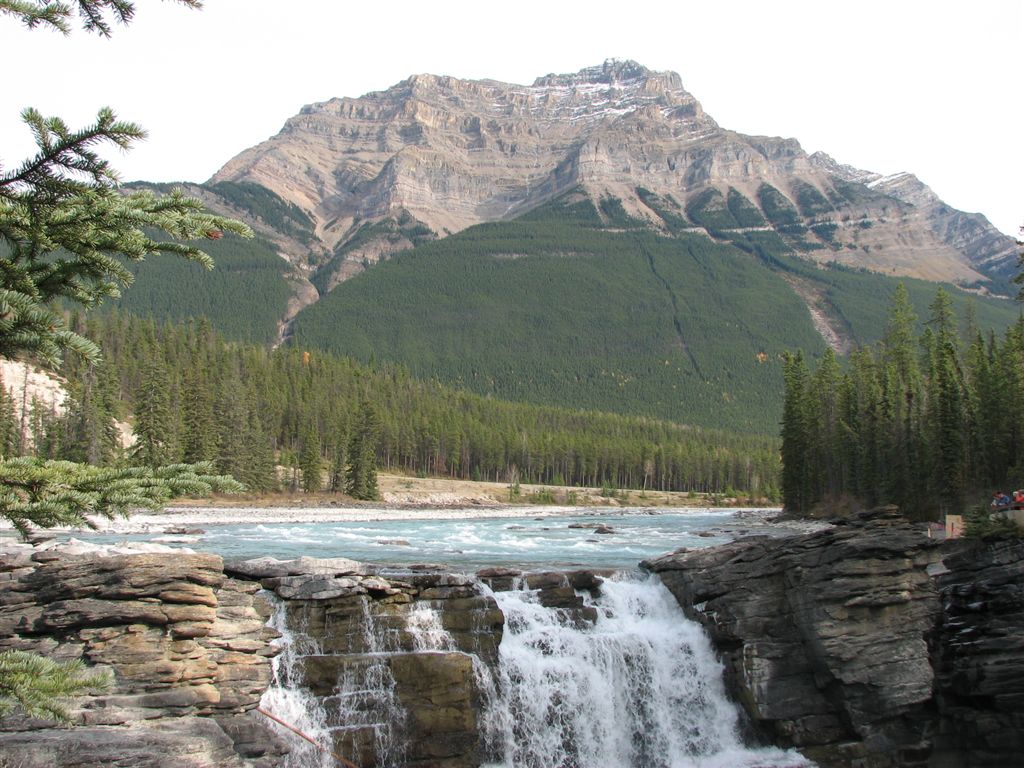
Athabasca Falls is one of those places in the Canadian Rockies where the landscape doesn’t need any introduction. The river, usually wide and calm, suddenly narrows into a tight gorge before plunging twenty-three meters into a canyon carved over millennia. It’s not the tallest waterfall in Canada, but its raw power and the way it commands the space around it make it unforgettable. The sound reaches you long before you see the water—a deep, constant roar that lingers in the air even after you’ve left.
The falls have been part of the region’s story for centuries, long before Jasper became a national park. Indigenous peoples, including the Cree and Stoney Nakoda, knew the Athabasca River as a lifeline, a source of food and travel. The waterfall itself may have been a landmark or even a sacred site, though no written records confirm this. When European fur traders and explorers arrived in the early 1800s, the river became part of the network connecting the eastern plains to the Pacific coast. Their journals mention the falls as both a breathtaking sight and a formidable obstacle on the journey upstream.
Getting here is simple. A short trail from the parking lot leads to the viewing areas in about ten minutes of easy walking. The path winds through the forest, and the first glimpse of the river below is always startling—turbulent, churning, nothing like the smooth surface upstream. Wooden walkways and platforms bring you close to the edge, though there’s little in the way of barriers. The design is deliberate: the park trusts visitors to respect the landscape, and the landscape, in turn, doesn’t hold back. On sunny days, mist from the falls catches the light, creating rainbows that hang over the gorge. When the sky is overcast, the water looks heavier, almost metallic, as if the river itself is made of something denser than liquid.
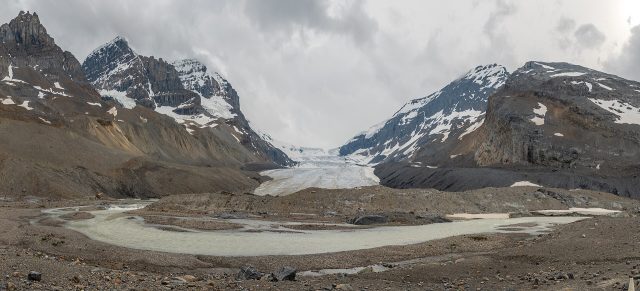
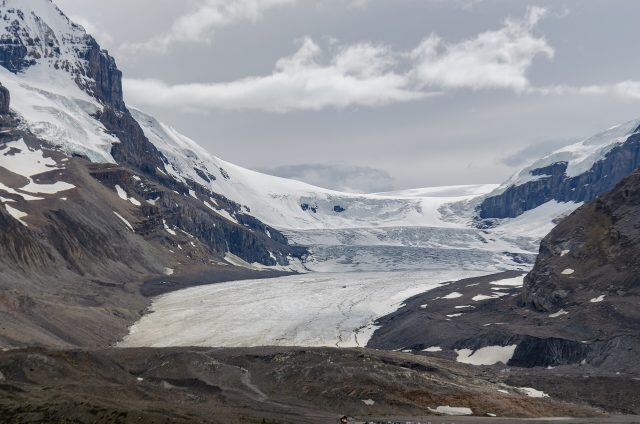
The real architecture here belongs to the earth. The canyon walls are layers of ancient limestone and shale, some of them half a billion years old, twisted and fractured by time. In places, the rock formations resemble crumbling fortresses or giant staircases, and if you look closely, you might spot fossils of long-extinct sea creatures—proof that this land was once underwater. The Athabasca River begins in the Columbia Icefield, and the water carries traces of glaciers: fine sediment that gives it a milky, opaque quality, as if the river is still deciding what color it wants to be.
For locals and visitors alike, Athabasca Falls is more than just a stop on a sightseeing list. In summer, families spread out picnic blankets near the viewing areas, photographers adjust their tripods trying to capture the perfect shot, and hikers pause to catch their breath before moving on. Winter changes the scene. The crowds thin out, but ice climbers arrive, drawn to the frozen cascades. The falls don’t freeze completely—the river keeps moving beneath the ice—but the transformation is dramatic. No matter the season, the place has a way of making you feel small in the best possible sense, a reminder of how much the world can hold.
Despite its popularity, the falls never feel overrun. There’s no gift shop, no café, just a small information board with a map and a few details about the geology. The lack of commercial clutter is part of the appeal. You’re not here to buy souvenirs; you’re here because the place demands attention. The absence of distractions makes it easier to notice the details—the way the water changes color depending on the light, the way the sound shifts when you move from one viewpoint to another, the way the air smells like wet stone and pine.
Athabasca Falls isn’t the kind of place you can fully capture in a photo or a description. You have to stand there, feel the vibration of the water through the soles of your shoes, let the mist settle on your skin. It’s a place that makes you aware of time in a different way—not the ticking of a clock, but the slow, relentless work of water carving through rock. Even in a world where it feels like every corner has been mapped and documented, there’s something reassuring about a place that still feels untamed. Maybe that’s why people keep coming back: not just to see the falls, but to remember what it’s like to stand in the presence of something bigger than themselves.