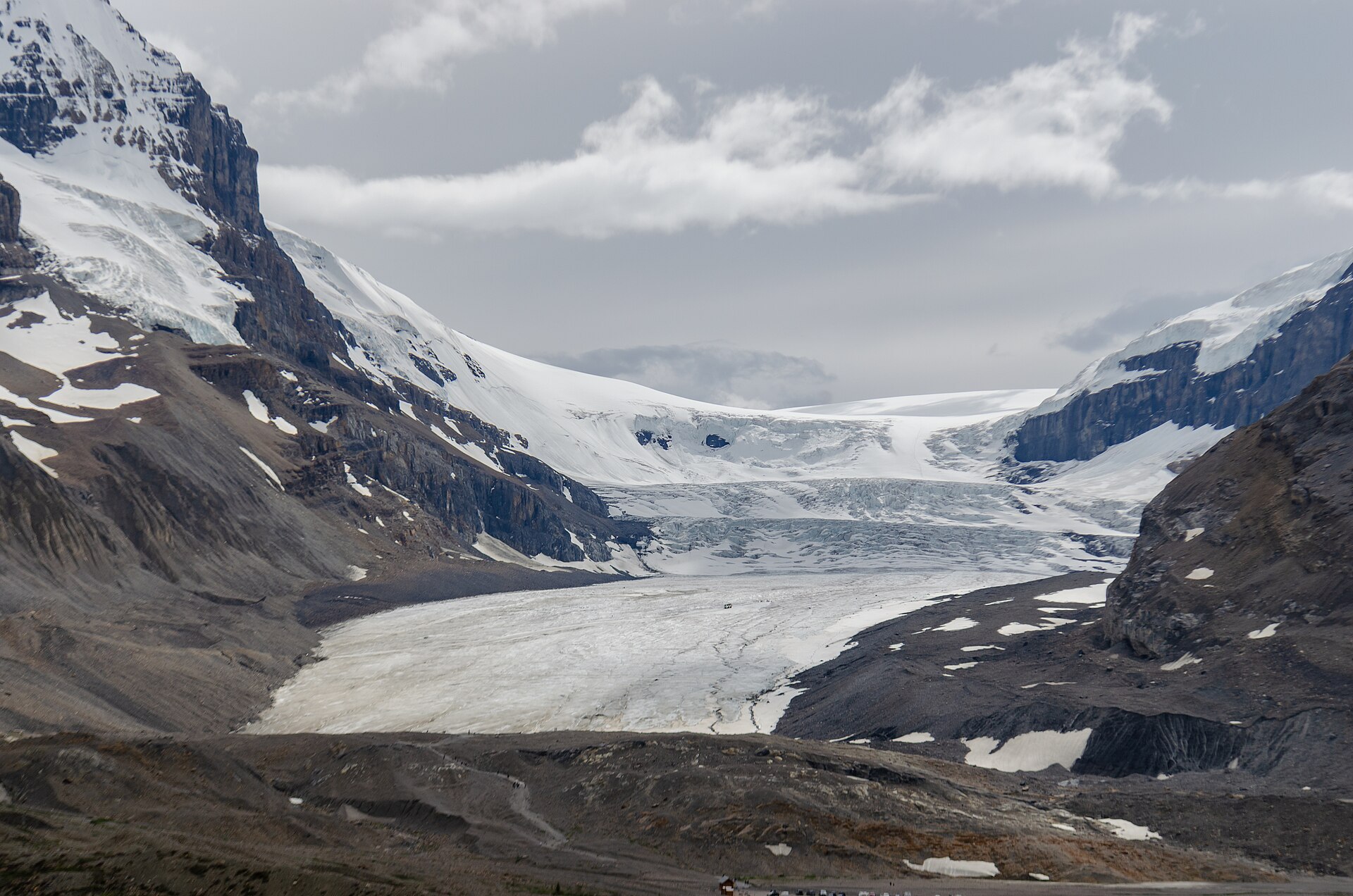
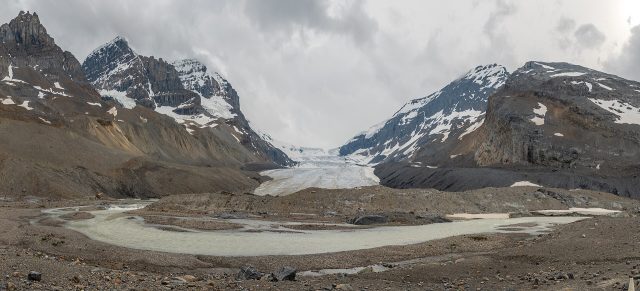
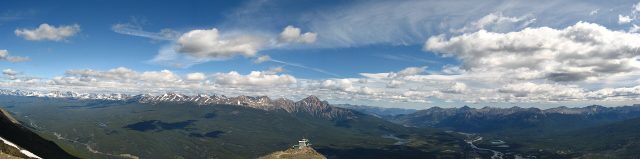
Athabasca Glacier is one of those rare places where the raw power of nature becomes impossible to ignore. Tucked within Jasper National Park in the heart of the Canadian Rockies, it’s part of the Columbia Icefield, one of the largest icefields in North America. This isn’t just a static landscape to admire from a distance—it’s a living, shifting force, constantly reshaping itself over centuries. The glacier’s surface is a maze of crevasses and fissures, its pale blue ice spilling down the mountainside in stark contrast to the dark rock and dense pine forests that surround it. Even from afar, the sheer scale of it commands attention, a reminder of how small human presence really is in the face of geological time.
The glacier’s story is woven into the history of the Rockies themselves. During the last ice age, this entire region was buried under a thick sheet of ice that carved out valleys, lakes, and moraines as it advanced and retreated. Today, Athabasca Glacier is still moving, though not in the way it once did. Over the past century and a half, it has receded dramatically—so much so that in the mid-1800s, its tongue extended far enough to nearly reach the modern Icefields Parkway. Now, visitors have to make an effort to get close, whether by boarding a rugged all-terrain vehicle or hiking across the rocky terrain. The retreat has accelerated in recent decades, a visible sign of the broader changes affecting glaciers worldwide.
Standing near the glacier, it’s hard not to feel a sense of awe, as if stepping into another era. The ice here is thousands of years old, a silent witness to the planet’s transformations long before humans walked these mountains. On clear days, the glacier glows under the sunlight, its surface fractured into countless crystals that scatter light in every direction. When clouds roll in, the ice takes on a muted, almost ghostly hue, its depths seeming to hold secrets of the past. The air is crisp and cool, carrying the scent of pine and damp earth, while the only sounds are the occasional gust of wind or the distant rumble of ice breaking away. It’s a place where time feels different, where the weight of centuries presses in around you.
Visiting Athabasca Glacier isn’t just about seeing it—it’s about understanding its fragility. Jasper National Park, established in the early 1900s, was created to protect the unique ecosystems of the Rockies, and strict conservation measures are in place to preserve the glacier and its surroundings. Visitors are asked to stay on marked paths, avoid touching the ice without proper gear, and leave no trace. These rules aren’t just about safety; they’re a recognition that this landscape, though ancient, is not invincible. The glacier continues to shrink, a quiet but unmistakable reminder that nature operates on a scale far beyond human control.
For those who want to get closer, there are a few ways to experience the glacier up close. The most accessible option is a guided tour on massive Ice Explorer vehicles, which ferry visitors across the rocky terrain to the glacier’s edge. The ride itself is an adventure, offering sweeping views of the icefield and the surrounding peaks. For a more immersive experience, guided hikes across the glacier are available, though these require sturdy footwear, warm clothing, and a decent level of fitness. Walking on the ice reveals its hidden details—the deep crevasses, the meltwater streams carving their way through the surface, and the occasional ice cave, their interiors glowing with an eerie blue light.
Beyond its natural beauty, Athabasca Glacier plays a crucial role in scientific research. Glaciologists and climate scientists from around the world come here to study the icefield’s behavior, tracking its retreat and analyzing the data to better understand global climate patterns. The findings from this region help inform research in the Arctic and Antarctic, offering insights into how glaciers respond to rising temperatures. For visitors, this adds another layer to the experience—not just a chance to witness a stunning landscape, but an opportunity to reflect on the broader implications of a changing planet.
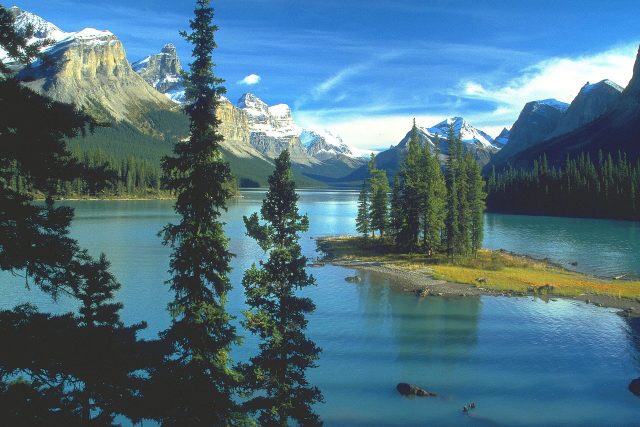
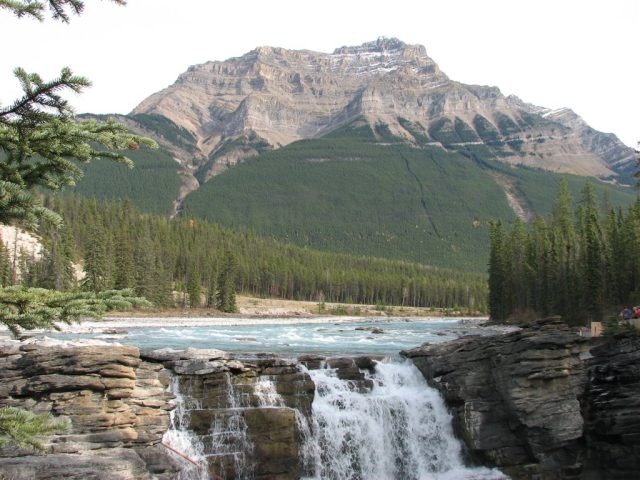
The area around the glacier holds other wonders worth exploring. Nearby Maligne Lake, with its striking turquoise waters, owes its color to glacial silt suspended in the water, a fine powder ground from the surrounding mountains. The lake is a quiet place, perfect for a slow walk along the shore or a moment of stillness by the water, watching the way the light shifts across the surface. The Athabasca River valley, just a short drive away, is another highlight, where wildlife like elk, bighorn sheep, and even black bears can sometimes be spotted along the riverbanks. If you’re lucky, you might catch a glimpse of a wolf in the distance, though they tend to keep their distance from humans.
What makes Athabasca Glacier so compelling isn’t just its beauty—it’s the way it makes you feel. There’s a sense of humility that comes with standing in its presence, a realization that this place existed long before people and will likely endure long after. At the same time, it’s a stark reminder of how quickly things can change. The glacier is retreating, and while that’s part of a natural cycle, the pace of its disappearance has been hastened by human activity. Visiting it isn’t just about ticking a destination off a list; it’s about connecting with something larger than yourself, something that puts everyday concerns into perspective.
In the end, Athabasca Glacier leaves an impression that lingers long after you’ve left. It’s not just the photographs or the memories of the ice’s color, but the way it makes you think about time, change, and the delicate balance of the natural world. There’s a quiet urgency to it, too—a sense that this might be one of the last generations to see the glacier in its current form. That thought doesn’t diminish the experience; if anything, it makes it more meaningful. It’s a place that invites you to look closely, to listen, and to carry a piece of its story with you.