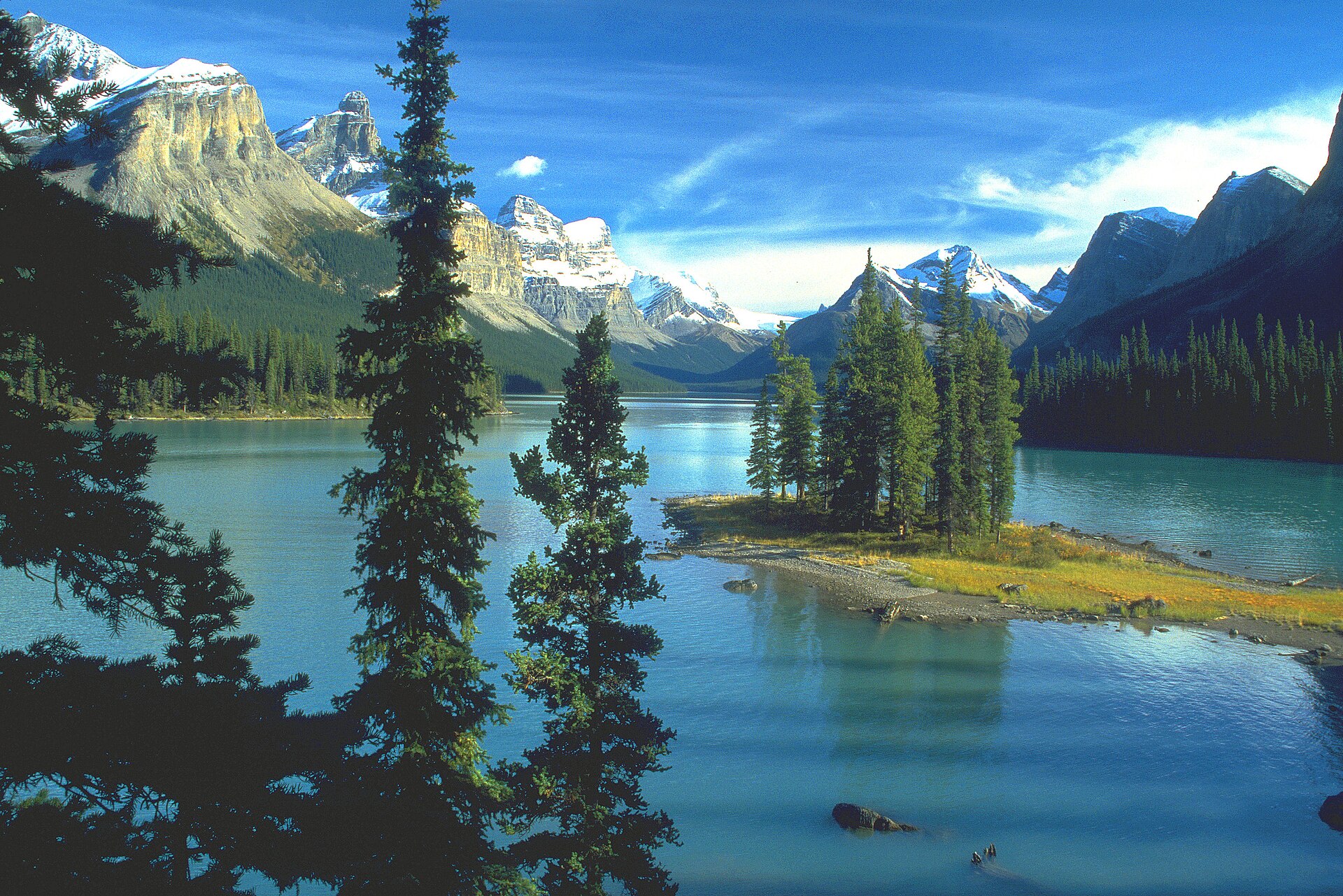
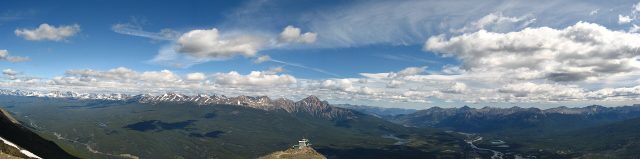
Maligne Lake sits in the heart of Jasper National Park, where the Canadian Rockies rise in sharp, silent ridges around it. The water is so clear that on still days, the bottom seems close enough to touch, its stones and sand shifting between shades of blue and green as the light moves. The mountains mirror themselves in the surface, turning the lake into a vast, unbroken reflection of the sky. There’s a quiet here that feels older than the park itself, as if the land has always known how to hold its breath.
The lake wasn’t always part of the tourist map. For generations, the Stoney Nakoda and Cree peoples traveled through these valleys, but the wider world only began to notice Maligne in the early 1900s, when Jasper was established as a national park. Even then, it remained remote—roads were slow to reach it, and the journey still winds through tight mountain passes. By the 1930s, trails were cut and basic facilities built, but the place never lost its sense of being slightly out of reach. That distance is part of its charm now. You don’t stumble upon Maligne by accident; you have to want to come here.
There are no grand buildings or monuments, just the land as it’s been for centuries. The shore is lined with spruce and fir, their branches heavy with the scent of resin. Boulders, smoothed by ancient glaciers, sit half-buried in the earth, their surfaces worn by time. In summer, the forest hums with life—deer step cautiously to the water’s edge, and if you’re lucky, you might spot a bear or a moose moving through the trees. Winter transforms everything. The lake freezes into a sheet of ice, thick enough to walk on, while snow softens the outlines of the peaks. The silence deepens, broken only by the occasional creak of ice or the distant call of a raven.
Most people come to walk. A five-kilometer trail loops around the lake, easy enough for casual hikers but rewarding at every turn. The path dips in and out of the trees, offering new angles on the water and the mountains beyond. Early mornings are best, when mist clings to the surface and the first light catches the peaks in gold and pink. For those who prefer to be on the water, canoes and kayaks are available to rent. Paddling here feels different than on other lakes—the stillness is so complete that even the smallest ripple seems loud.
Winter turns Maligne into something else entirely. The ice becomes a vast, empty plain, and the only tracks you’ll see are your own. Skating is possible if the conditions are right, though most people come simply to walk, their boots crunching in the snow. The cold sharpens the air, and the world feels smaller, quieter. There are no crowds, no distractions—just the lake, the mountains, and the sky. It’s a different kind of beauty, one that doesn’t rely on color or movement but on the stark, clean lines of the landscape.
Maligne isn’t as famous as some of the other lakes in the Rockies, and that’s exactly why it feels special. There are no gift shops or crowded viewpoints, no lines for photos. Instead, there’s space—space to sit on a rock and watch the light change, space to walk without hearing another voice, space to feel like the only person in the world for a little while. It’s the kind of place that makes you slow down without realizing it, where time doesn’t so much stop as stretch, giving you room to breathe.
The lake is also part of something larger. Jasper National Park is a UNESCO World Heritage Site, recognized for its untouched wilderness and the delicate balance of its ecosystems. The water in Maligne is so clean it’s safe to drink straight from the lake, and the surrounding forests shelter species that have disappeared from more developed areas. Visiting here isn’t just about seeing a beautiful place; it’s a reminder of what the world looks like when it’s left alone.
There’s no grand lesson to take from Maligne, no story of human triumph or tragedy. It’s simply a place that exists, unchanged by the noise of the modern world. Whether you come in summer or winter, at dawn or dusk, the lake offers the same thing: a chance to step outside of time for a while. You might leave with nothing more than a memory of light on water or the sound of wind through the trees, but those are the kinds of things that stay with you long after you’ve gone.