Sigiriya is a place where history lingers in the air, where the past feels tangible beneath your feet. Long before the modern world took shape, King Kashyapa chose this rugged landscape of rocky outcrops and lush greenery to build his palace in the fifth century. While the Lion Rock draws most visitors upward, the true magic of Sigiriya lies hidden at its base—the Water Gardens, a masterpiece of ancient engineering and landscape design that still holds its secrets.
Kashyapa envisioned a residence that embodied luxury, security, and harmony with nature. Unlike the imposing fortresses of his time, his creation was one of elegance and tranquility. The Water Gardens were not just decorative; they were a testament to human ingenuity. Channels, pools, and fountains operated without pumps, relying instead on gravity and a network of reservoirs higher up the slope. During the monsoon season, the gardens came alive as water flowed effortlessly through the system, creating the illusion of a self-sustaining paradise.
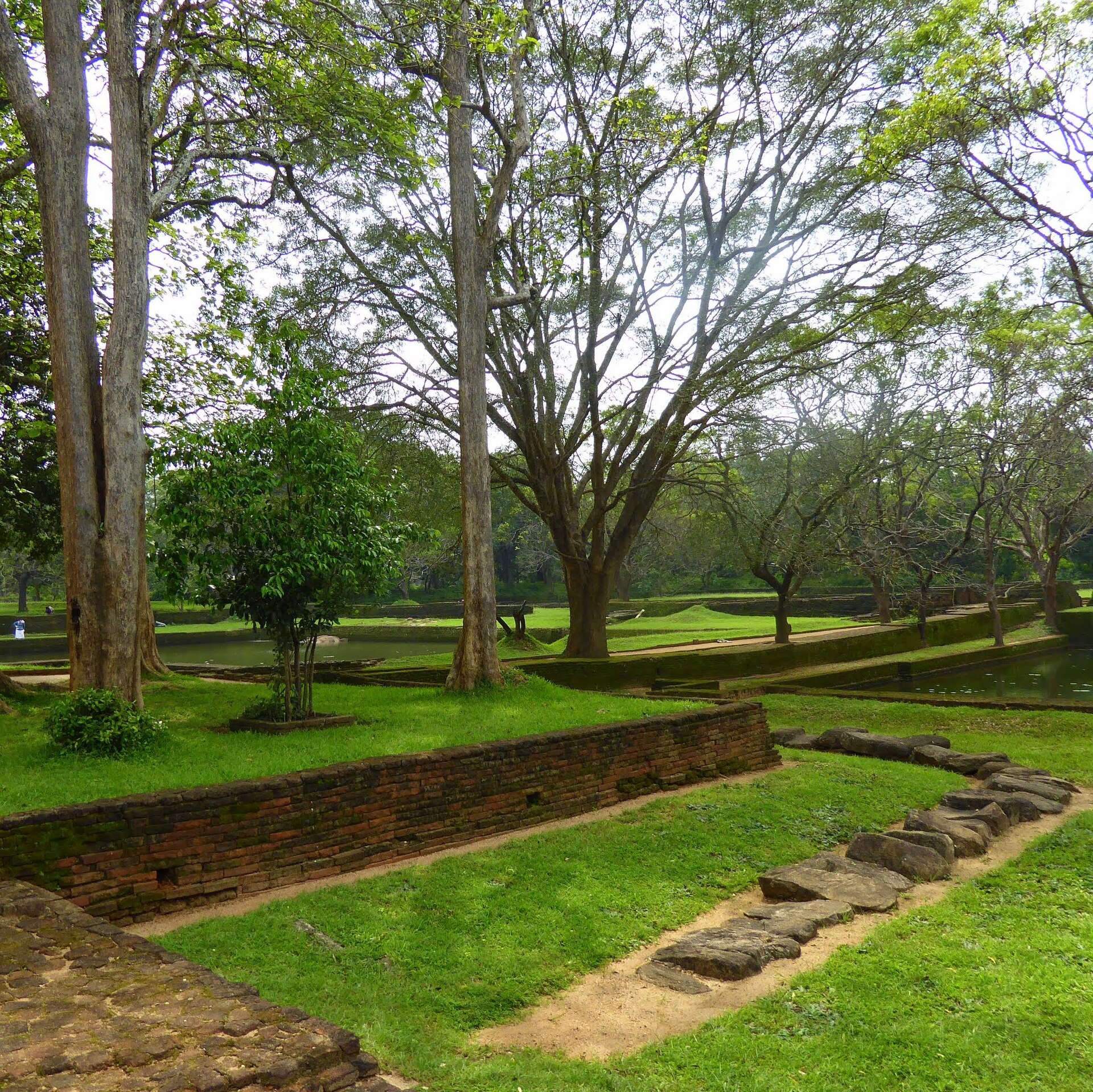
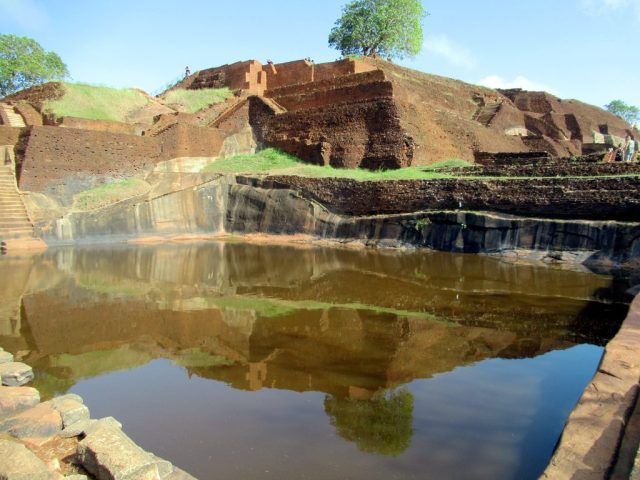
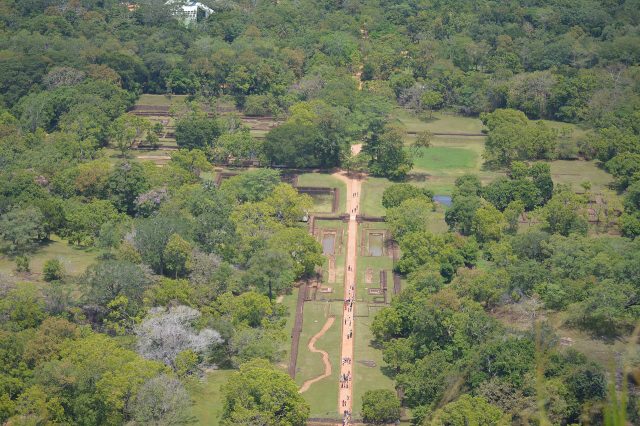
The layout of the gardens follows the principles of symmetry found in ancient Indian and Sinhalese traditions. A central axis divides the space into two mirrored halves, where rectangular pools once reflected the sky, the surrounding trees, and the people who walked along their edges. Stone pavilions lined the canals, offering shaded resting places for courtiers or the king himself. Today, only the foundations remain, but even these fragments hint at the lively scenes that once unfolded here—the murmur of voices, the gentle splash of water, the rustle of silk garments against stone.
Among the most intriguing features are the lotus fountains, small stone basins from which water once arched upward in delicate sprays, mimicking the shape of a blooming flower. Archaeologists still debate how the builders achieved this effect, though theories suggest a system of interconnected vessels and natural water pressure. These fountains stand as proof of the advanced engineering knowledge that flourished on the island over fifteen hundred years ago.
Centuries of neglect have softened the grandeur of the gardens. Tropical vegetation now weaves through the ruins, its vines curling around weathered stones and leaves drifting over the remnants of ancient structures. Unlike the crowded ascent to the summit of Lion Rock, the Water Gardens offer a quieter experience. Here, you can wander along the pathways, imagining the footsteps of courtiers who once walked these same routes. In the heat of midday, the shade of the trees and the coolness of the water create a perfect setting for unhurried exploration.
The gardens are deeply tied to the story of Sigiriya itself. Kashyapa, who seized power after a violent coup, lived in constant fear of retribution. Though he chose an impregnable rock for his fortress, even that was not enough to ease his paranoia. After his death, the palace was abandoned, and Sigiriya was repurposed as a Buddhist monastery. The Water Gardens, too, fell into disuse, and nature slowly reclaimed what had once been a symbol of royal splendor. It wasn’t until the twentieth century that archaeologists began to clear the overgrowth and restore parts of the hydraulic system, revealing glimpses of the past.
For Kashyapa, these gardens were a display of power and refinement. Today, they serve as a reminder of human creativity and the enduring desire to blend art with nature. There are no gilded statues here, no grand monuments—just water, stone, and silence. The gardens invite you to pause, to sit on a weathered bench and listen to the soft trickle of water, or to stand by a pool and watch the sky ripple in its surface.
If you plan to climb Lion Rock, consider arriving early and lingering in the gardens first. The light is softer in the morning, the air thick with the scent of damp earth. Walk the paths when the day is still young, when the only sounds are the rustle of leaves and the distant call of birds. Find a spot by one of the pools and let the stillness settle around you. In moments like these, Sigiriya feels like a place where time moves differently, where the past and present coexist in quiet harmony.