Sigiriya’s Frescoes: A Glimpse into a Lost Kingdom
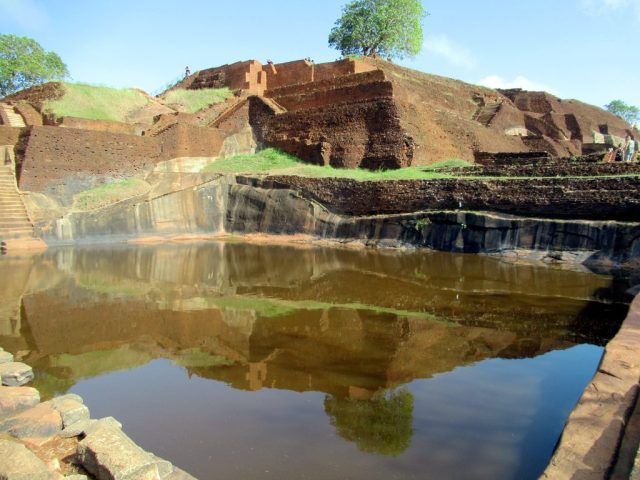
Sigiriya’s rock fortress juts from Sri Lanka’s central jungles, a red-stone monolith that has overlooked the land for over a millennium. But its height isn’t what stays with you—it’s the art clinging to its western face. The Sigiriya frescoes, painted high on the cliffside, survive as fragments of a 5th-century kingdom that flourished briefly before vanishing. These aren’t decorations. They’re remnants of a worldview, a moment when this rock was the heart of a dynasty.
The paintings show women—twenty-one originally, though only a few remain visible. Their faces are calm, their postures fluid, as if paused mid-dance. No one knows who they were: celestial figures, royal consorts, or symbols of fertility. The name *Sigiriya Damsels* suggests romance, but the truth is unclear. What’s undeniable is the craftsmanship. The artists used *buon fresco*, applying natural pigments to wet plaster so the colors fused with the wall. Fifteen centuries later, the ochres, greens, and roses still glow, as if the painters had just left.
Reaching the frescoes is part of the journey.
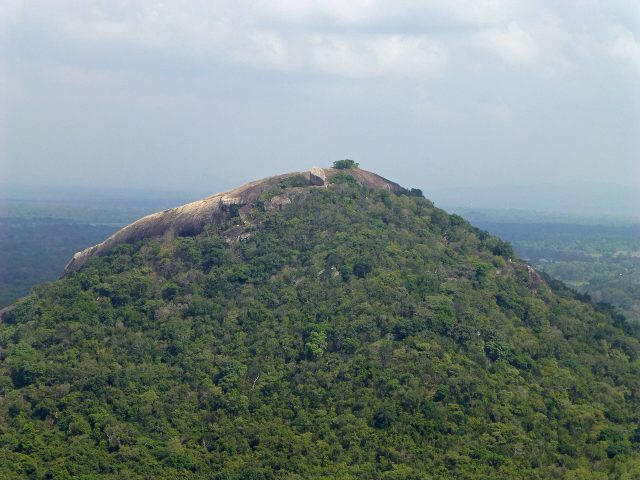
The climb starts on narrow staircases cut into the rock, passing crumbling brick walls and terraces. As you rise, the jungle spreads below—a green expanse broken by scattered boulders. By the time you reach the gallery, the air feels lighter, the silence heavier. The frescoes sit in shallow niches, their figures arranged along the cliff. From here, you can imagine how the fortress once served as palace and stage, where art, power, and ritual merged.
Their purpose is still debated. Were they part of a religious complex, tied to a local deity or the king’s deification? A record of courtly life? Some argue the figures are *apsaras*—celestial nymphs meant to accompany the king in death. What’s clear is how little we understand. The frescoes defy easy answers, their meaning lost to time like the wind sweeping the rock.
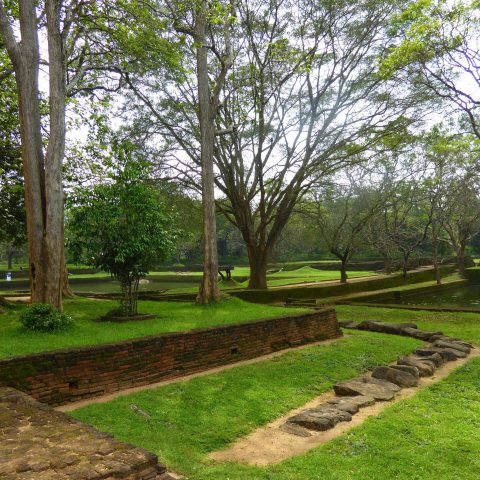
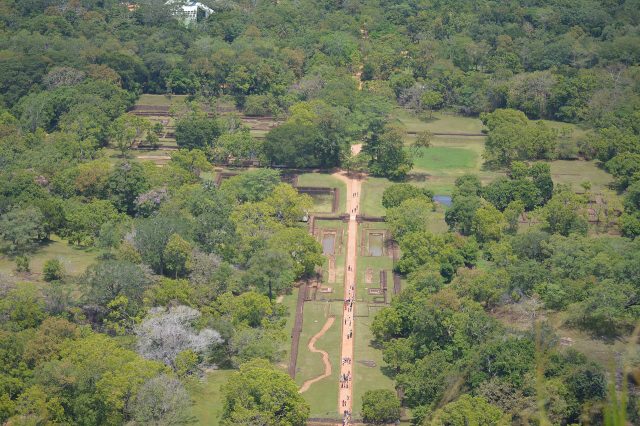
King Kashyapa built Sigiriya after seizing the throne. He abandoned Anuradhapura for this impregnable rock, surrounded by jungle and marshland. The fortress lasted less than twenty years. After his death, it was abandoned, its palaces left to decay, its gardens swallowed by the wild. Only the frescoes remained.
Today, the jungle hums below. The sun beats down. The figures on the wall seem to watch, detached. There’s no grand story, just fragments—the curve of a hand, the tilt of a head, the ghost of a smile. These are the pieces we’re left with.
The frescoes fascinate because they keep their secrets. They were painted when this rock was a kingdom’s center, when the king’s word was law and the walls pulsed with color. Now, they’re all that’s left—a whisper of pigment on stone. Even the mightiest civilizations fade. The frescoes don’t explain. They invite you to wonder.