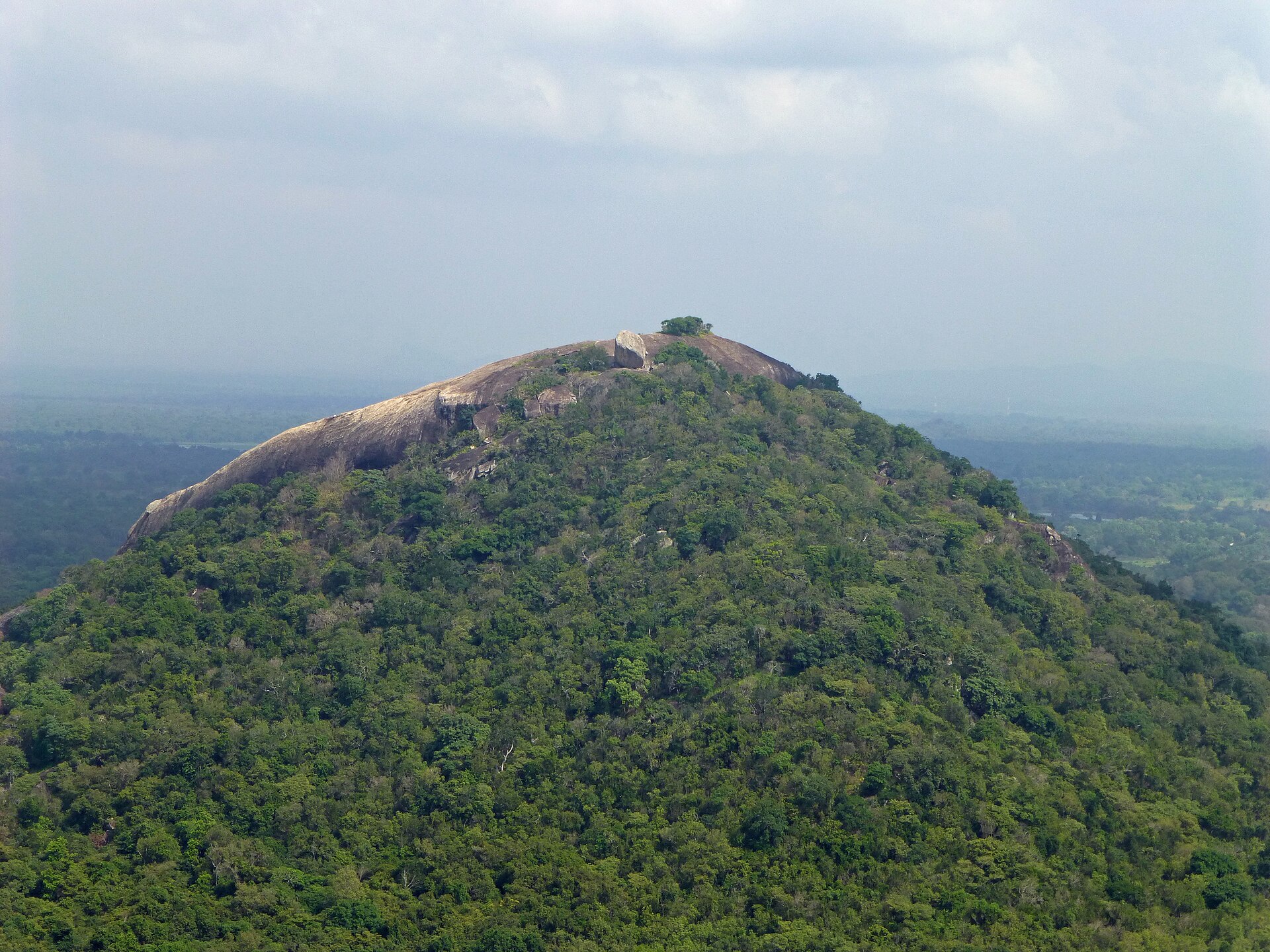
Pidurangala is one of those places where the past lingers in the quiet corners of the landscape, almost as if the wind itself carries whispers of the people who once walked these paths. Just a short distance from the more famous Sigiriya, this granite outcrop rises from the earth with a sense of understated presence, offering a different kind of experience—one that feels more like a personal discovery than a tourist attraction.
The climb begins at the base of the hill, where ancient stone steps, worn smooth by centuries of use, lead upward through the undergrowth. These steps were carved into the rock in the 5th century, when Pidurangala was home to a Buddhist monastery established by King Kashyapa. The king, who would later move his capital to Sigiriya, chose this spot for its seclusion, a place where monks could meditate far from the distractions of the world. Today, the ruins of the monastery are scattered across the hillside—crumbling platforms, niches where statues once stood, and fragments of walls that hint at the lives lived here over a thousand years ago.
The ascent takes about half an hour if you take your time. The trail winds between moss-covered boulders and trees whose roots twist around the rocks like old fingers. About halfway up, you’ll come across a reclining Buddha carved directly into the stone. The statue faces east, toward the rising sun, its serene expression untouched by the passage of time. It’s easy to imagine the monks pausing here centuries ago, finding peace in the quiet rhythm of the place.
At the summit, the landscape opens up into a wide, grassy plateau dotted with a few scattered trees. The view is expansive—rice paddies and palm groves stretch out to the east, while to the west, Sigiriya’s sheer walls rise like a fortress from the earth. Sunrise is particularly striking here, when the sky softens into shades of pink and orange, and the morning mist still clings to the valleys below. There’s a sense of stillness that makes it easy to linger, watching the light change over the land.
Unlike Sigiriya, Pidurangala doesn’t draw the same crowds. There are no ticket booths, no queues, no vendors trying to sell you trinkets. The locals you meet along the way are more likely to greet you with curiosity than with an outstretched hand. The climb can be slippery during the rainy season, and the summit is often windy, but on a clear day, the effort is well worth it. Even those who aren’t seasoned hikers will find the ascent manageable if they take it slow.
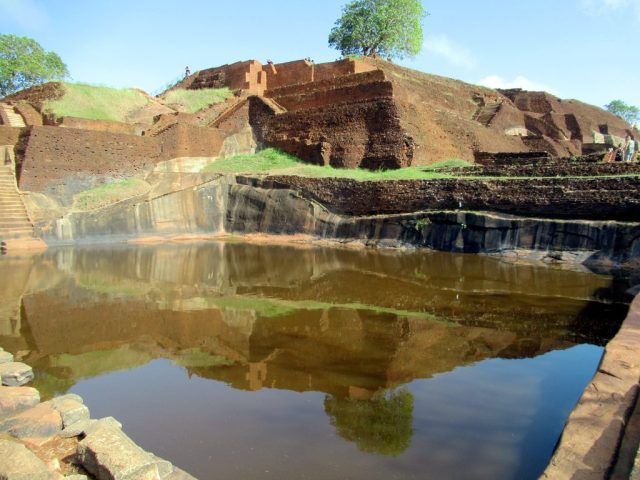
The connection between Pidurangala and Sigiriya is more than just geographical. According to legend, King Kashyapa offered the monks here a choice: leave this place so he could build his fortress on the Lion Rock, or stay and receive a new monastery in return. The monks agreed to move, and as a result, Pidurangala was gradually abandoned while Sigiriya became a symbol of royal ambition. Today, the two sites exist in contrast—one a monument to power, the other a quiet reminder of the values that endure beyond it.
There’s no rush at the top. You can sit for an hour or more, watching the valley below shift with the time of day. In the morning, the landscape feels almost dreamlike, still wrapped in mist. By midday, the fields come alive with activity, and in the evening, the air cools as shadows stretch long across the earth. Occasionally, you might see a monk making his way to the ruins to pray, or a herder guiding his cattle along the lower slopes.
The descent is just as rewarding as the climb. At the base of the hill, a small village unfolds at a leisurely pace. The houses are simple, the streets quiet. A local shop might offer a cup of tea, and farmers sometimes sell fresh fruit from roadside stalls. There’s no pressure here, no sense of being hurried along.
Pidurangala isn’t the kind of place you visit for luxury or entertainment. There are no hotels, no restaurants, no souvenir shops—just the rock, the wind, and the weight of history. If you’re lucky, you might have the summit to yourself for a while, and in that silence, it’s easy to understand why the monks chose this spot for contemplation. It’s a place that invites you to slow down, to look around, and to listen.