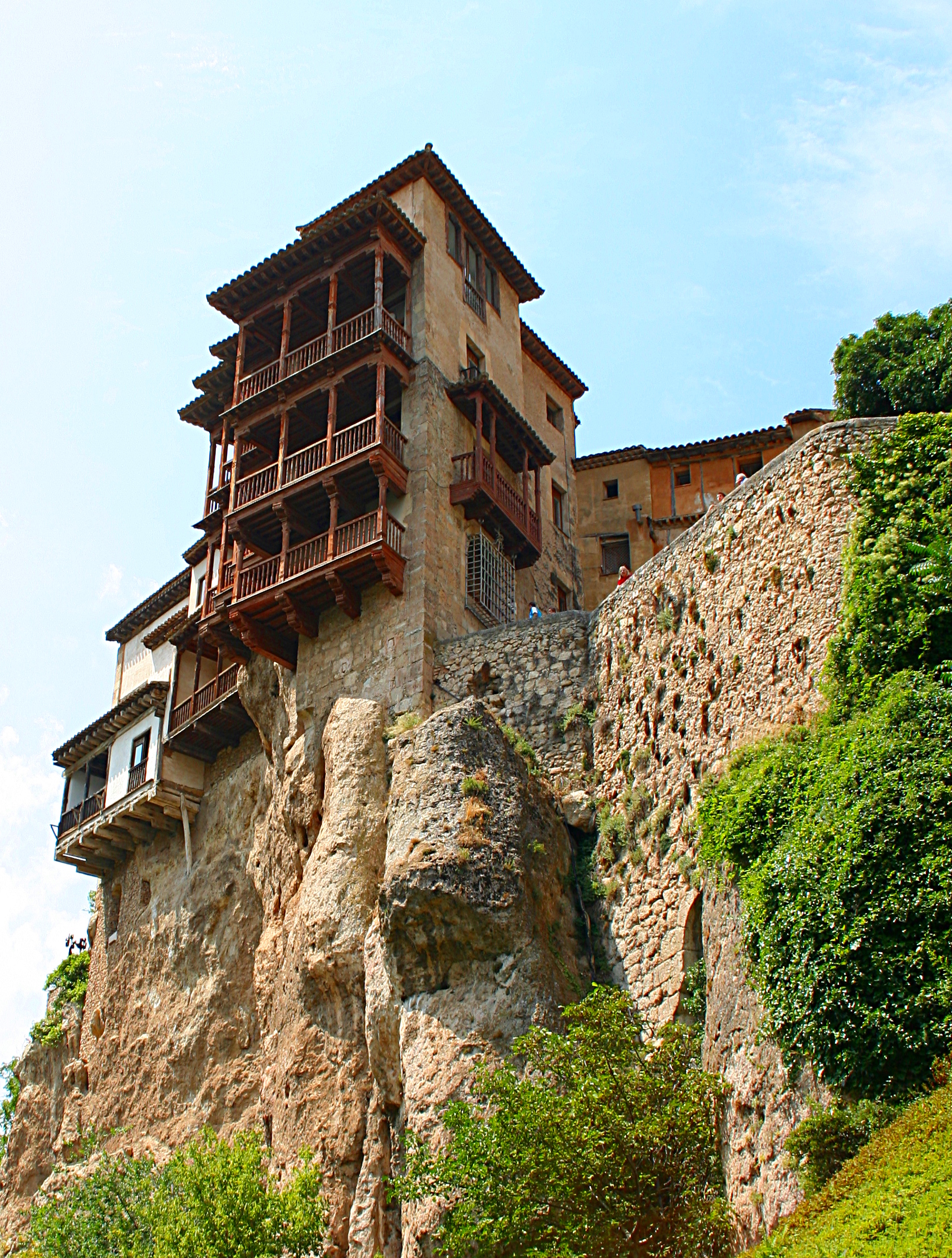
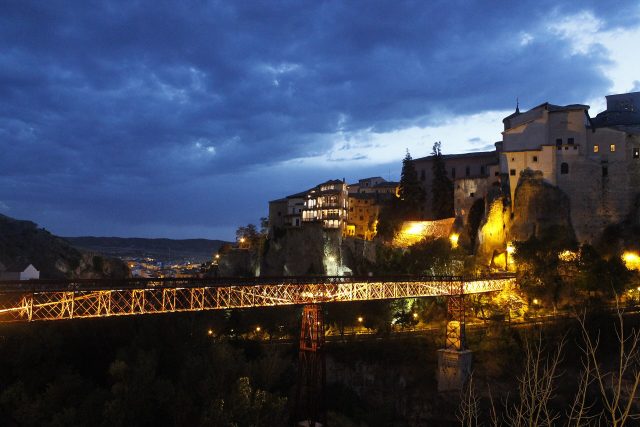
Perched on the edge of a sheer cliff above the Huécar River gorge, the Casas Colgadas—or Hanging Houses—of Cuenca are one of those rare places where history feels alive rather than preserved. These medieval structures cling to the rock face as if defying gravity, their wooden balconies jutting over the abyss below. Yet despite their precarious appearance, they have stood for centuries, not as a whimsical architectural experiment, but as a practical solution to the challenges of a fortified city where space was scarce and terrain unforgiving. In a town where every inch of land was valuable, builders had no choice but to adapt, constructing homes that seemed to grow directly from the stone itself.
The origins of the Hanging Houses stretch back to at least the 15th century, though they likely existed in some form even earlier. Cuenca in the Middle Ages was a thriving hub of trade and craftsmanship, its location on the border between Castile and Aragon making it strategically vital. The first houses were built from wood and stone, with lower floors extending over the gorge on sturdy wooden brackets—a design that saved space while also offering a defensive advantage. Over time, many were rebuilt or reinforced, but the core idea remained: the closer to the edge, the more desirable the home.
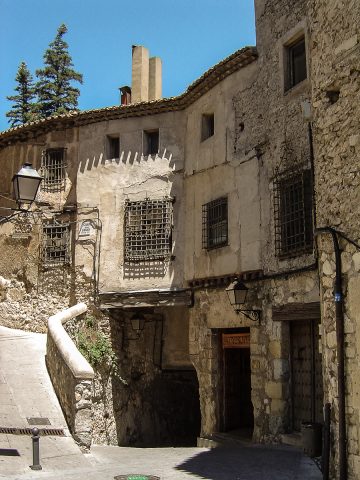
Today, the Hanging Houses are far more than a tourist attraction; they are woven into the fabric of Cuenca itself. Some remain private residences, while others have been converted into cafés, small hotels, or artisan workshops. Walking along the narrow streets that wind along the cliff’s edge feels like stepping into another era. The creak of old wooden doors, the weathered stone walls, and the intricate carvings on the balconies all contribute to a sense of timelessness. The best time to visit is at dusk, when the setting sun bathes the gorge in golden light, casting long shadows that stretch across the river below.
What makes these houses remarkable is not just their daring construction, but their ingenuity. Each structure is a carefully balanced system, with upper floors anchored into the rock by massive beams while lower levels appear to float in midair. Some houses rest on thick wooden stilts, giving them the appearance of giant insects poised to take flight. These supports aren’t just functional—they add to the houses’ charm, making them feel almost alive. Remarkably, many of the original frameworks have survived, though they’ve been repaired and strengthened over the centuries.
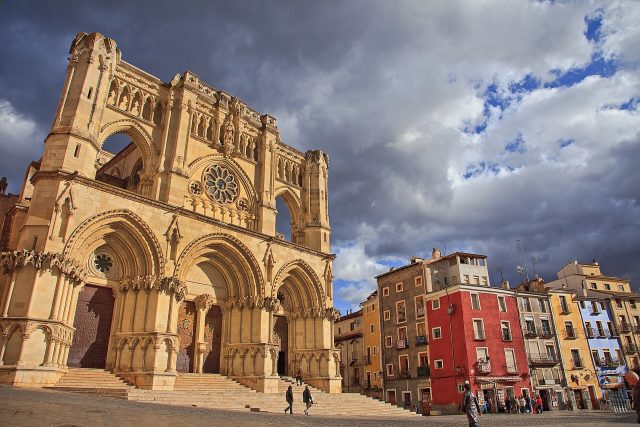
Cuenca is a city of contrasts, and the Hanging Houses are just one facet of its character. Here, medieval quarters coexist with modern neighborhoods, quiet alleyways lead to lively plazas, and the past and present blend seamlessly. Yet the Hanging Houses have become the city’s defining feature, a symbol of how people can adapt to their environment without destroying it. They stand as proof that architecture doesn’t have to dominate nature—it can work in harmony with it.
Exploring the Hanging Houses also offers unexpected perspectives on the city. From certain balconies, the view stretches across the gorge to the river winding below, and on clear days, the surrounding hills—covered in forests and vineyards—come into focus. For a different angle, you can descend to the riverbank and look up, where the houses seem even more fragile and yet impossibly sturdy. The Huécar’s waters are cold and clear, and in summer, locals still come to cool off in its shallows.
Unlike many famous landmarks, the Hanging Houses haven’t been turned into a sterile open-air museum. They remain a living part of Cuenca, which is perhaps why they feel so authentic. There are no crowds here like in Barcelona or Madrid, just a quiet, unassuming atmosphere. You might stop for coffee in a café on the ground floor of one of the houses, listening to the murmur of locals chatting, or simply sit on a bench by the cliff’s edge, watching the light shift over the gorge.
The Hanging Houses are more than an architectural oddity—they’re a testament to how cities can coexist with their surroundings. They remind us that even in the most challenging conditions, people can create something beautiful and enduring. Cuenca may no longer be the fortified stronghold it once was, but its spirit remains unchanged—free, resilient, and just a little mysterious. That’s why these houses still draw the eye, inviting visitors to wonder about the lives lived within their walls and the stories they could tell.