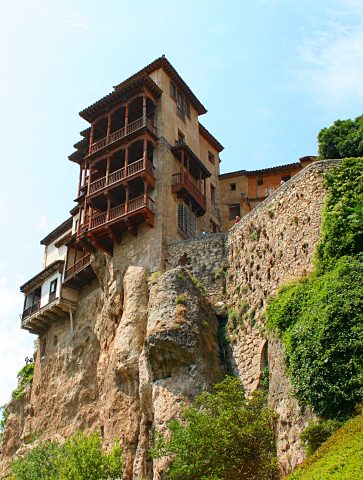
The Museum of Abstract Art in Cuenca is one of those places that doesn’t reveal itself all at once. Instead, it lingers in your mind long after you’ve left, a quiet presence that grows richer with time. Perched in the historic Casas Colgadas—the hanging houses—on the edge of the Huécar River gorge, the museum seems to defy gravity, clinging to the cliffside like the rest of the town. These 15th- and 16th-century buildings were once homes to artisans and merchants, their wooden beams and weathered stone walls bearing the marks of centuries. Now, they frame a collection dedicated to mid-20th-century Spanish abstraction, where the architecture itself feels like part of the art. Narrow staircases wind between rooms, sunlight filters through small windows, and the view beyond—rocky ravines and the river far below—becomes as much a part of the experience as the paintings on the walls.
The museum was founded in 1966 by Fernando Zóbel, a painter with deep ties to Spain despite his Filipino roots. Alongside fellow artists, Zóbel sought to create a space for contemporary art far from the cultural noise of Madrid or Barcelona. His vision was personal: a collection built around the work of friends and collaborators who were reshaping Spanish art in the aftermath of the Civil War. Among them were Antonio Saura, whose jagged, almost violent brushstrokes seemed to claw at the canvas; Manuel Millares, whose torn and stitched canvases evoked raw, bodily struggle; and Rafael Canogar, whose layered textures hinted at both destruction and renewal. These artists, working in the 1950s and 60s, turned to abstraction not as an escape, but as a necessity—a way to express what couldn’t be said aloud in Franco’s Spain.
What makes the museum’s collection so compelling is its focus. There are no filler pieces here, no works included simply because they’re fashionable. Every painting, sculpture, and drawing serves a purpose, telling a story about a generation of artists who used abstraction to navigate a fractured world. For them, it wasn’t just a style; it was a language of resistance, grief, and hope. You can trace the evolution of their ideas through the galleries—from Saura’s explosive compositions to Luis Feito’s more meditative, almost spiritual canvases. Millares’ work stands out in particular, his shredded fabrics and dark, earthy tones suggesting both violence and resilience, as if the canvas itself had survived a battle.
The building itself is as much a part of the experience as the art it holds. The Casas Colgadas, with their uneven floors and low ceilings, create an intimate setting where the boundaries between past and present blur. The museum doesn’t try to modernize or sanitize the space; instead, it embraces the creaks in the floorboards, the way light slants through the windows, casting shadows that seem to dance with the paintings. Moving from one room to another feels like stepping through layers of history, each turn revealing a new perspective—sometimes a striking canvas, sometimes the dramatic view of the gorge outside. There’s no grand spectacle here, just a quiet invitation to slow down and look closely.
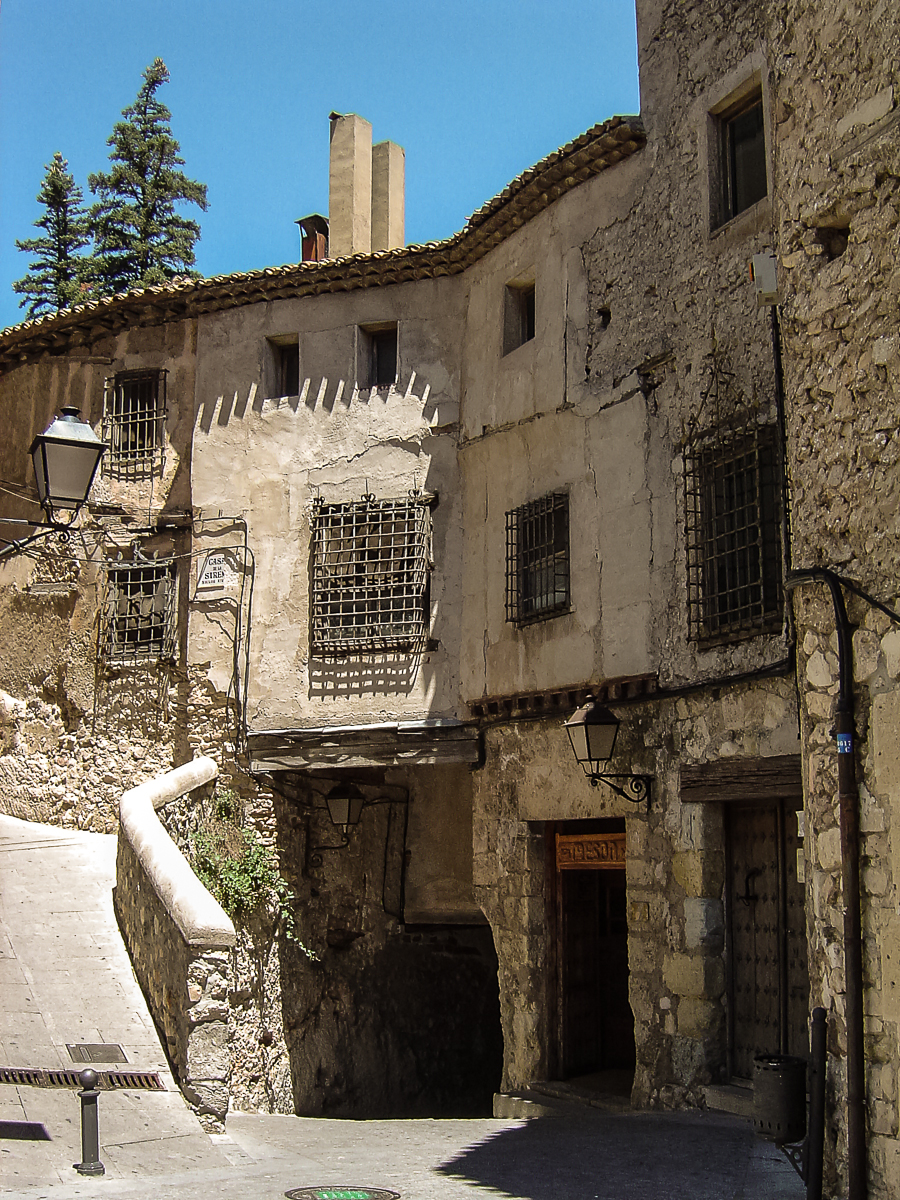
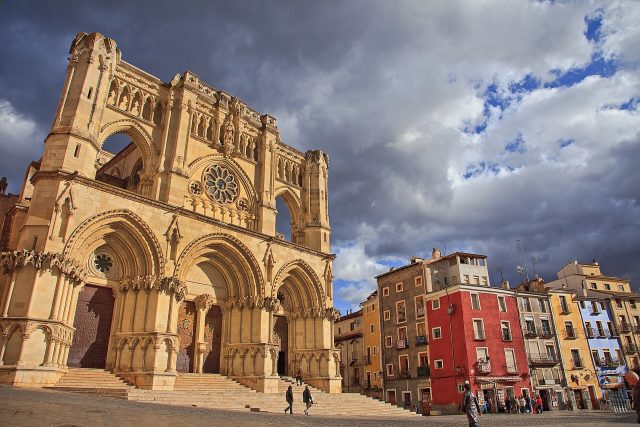
Cuenca is a city that wears its history lightly, where medieval streets and Gothic cathedrals coexist with the everyday rhythm of life. The Museum of Abstract Art fits seamlessly into this landscape, not as a rival to the ancient monuments, but as another thread in the city’s story. It’s a reminder that art doesn’t need to be confined to grand galleries or bustling capitals to matter. Here, in a town suspended between cliffs, abstraction feels at home, as if the very landscape—harsh, dramatic, and unyielding—inspired the artists who once walked these streets.
Visiting the museum is more than just an encounter with art; it’s a glimpse into a pivotal moment in Spain’s history. The mid-20th century was a time of political repression, isolation, and slow recovery from the wounds of the Civil War. The artists represented here worked under censorship, their choices limited, their voices stifled. Yet their abstraction wasn’t an escape from reality—it was a way to confront it. The museum’s collection becomes a document of that era, a testament to how creativity can flourish even in constraint. The paintings don’t just hang on the walls; they carry the weight of their time, speaking in a language that feels urgent even decades later.
What makes the Museum of Abstract Art in Cuenca so unusual is its refusal to play by the rules of modern cultural spaces. There are no flashy exhibitions, no interactive displays, no attempts to dazzle with technology. Instead, there’s a sense of stillness, a space where art isn’t competing for attention but simply exists, waiting to be discovered. It’s the kind of place you might stumble upon while wandering the old town, drawn in by curiosity rather than a guidebook recommendation. And once inside, you realize that the lack of fanfare is part of its charm—the way the light falls on a canvas, the way the wind hums through the gorge outside, the way the past feels present in every corner.
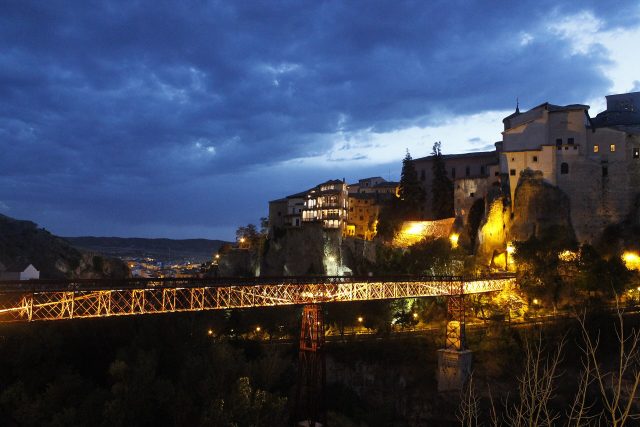
Cuenca is a city where time moves differently. The cliffs, the river, the hanging houses—it all feels suspended, as if the town itself is holding its breath. It’s easy to imagine the artists of the 1950s and 60s walking these same streets, finding inspiration in the play of light on the rocks or the sound of the river far below. The museum isn’t just a tribute to their work; it’s a continuation of their conversation with the city. It doesn’t try to be cutting-edge or trendy. Instead, it preserves the spirit of an era when art wasn’t a commodity, but a way of being. And perhaps that’s why it feels so alive—because it refuses to let that spirit fade.