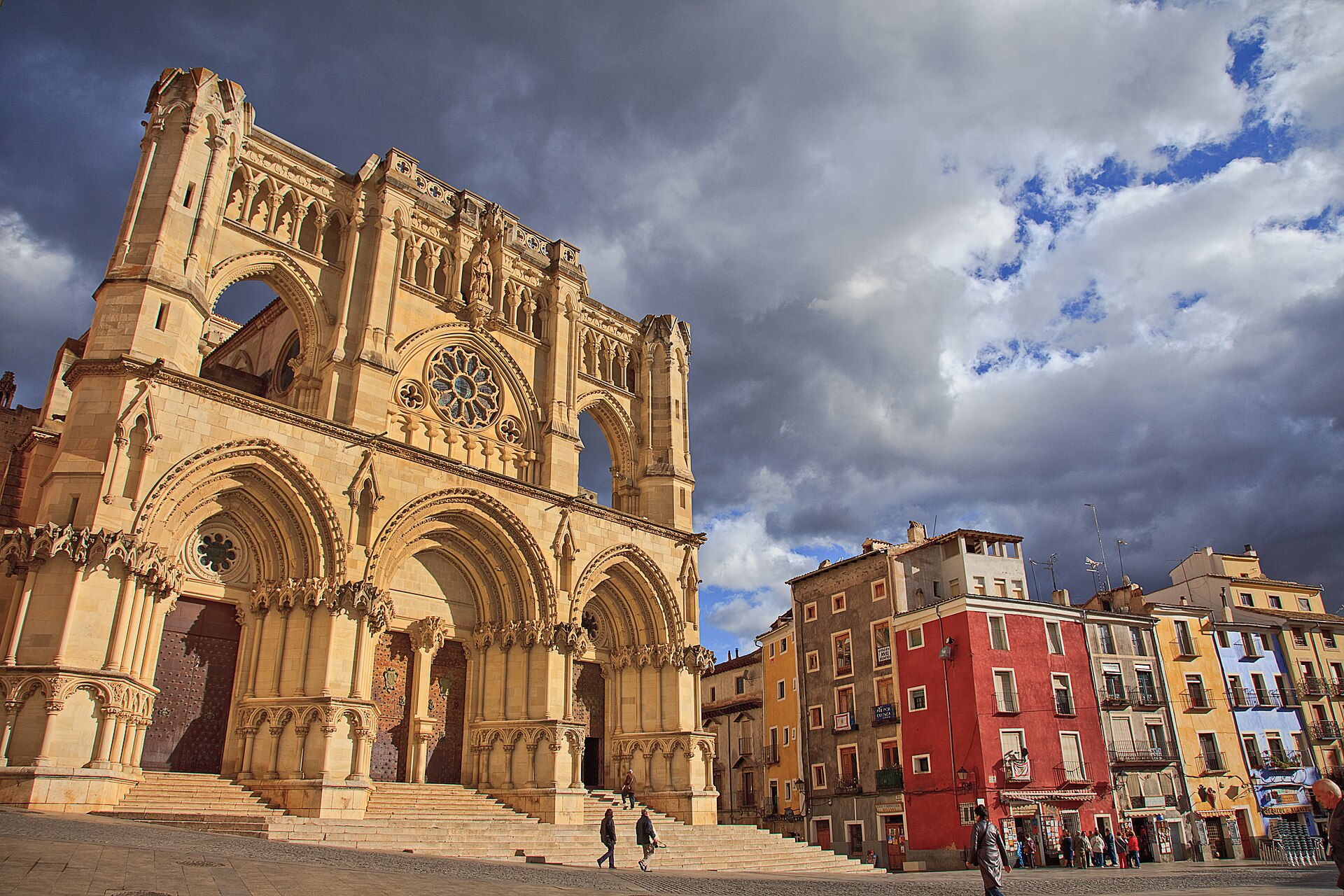
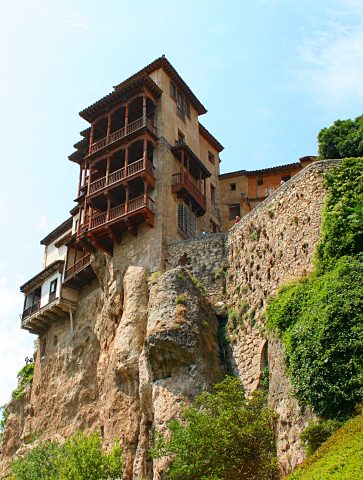
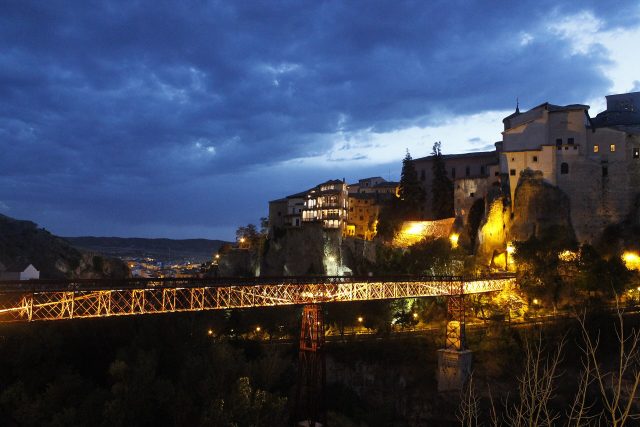
Cuenca’s cathedral clings to the edge of the city’s cliffside, its Gothic spires rising from the rock like natural extensions of the landscape. Below, the Huécar River gorge cuts deep, and the famous hanging houses cling to its sides. But the cathedral holds its ground, a silent witness to centuries.
Building started in 1182, after Alfonso VIII reclaimed Cuenca from Moorish rule. The cathedral was meant to signal a new Christian beginning. What took shape was unusual: French Gothic, brought by Alfonso’s wife, Eleanor of England, mixed with local stone and skill. The pointed arches and early stained glass were lighter than the Romanesque churches common in Castile then. For a frontier town, it was an unexpected choice.
The inside feels both open and close. The main nave stretches upward, its ribbed vaults held by slender columns. The capitals are carved with flowers and leaves. The stained glass, some of Spain’s oldest, dates to the 1200s. These windows don’t blaze with color like later ones—they glow, casting shifting patterns on the stone as the sun moves.
The cathedral didn’t stay the same. In the 1500s, a Renaissance chapel was added. Later, Baroque touches appeared. The most striking change is the *Arco del Obispo*, an arch linking the cathedral to the bishop’s palace. Walk beneath it, and you step from Gothic austerity to Baroque decoration. The arch shows how the building changed with each generation.
Mass is still said here. On feast days, the organ and choir fill the space. On quiet days, only footsteps echo. The side chapels hold stories: tombs worn smooth by time, wooden saints with chipped paint, frescoes faded but still visible. Each corner holds a piece of Cuenca’s past—processions, prayers, private moments.
The attached museum holds religious art. Vestments, reliquaries, and paintings from across Spain fill its rooms. Some are ornate, others plain. A gilded monstrance might sit next to a simple wooden cross. Together, they show the hands that shaped them over centuries.
Cuenca is a city of contrasts, and the cathedral mirrors that. Outside, its walls look like part of the cliff. Inside, the light makes the space feel almost weightless. There’s no hurry here. You might spend an hour studying a carved capital or an afternoon watching the stained glass change with the light.
The cathedral has seen wars, peace, prosperity, and decline. Today, it draws tourists and locals alike. Places like this don’t just hold history—they show how it shapes what comes next. Stand beneath its vaults, and you’re standing where others have stood for centuries.