Perched on the edge of the Huécar Gorge, the Monastery of San Pablo is part of the cliffside. Its stone walls rise into the sky. Built by the Dominican order in the 15th century, it began as a place where monks lived and worked in isolation. Over time, its role shifted—from a spiritual refuge to a landmark defining Cuenca’s skyline. In the 20th century, it became a *parador*, a state-run hotel preserving its history while offering guests a stay.
The architecture blends Gothic and Renaissance styles. The main entrance is marked by tall, pointed windows and sturdy buttresses anchoring the building to the rock. Inside, vaulted ceilings stretch overhead, their ribs meeting in simple intersections. The choir stalls are carved with restrained detail, and faded frescoes hint at the monastery’s past. The cloister, once a place for monks to walk in contemplation, now serves as a courtyard where visitors sit under centuries-old arches.
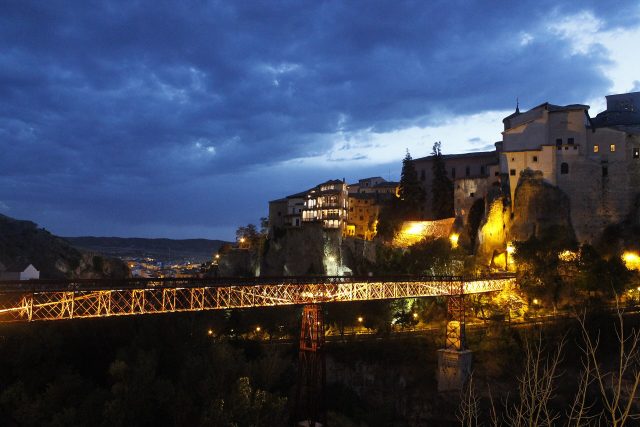
To reach the monastery, you cross the San Pablo Bridge, suspended sixty meters above the gorge. The wooden railings, weathered by time, contrast with the solid stone supports. The walk is a transition from Cuenca’s streets into silence. The wind rushes through the gorge, and footsteps echo on stone. Below, the Huécar River carves the valley. Ahead, the monastery stands like a guardian.
For centuries, San Pablo was a center of learning and faith. Monks copied manuscripts by hand, preserving knowledge when books were rare. It also welcomed pilgrims traveling the Camino de Santiago, offering shelter. By the 19th century, after secularization, it fell into disrepair. Restoration in the mid-20th century turned it into the *parador* it is today. Now, anyone can walk through its doors.
The *parador*’s rooms have high ceilings and thick stone walls. Antique furniture adds warmth. From the windows, the gorge stretches below, the river glinting in sunlight. Cuenca’s old town is a fifteen-minute walk away, but here, the city’s noise fades. Breakfast is served in the former refectory, where monks once ate in silence. The restaurant is open to all. The food is local, with recipes passed down through generations.
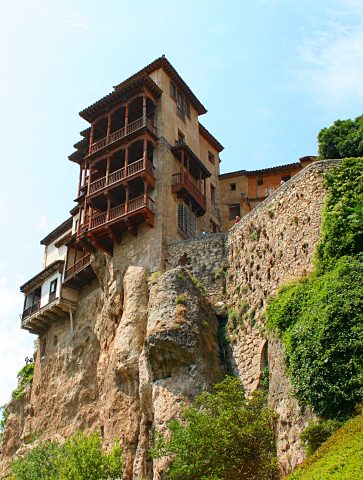
Cuenca is famous for its *Casas Colgadas*. San Pablo offers something else: history in every stone. It’s for those who want to understand how people once lived—not through spectacle, but through enduring details.
As evening falls, the monastery glows in golden light. Shadows stretch across the courtyard. The air cools. From the viewpoint near the *parador*, Cuenca’s lights flicker to life, reflected in the mist rising from the gorge. The place feels alive, not like a relic.
San Pablo has seen centuries of change. It has been a monastery, a ruin, and now a place where travelers pause. Its walls have witnessed empires rise and fall, faith shift, and a city endure. Today, it connects past and present, letting you step into history without leaving the modern world behind.