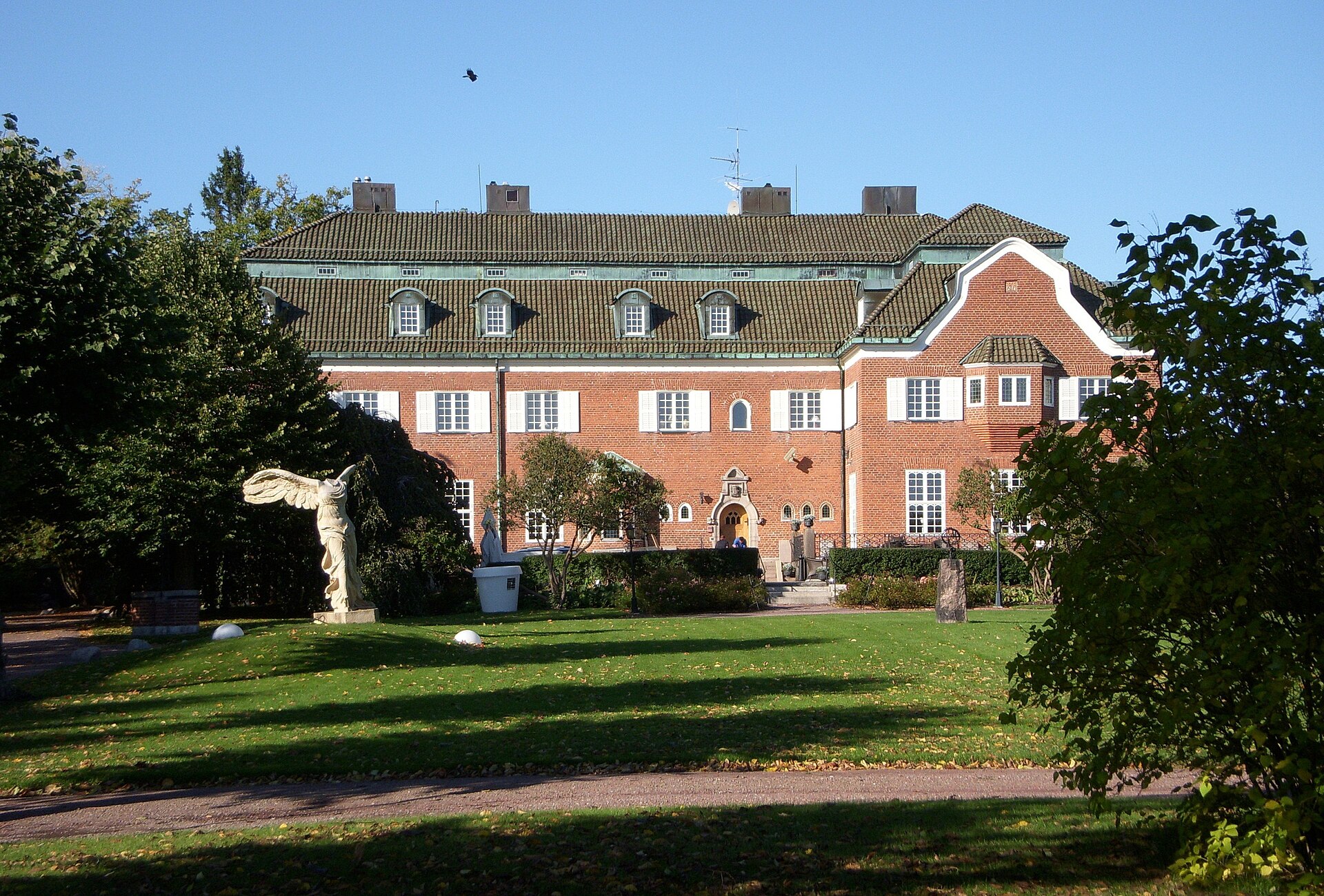
Villa Pauli is one of those rare houses that seem frozen in time, preserving not just its walls but the very spirit of its era. Nestled in Djursholm, a quiet suburb of Stockholm, it stands along the shore of Edsviken Bay, where gentle waves lap against granite cliffs and pine trees cast long shadows over manicured lawns. Built in the early 20th century, this mansion is more than an architectural landmark—it’s a piece of Sweden’s bourgeois history, a symbol of how tastes, technology, and ideas of comfort evolved during a transformative period.
The villa’s architecture strikes a balance between tradition and innovation. Designed in the Swedish National Romantic style, it emerged as a response to European Art Nouveau in the early 1900s. There’s no excess or ostentation here—just solid stone walls, steep tiled roofs, tall windows with delicate glazing, and wooden balconies that exude a sense of permanence. Yet there’s also a touch of English cottage charm in the details: cozy, refined, and effortlessly elegant. The house feels like a natural extension of the landscape, its granite foundations echoing the nearby cliffs and its wooden elements blending with the surrounding forest.
The story of Villa Pauli is closely tied to the Pauli family, one of Sweden’s most influential dynasties of the time. Ernst Pauli, an industrialist and patron of the arts, commissioned the house as a summer retreat, but it soon became a gathering place for artists, scientists, and politicians. In those years, Djursholm was transforming from a rural backwater into an exclusive suburb, and Villa Pauli became a symbol of that change. Evenings here were filled with chamber music, debates about the nation’s future, and discreet political discussions—Sweden at the time was navigating its role in a rapidly changing world.
The interiors, as described in surviving accounts, embodied the refined yet understated taste of the era. Dark oak paneling, intricately carved stone fireplaces, stained-glass windows with floral motifs, and handcrafted furniture created an atmosphere of warmth, a quality especially cherished in the Nordic countries. Lighting was carefully considered: large windows maximized natural daylight, while in the evenings, lamps with colored glass shades cast a soft glow across the rooms. The house even had electricity—a rarity at the time—highlighting the family’s status.
Today, Villa Pauli remains a private residence, and access to its interiors is limited. But even from the outside, the house and its surrounding park offer a glimpse into the lives of those who valued comfort without ostentation. The English-style garden, with its winding paths, old lime trees, and vibrant flowerbeds, feels like a living painting in summer. In winter, the scene shifts: bare branches, snow-covered lawns, and the frozen bay create a quiet, almost fairy-tale landscape.
Djursholm itself has a distinct character. Unlike bustling Stockholm, it’s a place of stillness, where the only sounds are the cries of gulls and the rustle of leaves. The streets are lined with villas and mansions, many over a century old, and a promenade runs along the shore, where locals walk their dogs or sit on benches, gazing at the water. Villa Pauli fits seamlessly into this setting, a reminder that even in a fast-moving world, some places still move at a slower pace.
Though the villa isn’t a museum and its interiors remain hidden, its exterior tells a story of its own. It speaks of the people who lived here, the tastes and ideals of their time, and how architecture can be both functional and beautiful. Walking along Djursholm’s waterfront, it’s easy to imagine carriages pulling up to the house a century ago, guests in evening wear ascending the granite steps for an evening of conversation by the fire.
Villa Pauli isn’t just a house—it’s a fragment of living history. It reminds us that behind every old building lie human stories, dreams, and disappointments, along with visions of what an ideal home should be. That’s why places like this draw the eye: they offer a fleeting connection to the past, a chance to feel its presence and understand that some things—beauty, comfort, harmony with nature—never lose their value.