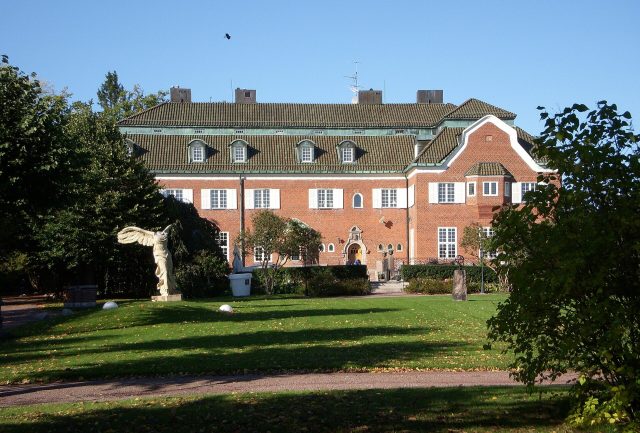
Djursholmsbrunn Park is one of those quiet corners near Stockholm where people come not for crowds or grand sights, but simply to step away from the noise of the city. It stretches along the shore of Edsviken Bay, where the water shifts between gentle ripples on calm days and restless waves when the wind picks up. There are no tour buses here, no souvenir stands—just winding paths, trees, and benches where you can sit for hours, watching the light change over the water.
The park took shape in the early 20th century, when Djursholm was transforming from a rural outpost into an affluent suburb. Wealthy Stockholmers began building villas here, and the park became part of this new landscape. Unlike formal public gardens, it was designed to feel like a natural extension of the private estates around it. The paths meander without purpose, lawns fade into wild thickets, and the whole place has the easy, unforced charm of a place that has always been there.
There’s little in the way of grand architecture, but a few details stand out. A small bridge crosses a stream leading to an old spring, which gave the park its name. The water is clear, and locals sometimes fill bottles from it, though it’s not officially treated for drinking. Nearby, a modest granite obelisk honors the park’s founders. It’s easy to miss, but if you look closely, you’ll see names and dates carved into the stone.
Summer is the liveliest time here. The linden and oak trees cast deep shade, and the air smells of grass and damp earth. On weekends, families come with children—some spread out picnics by the water, others stroll along the wide paths with strollers. In autumn, the park empties, but the colors deepen: yellow and red leaves blanket the ground, and the bay darkens under the overcast sky. Winter turns it into a quiet, snow-covered expanse, with only the occasional footprint to suggest anyone has passed through.
This isn’t a place for guided tours or Instagram photos. It’s for those who want to escape the city’s rush and settle into the slower rhythm of suburban life. There’s no set route, just the freedom to wander—toward the water, or deeper into the park, where old villas peek through the trees. Some of these homes date back to the early 1900s, their facades still looking as if time has barely touched them.
The park is deeply tied to Djursholm’s history, one of Stockholm’s most prestigious neighborhoods. In the 19th century, industrialists, bankers, and artists moved here seeking refuge from the city. They brought not just wealth but ideas, shaping the area with architecture that borrowed from English cottages and Norwegian estates. The park became part of this vision—a place where nature and human design coexist without fuss.
Today, Djursholmsbrunn remains a spot for unhurried walks. There are no cafes or attractions, just benches with views of the water and a silence broken only by gulls or the rustle of leaves. In spring, apple and cherry trees bloom, while in summer, fishermen cast their lines from the rocks along the shore. Autumn is especially striking: the bay seems wider, the sky lower, and the whole scene takes on a quiet depth.
The park asks nothing of its visitors except respect for its tranquility. Loud conversations or rowdy groups feel out of place here—it’s a space for those who appreciate stillness and the chance to be alone with their thoughts. That might be why it rarely appears in guidebooks. It’s not for everyone, just for those willing to slow down and find beauty in simplicity.