Perched on the narrow promontory of Sirmione, where the waters of Lake Garda lap against the shore, Villa Meneghini-Callas feels like a place where time moves differently. It’s not just the setting—though the lake’s shifting blues and the distant silhouette of mountains certainly play their part—but the quiet sense that history lingers here, woven into the very walls of the house. This was once the retreat of Maria Callas, one of the most electrifying voices of the 20th century, a woman whose artistry and tumultuous life still captivate those who hear her name. The villa itself is unassuming, a modest two-story building with whitewashed walls and terracotta tiles, its charm lying not in grandeur but in the intimacy of its spaces. From the windows, the lake seems almost close enough to touch, and on still days, the sound of water lapping against the shore drifts through the rooms.
The villa was built in the early 1900s, but it wasn’t until the 1950s, when Giovanni Battista Meneghini—Callas’s husband and manager—purchased it, that it became a sanctuary for the soprano. Between grueling rehearsals and performances, she would retreat here, seeking solace in the quiet rhythms of lake life. It was a place to prepare for roles that would later define her career, to host friends who were themselves luminaries of the era, and to escape, if only briefly, the relentless scrutiny of the public eye. Yet the villa also bore witness to some of the most dramatic chapters of her life. It was here that her affair with Aristotle Onassis began, a relationship that would later unravel her marriage and become one of the most talked-about scandals of the time. The house, in its understated way, holds these contradictions—peace and passion, artistry and upheaval—within its walls.
Today, the villa remains open to visitors, though it resists the label of a museum. There are no glass cases displaying Callas’s gowns or annotated timelines of her life, no curated exhibits breaking down her legacy. Instead, it offers something more elusive: a sense of the past as it might have been lived. The interiors have been preserved much as they were during her time, with high ceilings, antique furniture, and large windows that frame the lake like a living painting. The air carries the faintest echo of the conversations that once filled these rooms—of composers debating scores, writers reading aloud, and Callas herself, perhaps humming a phrase from *Norma* or *La Traviata* as she gazed out at the water. It’s easy to imagine her here, wrapped in a shawl on a cool evening, the scent of jasmine from the garden drifting through the open doors.
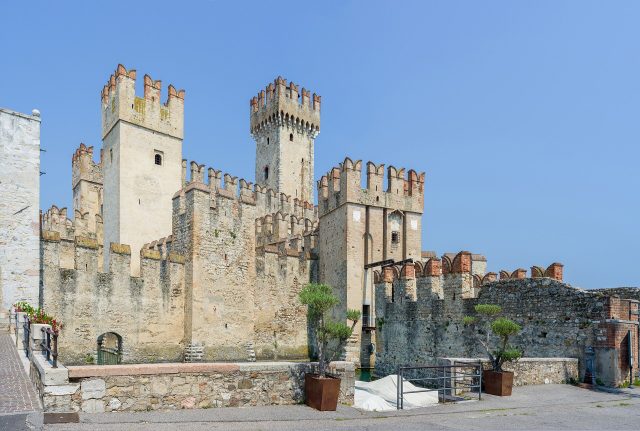
Sirmione, the town that cradles the villa, has its own layered history. The narrow peninsula it occupies has been inhabited since Roman times, and the imposing Scaliger Castle, with its crenellated walls and moat, stands as a reminder of the medieval power struggles that once shaped this region. Yet Sirmione has long since shed its martial past, reinventing itself as a haven for those seeking beauty and tranquility. The thermal springs that bubble beneath the town have drawn visitors for centuries, and today, the streets are lined with cafés and boutiques catering to travelers who come for the lake’s clear waters and the gentle pace of life. The villa fits seamlessly into this landscape, its cultural weight adding depth to the town’s allure without overshadowing its natural charm.
A visit to Villa Meneghini-Callas is less about ticking off a tourist attraction and more about stepping into a moment suspended in time. There are no crowds here, no guided tours rushing you from room to room. Instead, you’re left to wander at your own pace, to sit in the garden where Callas once walked, or to stand by the windows where she must have stood, watching the light dance on the lake. Occasionally, the villa hosts small cultural events—concerts, poetry readings, or exhibitions—that breathe new life into its history, but even without them, the place feels alive in its own quiet way. It’s the kind of spot where you might find yourself lingering longer than intended, reluctant to leave the stillness behind.
Lake Garda itself is a character in this story, its presence inescapable and ever-changing. The largest lake in Italy, it stretches between the regions of Lombardy, Veneto, and Trentino, its shores dotted with olive groves, lemon trees, and villages that seem untouched by time. The climate here is milder than in the surrounding Alps, making it a year-round destination. In summer, the lake is a playground for sailors and swimmers, while in winter, the mist rising from the water lends the landscape a dreamlike quality. The villa, with its lakeside perch, feels like a bridge between the town and the water, a place where the natural and the cultural merge effortlessly.
For those who know Callas’s story, the villa is a pilgrimage of sorts—a chance to connect with the woman behind the myth. But even for those who come without that knowledge, it offers something rare: a sense of authenticity. There’s no attempt to sensationalize its history or dress it up in spectacle. Instead, it invites you to slow down, to notice the details—the way the light slants through the windows in the afternoon, the creak of the wooden floors, the distant hum of a boat engine on the lake. It’s a reminder that history isn’t always about grand gestures or monumental events; sometimes, it’s found in the quiet corners of the world, in places that feel as though they’ve been waiting for you to discover them.
Sirmione, with its cobbled streets and lakeside promenades, is the perfect companion to the villa. The town has a way of making time feel elastic, whether you’re sipping an espresso at a café, exploring the ruins of a Roman villa submerged in the lake, or simply watching the sunset paint the water in shades of gold and pink. The villa, in turn, adds a layer of depth to the experience, grounding the beauty of the landscape in stories of human passion and creativity. It’s a place that doesn’t demand your attention but rewards those who choose to linger, offering a glimpse into a world where art, nature, and history converge in the most unassuming of ways.