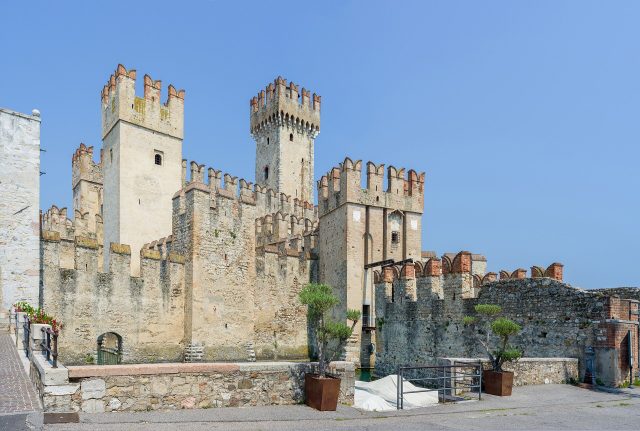
Sirmione is a quiet lakeside town on the shores of Lake Garda, where the past lingers in the warm breeze off the water. It’s a place of thermal springs, a medieval castle, and narrow streets that wind toward the lake, but its most intriguing corner lies at the very tip of the peninsula. Here, where the cliffs drop sharply into the water, the ruins of an ancient Roman villa known as the Grotto of Catullus stand as a silent witness to centuries gone by.
The name evokes the Roman poet Gaius Valerius Catullus, who lived in the first century BCE and wrote verses about love, longing, and the beauty of nature. Though legend claims he retreated here to escape the chaos of Rome, the villa itself was built after his death. Archaeologists have traced its origins to a wealthy Roman family who chose this dramatic spot for their summer retreat. Still, the connection to Catullus endures, lending the ruins a poetic air that feels almost tangible.
The villa sprawls across nearly two hectares of rocky shoreline, its remains clinging to the slope like fragments of a forgotten dream. What survives are the outlines of walls, the stubs of columns, and patches of mosaic flooring—geometric patterns in faded hues that hint at the luxury once enjoyed here. The complex was designed in tiers, descending toward the lake, with living quarters, baths, gardens, and even a small private harbor. Below ground, chambers carved directly into the rock stored wine and supplies, their cool darkness a stark contrast to the sunlit terraces above.
The architecture reflects the style of Roman country villas from the late Republic and early Imperial periods. Brick and stone were used in construction, with vaulted ceilings and simple yet elegant mosaics. Over time, the site evolved; in the Middle Ages, a fortified settlement rose among the ruins, and remnants of its walls and towers still stand. These later additions tell their own story, a reminder that this place has always been shaped by those who lived here.
From the highest terraces, the view is breathtaking. Lake Garda stretches out in shades of blue and emerald, its surface rippling under the wind. In the distance, mountains rise like a hazy backdrop, their peaks softened by the light. As the sun sets, the stones of the villa glow golden, as if warmed by the same fire that once lit the rooms of its long-gone inhabitants.
Visiting the Grotto of Catullus is less about seeing a monument and more about stepping into a different time. It’s easy to imagine the villa in its prime—the murmur of voices in the gardens, the splash of water in the baths, the quiet rustle of scrolls in a shaded colonnade. The ruins don’t just preserve history; they make it feel alive, if only for a moment.
Unlike many of Italy’s more famous sites, the Grotto of Catullus remains relatively untouched by crowds. There are no tour buses or loud groups, just the sound of waves lapping against the shore and the occasional whisper of wind through the olive trees. The path leading up to the ruins is steep, winding through vineyards and groves, but the effort is part of the experience. Here, history isn’t something you observe from behind a rope—it’s something you walk through, touch, and even sit upon.
If you find yourself in Sirmione, don’t let your visit end with the thermal baths or a stroll through the old town. Take the time to climb to the northern tip of the peninsula. Sit on the ancient steps, listen to the water, and let the silence settle around you. It’s not hard to picture Catullus here, reciting his verses to the wind, his words carried across the centuries to this very spot. The ruins may not have been his, but the spirit of the place is undeniably his own.