Perched on a gentle hill at the northern tip of Sirmione’s peninsula, the Church of San Pietro in Mavino stands as a quiet guardian of time. Its stone walls rise above olive groves and vineyards, offering a view of Lake Garda below. There are no grand facades or gilded domes—just the dignity of a place that has witnessed centuries unfold. The church’s charm lies in its simplicity, in the way it blends into the landscape.
The origins of San Pietro in Mavino date to the 8th century, though some believe its foundations may be older. The name *Mavino* comes from the Latin *in summas vineas*, meaning "among the highest vineyards." In medieval times, the church served as a place of worship and a lookout point, its thick walls offering protection to villagers. Inside, frescoes from the 12th to the 16th centuries depict saints and biblical scenes, painted by unknown artists.
The architecture is Lombard Romanesque—sturdy, unadorned, and built to last. The exterior is local stone, its narrow windows like arrow slits. The interior has three naves supported by columns with roughly carved capitals. The wooden ceiling, with exposed beams, adds warmth, and the altar is modest. The bell tower, added later, shows Venetian influence, a remnant of Sirmione’s time under Venetian rule.
The frescoes are the church’s treasure. The oldest, from the 12th century, follow Byzantine tradition—figures are rigid, faces solemn. Later works, from the Renaissance, show more movement, depicting Christ’s life and saints’ martyrdoms. One striking image is Saint Peter holding the keys to Heaven. Though faded, these paintings carry devotion and craftsmanship from another era.
San Pietro in Mavino has remained in use through the centuries. Restoration efforts have been careful, preserving its character. In the 19th century, historians noted the church, but interventions were minimal—just enough to stabilize the structure and clean the frescoes. Today, it still holds occasional services, a sanctuary for locals who see it as part of their heritage.
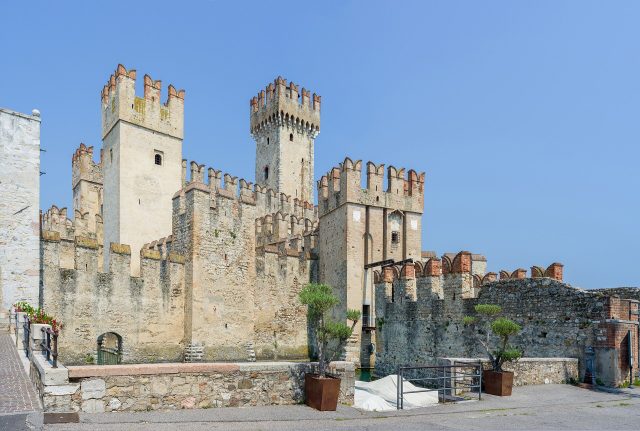
The church sits among olive groves. The scent of herbs lingers in the air. From the hill, the view of Sirmione is unbroken—red-tiled roofs, the Scaliger Castle’s battlements, and Lake Garda’s shimmering expanse. On clear days, Lombardy’s hills stretch into the horizon. You can imagine those who once stood here, their lives shaped by the land and the lake.
This isn’t a place that draws crowds. There are no souvenir stalls or guided tours. Visitors can sit on the stone bench outside, studying the frescoes or soaking in the stillness. Locals sometimes stop by to light a candle or steal a moment of solitude. For them, the church is more than a monument—it’s a link to the past.
Sirmione is known for luxury villas, thermal spas, and waterfronts, but San Pietro in Mavino offers something else. Here, time moves at its own pace. There’s no need to hurry. Just come, sit on the worn stone steps, and let the place speak. Sometimes, understanding comes not from facts or dates, but from the quiet impressions left behind.