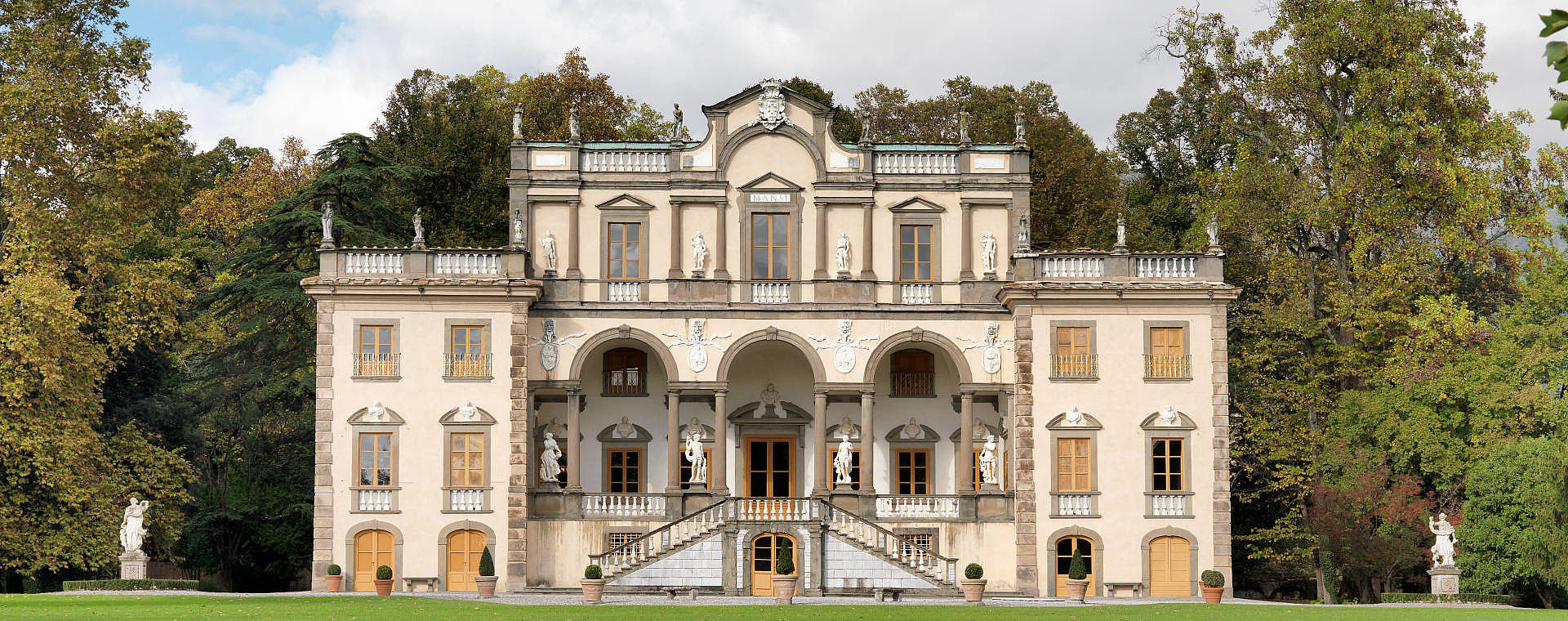
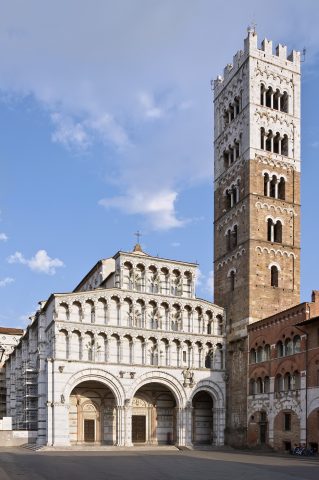
Villa Mansi is one of those quiet corners of Tuscany where time seems to slow down. Perched on a gentle hillside just outside Lucca, it overlooks a valley of olive groves and vineyards, its presence understated yet deliberate. The villa’s facade is unassuming, almost austere, with none of the flamboyance of Baroque palaces. Instead, there’s a quiet elegance in its proportions, in the way the windows catch the Tuscan light, as if designed to frame the landscape beyond. It doesn’t demand attention—it simply waits, patient and enduring, like the land itself.
The villa’s history stretches back to the 16th century, when it belonged to the Cenami family as a modest country estate. It wasn’t until the following century, under the ownership of the Mansi family, that it took on its current form. The architect Filippo Juvarra, known for his grand designs in Turin and Madrid, was brought in to refine the villa, introducing subtle Baroque touches while preserving its restrained character. Juvarra’s involvement wasn’t a formal commission but rather a collaboration that lent prestige to the project. Inside, the frescoes and stucco work still whisper of the villa’s past, not just as a setting for lavish gatherings but as a lived-in home where generations of aristocrats went about their daily lives.
The gardens at Villa Mansi are a study in balance. Designed in the Italian style, they unfold in precise geometric patterns, with terraces, fountains, and carefully trimmed hedges. Yet there’s nothing overly theatrical about them—no grand cascades or dramatic vistas like those at Villa d’Este or the Boboli Gardens. Instead, they offer a sense of tranquility, with shaded paths leading to small pavilions where the view opens up over the surrounding countryside. In summer, roses bloom along the walkways, while autumn brings the scent of ripe fruit from nearby orchards. It’s easy to see why this place feels like the essence of Tuscany: here, nature and architecture don’t compete but coexist, each enhancing the other.
The interiors of the villa tell their own stories. The furniture, paintings, and tapestries aren’t just relics behind glass—they feel like remnants of a life once lived. The library is particularly striking, with its collection of 18th-century books, many of them once owned by the Mansi family. The shelves hold works on philosophy, history, and even agriculture, a reminder that the villa’s owners weren’t just idle aristocrats but landowners who took an active interest in their estates. One room displays old maps of Tuscany, marked with the boundaries of the Mansi family’s holdings. These maps hint at the villa’s role as more than a retreat—it was a hub of activity, where business was conducted, guests were entertained, and family lore was passed down through the generations.
Today, Villa Mansi remains open to visitors, though it hasn’t achieved the fame of other Tuscan landmarks. That’s part of its charm. There are no crowds here, no rushed tours—just the quiet pleasure of wandering through rooms that still feel lived-in. Some of the original interiors have been lost or altered over the centuries, but what remains offers a glimpse into life during the Enlightenment, when elegance wasn’t just about opulence but about a certain understated refinement. The villa doesn’t overwhelm; it invites you to linger, to notice the details—the way the light falls across a fresco, the creak of an old floorboard underfoot.
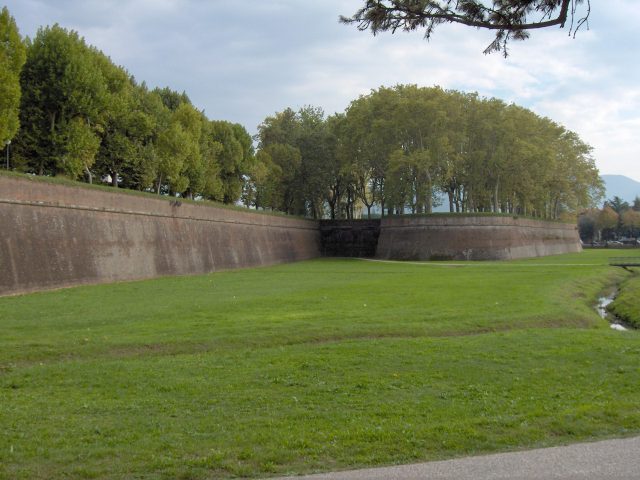
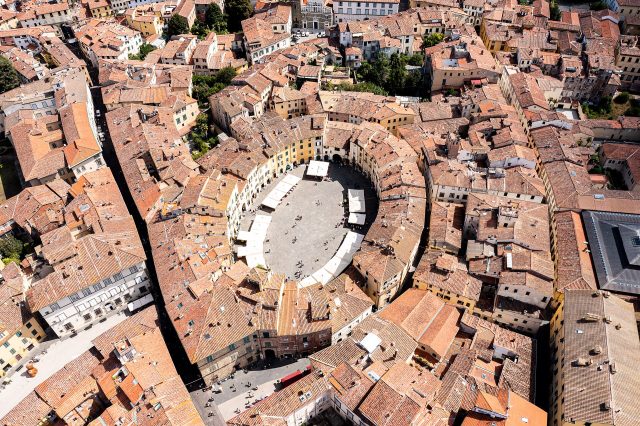
The area around the villa is worth exploring as well. Lucca, just a few kilometers away, is one of Tuscany’s most charming cities. Unlike Florence or Siena, it’s free of tourist crowds, with a relaxed pace that makes it easy to wander its medieval streets. The city’s Renaissance walls, wide enough to walk or cycle along, encircle a maze of narrow alleys, hidden piazzas, and small cafés where you can try *buccellato*, a local sweet bread studded with raisins and pine nuts. From Villa Mansi, it’s an easy bike ride or even a pleasant walk into Lucca, following a winding road that cuts through the rolling hills. Many visitors use Lucca as a base, stopping by the villa not as a must-see attraction but as a quiet detour, a place to pause and soak in the slower rhythm of the countryside.
What makes Villa Mansi special isn’t any single feature but the way it all comes together—the harmony of the architecture, the stillness of the gardens, the sense of history that lingers in the air. It’s not a place that dazzles at first sight. Instead, its beauty reveals itself gradually, in the play of light on the walls, in the hush of the cypress-lined paths, in the stories tucked into the margins of old books. It doesn’t try to impress; it simply endures, much like the Tuscan hills that have stood unchanged for centuries. That’s why some people return—because here, in this unassuming villa, they find something rare: a blend of simplicity and sophistication that feels increasingly hard to come by in the modern world.