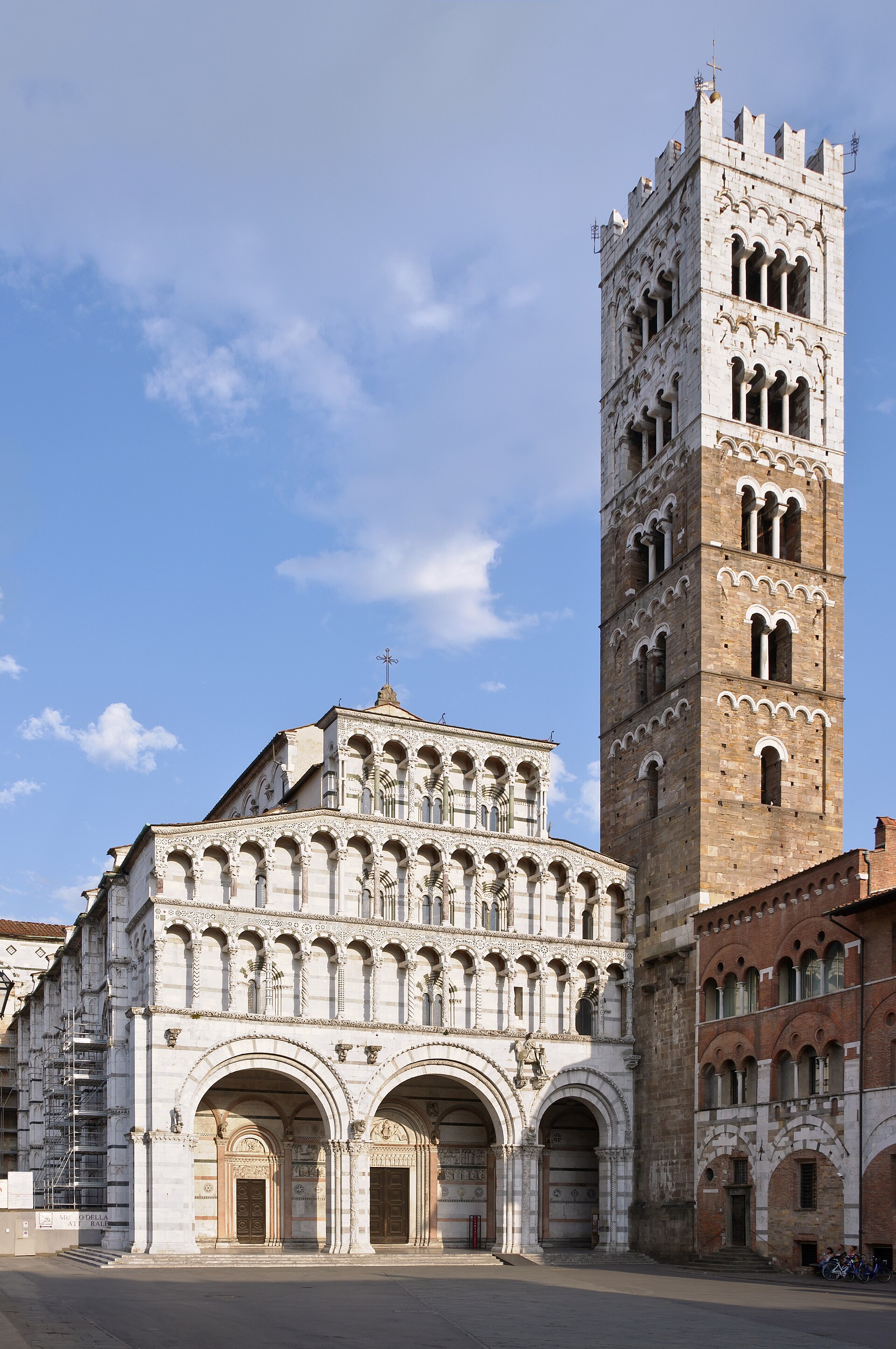
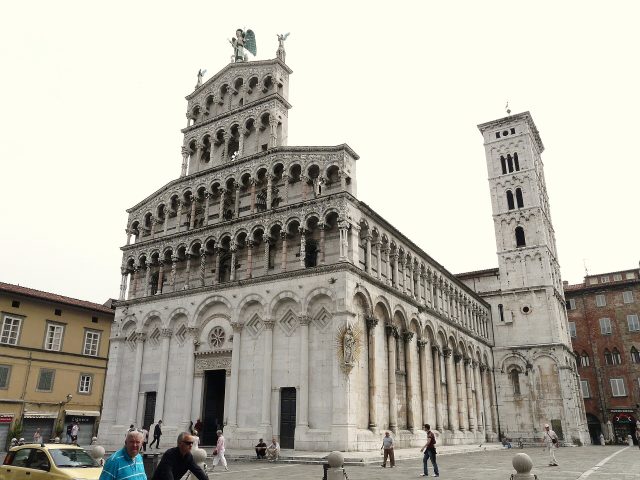
Lucca’s Cathedral of San Martino stands as more than just the city’s principal church—it is a place where history and architecture merge so seamlessly that time itself seems to move differently here. Its origins trace back to the sixth century, though the building has been reshaped over the centuries, absorbing influences from different eras while retaining a remarkable sense of harmony. The facade is the first thing that strikes visitors, adorned with intricate marble inlays that give it an almost delicate appearance despite its solid stone structure. Three tiers of arches rise above the entrance, their columns crowned with elaborately carved capitals, while reliefs depicting scenes from the lives of Christ and the saints add depth and movement. The central portal draws particular attention, its depiction of the Last Judgment alive with figures of the saved and the damned, their expressions frozen in a moment of divine reckoning.
Inside, the cathedral feels unexpectedly airy and luminous, a departure from the heavier atmosphere typical of Romanesque architecture. Soaring vaults and slender columns guide the eye toward the high altar, where one of Lucca’s most revered relics is kept—the Volto Santo, a twelfth-century wooden crucifix. According to legend, it was carved by Nicodemus, a witness to Christ’s Passion, and arrived in Lucca by miraculous means, drifting ashore in a boat with no oars. Today, the crucifix is draped in rich fabrics, and each September, it is carried through the city’s streets in a solemn procession, a tradition that has endured for centuries.
Among the cathedral’s many treasures is the Chapel of San Regolo, home to the relics of a sixth-century bishop. The chapel’s interior is adorned with frescoes by local artists, its intimate scale offering a quiet contrast to the grandeur of the nave. Nearby lies the tomb of Ilaria del Carretto, a masterpiece of early Renaissance sculpture created by Jacopo della Quercia in the early fifteenth century. Carved from white marble, the tomb depicts a young woman in peaceful repose, a small dog curled at her feet—a symbol of fidelity. The craftsmanship is so lifelike that visitors often linger, studying the delicate folds of her gown or the serene expression on her face, as if expecting her to stir at any moment.
The cathedral has long been intertwined with Lucca’s history, its walls bearing witness to coronations, political decisions, and the daily lives of the city’s inhabitants. During medieval sieges, it served as a refuge for the people of Lucca, its thick stone walls offering protection. One of its most intriguing features is a labyrinth set into the floor of a side chapel, a symbol of spiritual pilgrimage and penance. In earlier times, pilgrims were said to trace its path on their knees, reciting prayers as they went. Though the practice has faded, the labyrinth remains a curious reminder of how faith and ritual have evolved over the centuries.
Beyond its religious significance, the cathedral has always been a haven for art and culture. Over the centuries, it has attracted some of Italy’s finest craftsmen, from medieval stone carvers to Renaissance painters. The frescoes in one of the side chapels are attributed to Domenico Ghirlandaio, while the sacristy holds a collection of rare liturgical objects, including a thirteenth-century silver reliquary. The cathedral’s archives also preserve a trove of ancient manuscripts and books, though access to these is carefully restricted to protect their fragile pages.
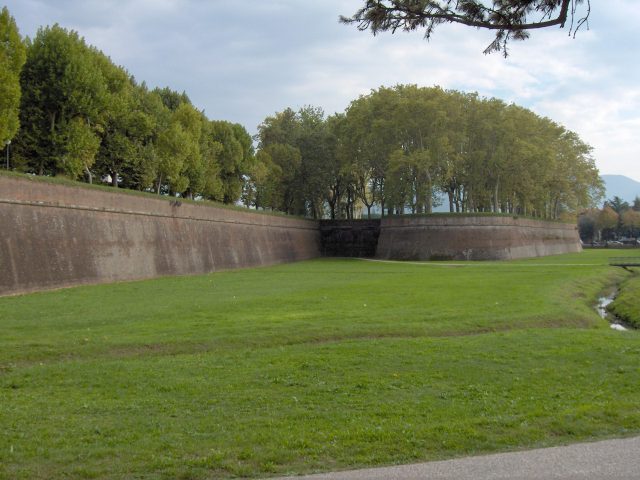
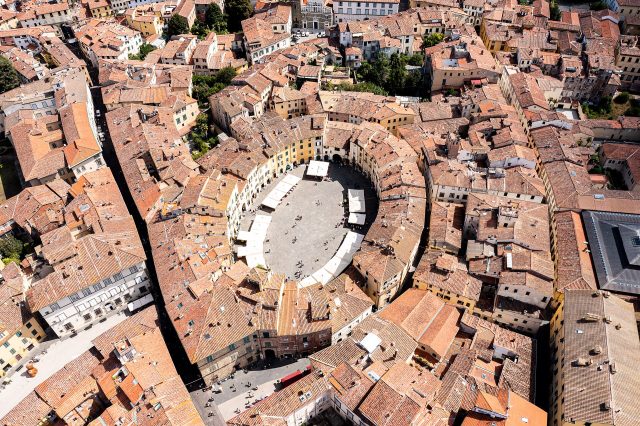
A visit to San Martino is as much about experiencing the atmosphere of old Lucca as it is about admiring its art and architecture. The city, encircled by its well-preserved medieval walls, moves at a leisurely pace, and the cathedral lies at its heart. Inside, the quiet is broken only by the echo of footsteps on the stone floor, while outside, the view from the bell tower stretches across red-tiled rooftops and the rolling hills of Tuscany. On sunny days, light filters through the stained glass, casting warm hues across the interior, while on overcast afternoons, the cathedral takes on a more mysterious air, as if transporting visitors to another time.
What makes San Martino truly special is the way the past lingers here, not as something distant or preserved behind glass, but as a living presence. Every stone, every fresco, and every sculpture has a story to tell, and even those who do not share its faith often find themselves drawn in. This is not a museum but an active place of worship, where prayers are still offered and bells still ring out over the city. In Lucca, time moves slowly, and there is no need to rush—here, the past is always close at hand.