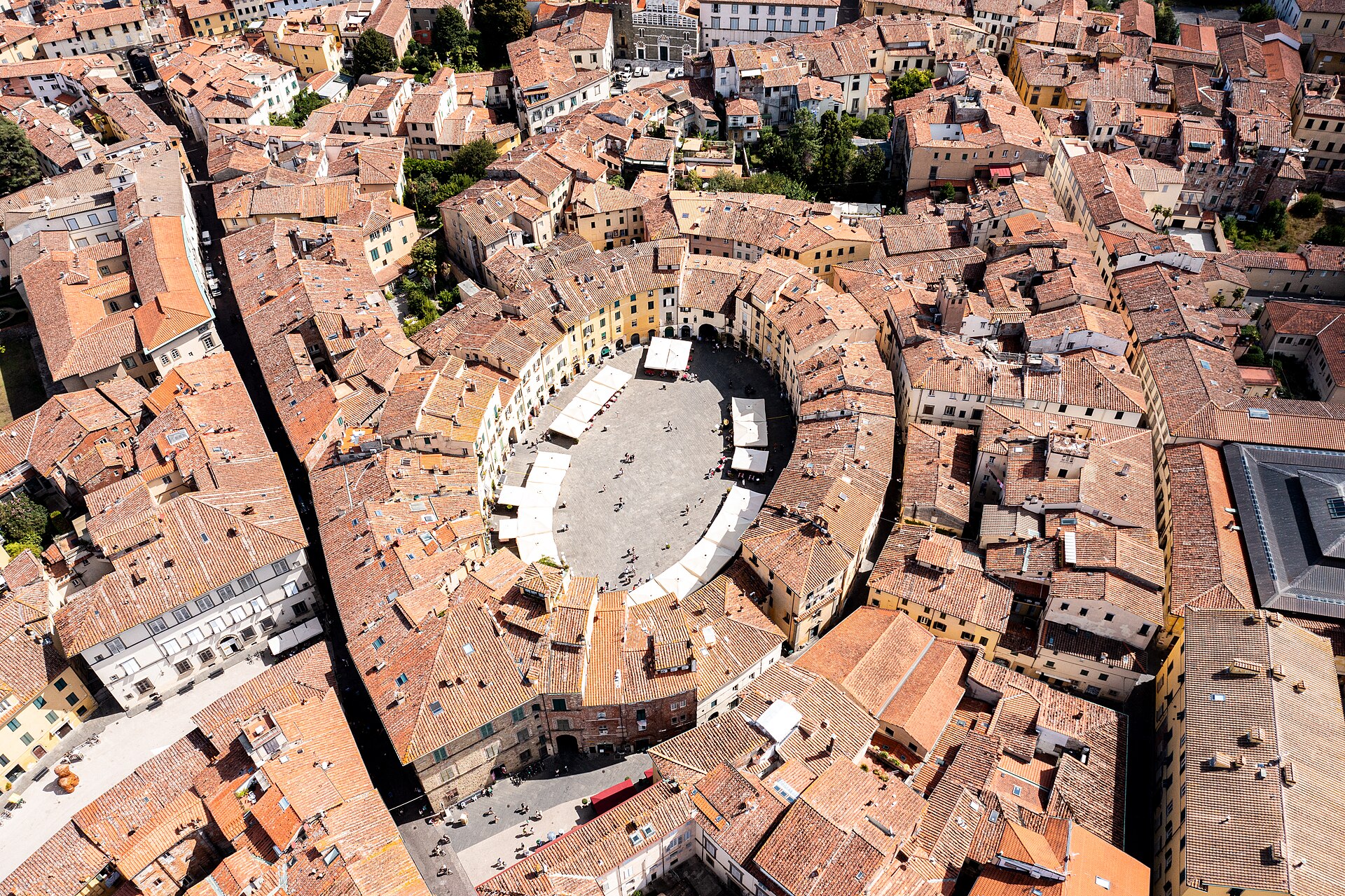
The stones here remember. Not in plaques or guided tours, but in the way they curve beneath your feet, in the slope of the ground that still dips toward what was once an arena. This isn’t like other Italian squares—no grand symmetry, no bombastic fountains. Just an oval of houses built where Romans once sat, watching gladiators or plays under the Tuscan sun. The amphitheater is gone, but its shape remains, stubborn and unmistakable.
Walk in from Via dell’Anfiteatro, and the noise of the city fades. The piazza is small enough to feel intimate, but its proportions play tricks on you—it’s bigger than it looks, deeper somehow. The houses crowd close, their ground floors now cafés or tiny shops selling olive oil and postcards. In summer, tables spill onto the cobblestones, and the air smells of espresso and warm bread. Winter thins the crowds, leaving only the quiet and the light, pale and slanting.
It was never Rome’s grandest amphitheater. Ten thousand people could fit inside—enough for Lucca, a city that even then preferred things on a human scale. They came for bloodsport, for theater, for the kind of public spectacle that bound a community together. Then the empire fell. The stones were carted away for new buildings, the arches buried under centuries of construction. By the Middle Ages, the amphitheater was less a ruin than a skeleton, its bones repurposed into something alive.
Look closely. The rough-hewn stones in some walls? Roman. The narrow passageways between buildings? They follow the old entrances, their ceilings still arched like the tunnels they once were. The past here isn’t preserved—it’s reused, layered like sediment. A medieval house stands where spectators once cheered; a Renaissance window looks out over cobblestones laid in the 1800s.
The piazza isn’t a museum. No ropes keep you back, no signs tell you where to stand. Locals buy groceries at the corner shop, old men play cards under the plane trees, and in the evening, someone might set up a microphone for a singer or a poet. It’s the kind of place where history feels accidental, like you’ve stumbled into a living room where the furniture just happens to be two thousand years old.
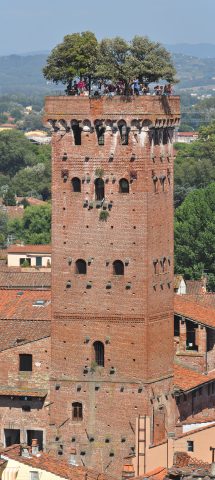
The buildings are unremarkable in the best way. Low, narrow, their facades worn by time—peeling frescoes, faded coats of arms, a tower at the corner that once belonged to a merchant. The roofs are tiled in the old Tuscan style, their curves softened by rain and sun. Shutters stay closed in the afternoon, keeping out the heat, but in the morning, the light picks out the texture of the walls, the way the stones catch the sun.
Time moves differently here. There’s no rush, no grand narrative demanding your attention. You can sit at a café table with a glass of wine and watch the light change. The way it slants in the morning, then stretches long in the afternoon. The way people drift in and out, buying bread or meeting friends. Sometimes, it feels like the square has paused, just for a moment, to let you catch up.