Lucca is one of those Italian cities that feels suspended in time, as if the centuries have left it untouched. Its most defining feature, the walls encircling the historic center, are far more than a relic of the past—they are a living part of the city’s daily rhythm. Unlike many medieval fortifications that now stand as museum pieces, Lucca’s walls have retained their purpose while evolving into something new: a place for leisure, connection, and quiet reflection. Stretching nearly four kilometers in a gentle loop around the old town, they invite both locals and visitors to stroll along their tree-lined promenade, pause on a bench, or simply gaze down at the terracotta rooftops and church towers below.
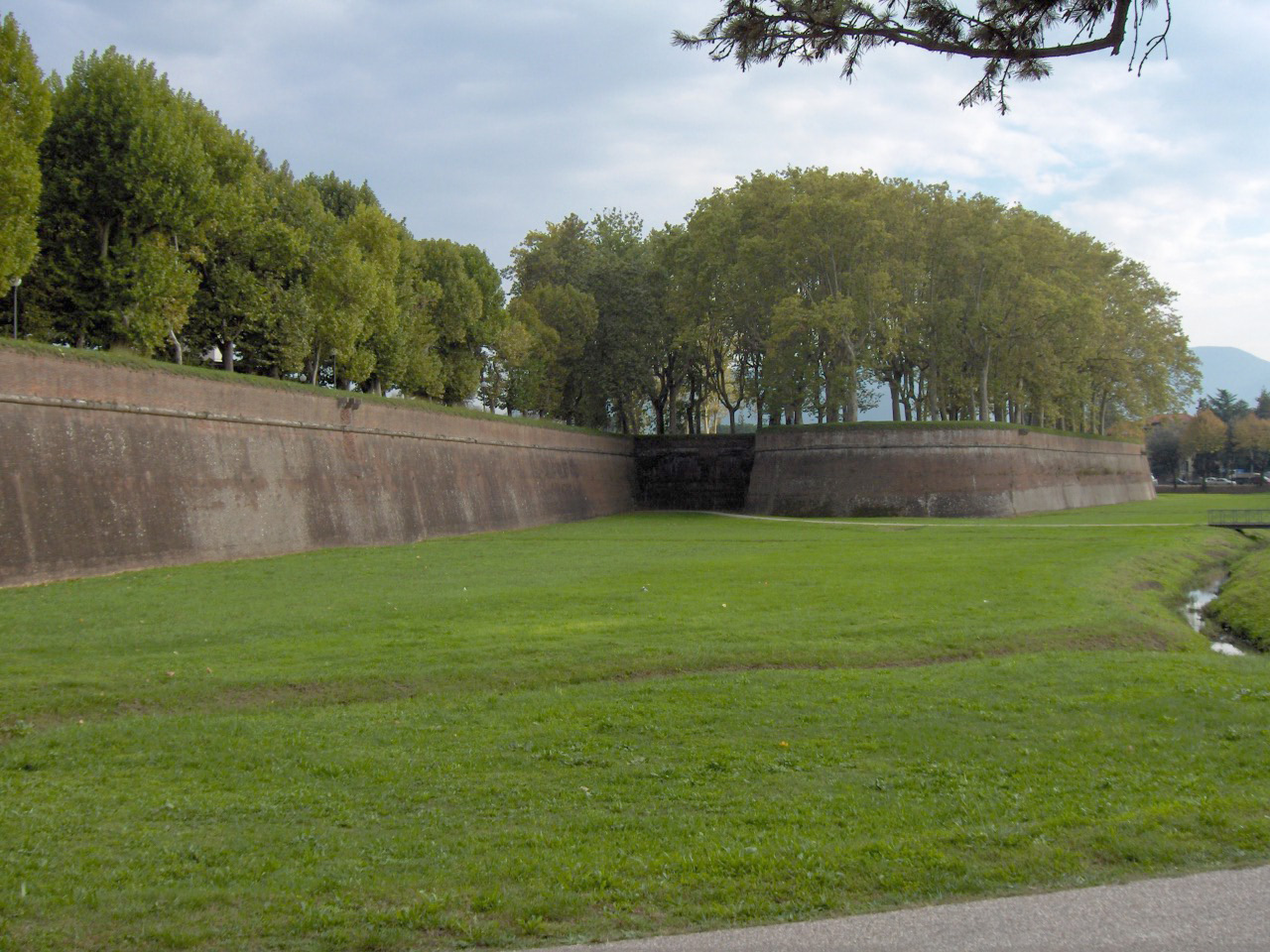
The construction of these walls began in the 16th century, when Lucca, then an independent republic, faced growing threats from neighboring powers. The earlier defenses, dating back to Roman times and later reinforced in the Middle Ages, were no longer sufficient against modern warfare. The new fortifications had to be formidable enough to withstand artillery, so the city embarked on an ambitious project that would span nearly a hundred years. The result was an imposing structure with eleven bastions, moats, and earthen ramparts designed to absorb cannon fire. Ironically, the walls were never tested in battle—by the time they were completed, the political landscape had shifted, and Lucca managed to preserve its independence until the Napoleonic era.
What makes Lucca’s walls remarkable is how seamlessly they have integrated into contemporary life. The top of the fortifications is nearly thirty meters wide, providing ample space for a broad, shaded promenade. Two rows of tall plane trees and linden trees line the path, offering respite from the summer sun. There’s no tourist hustle here, even in peak season; instead, the atmosphere is one of unhurried calm. Locals often start their mornings with a walk or jog along the walls, while cyclists weave between pedestrians. In the evenings, groups gather to chat or enjoy the view, and on weekends, families bring children to play in the small parks tucked within the bastions.
The architecture of the walls reflects both military precision and an unexpected harmony. The eleven bastions, shaped like pentagons, jut out from the main structure, each designed to provide overlapping fields of fire. Today, they serve as quiet vantage points rather than defensive strongholds. Some still house old cannons, their rusted barrels a reminder of the walls’ original purpose, though they now feel more like decorative relics than instruments of war. Inside the bastions, small gardens and sheltered nooks offer a place to rest, and the views from certain points—like the Bastion of San Frediano—stretch beyond the city to the Serchio River valley and the rolling hills beyond.
Unlike many European cities that demolished their fortifications in the 19th century to make way for expansion, Lucca chose to preserve its walls. Instead of tearing them down, the city transformed them into a public space, paving the promenade, adding benches, and later installing lighting. This decision proved so successful that the walls are now inseparable from Lucca’s identity. They don’t divide the old town from the new but rather bridge the two, creating a fluid transition between history and modernity. The walls have become a kind of elevated park, a place where the past and present coexist without tension.
Walking along the walls offers a unique perspective on Lucca. From above, the city unfolds in layers: narrow streets winding between tightly packed houses, piazzas dotted with cafés, and the spires of ancient churches piercing the skyline. The best time to experience this is at sunset, when the light softens, casting long shadows and bathing the rooftops in gold. The promenade is nearly empty then, the only sounds the distant chime of church bells or the hum of traffic below. In winter, the scene takes on a different mood—the trees stand bare, their leaves crunching underfoot, yet the walls remain a place of quiet retreat, where people come to escape the noise of the city.
What sets Lucca’s walls apart is their lack of pretension. There are no strict rules here, no museum-like formality. Visitors can linger as long as they like, whether to read a book, watch the world go by, or simply think. Some come for inspiration, others for solitude, and many to feel a connection to the city’s long history. The walls don’t demand anything of those who walk them—they simply offer space, both physical and mental. This unassuming quality is why they resonate so deeply with locals and travelers alike. They provide a sense of freedom, a rare opportunity to step outside the rush of modern life and feel part of something enduring.
Perhaps the most striking thing about Lucca’s walls is how ordinary they feel. They are not a monument to be admired from a distance but a place to be lived in. Children ride bikes along the promenade, couples share picnics on the grassy bastions, and elderly residents sit on benches, watching the world pass by. The walls have become a backdrop to everyday life, a constant presence that shapes the city’s character. In a world where so much of travel is about checking off sights, Lucca’s walls remind us that the most meaningful experiences often come from simply being in a place, without agenda or expectation. They are a testament to how history can remain relevant—not by being preserved in amber, but by being woven into the fabric of the present.