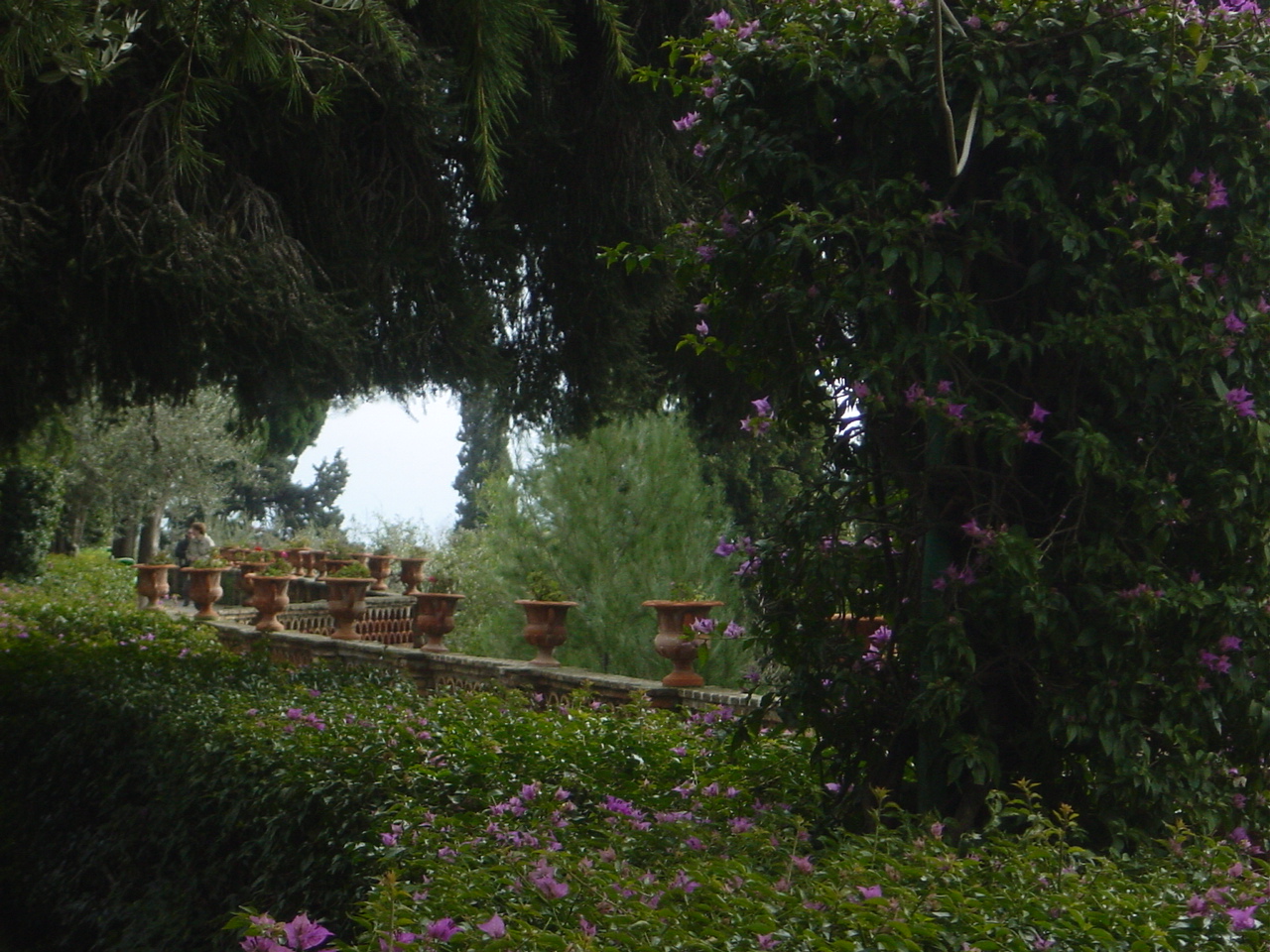
Taormina’s Villa Comunale, often simply called the town park, feels like a place where time slows just enough to let you breathe. Perched on a hillside overlooking the Ionian Sea, it’s a garden that seems to distill the essence of Sicily—citrus trees heavy with fruit, the murmur of fountains, the rustle of palm fronds in the breeze. The park isn’t large, but its size is deceptive. Every corner is designed to surprise, whether it’s a sudden glimpse of the bay through the trees, a shaded path winding between flowerbeds, or an old stone bench tucked beneath a pergola draped in ivy.
The story of the Villa Comunale begins in the late 19th century with an English aristocrat, Lady Florence Trevelyan, who fell in love with Taormina and decided to create a private garden here. More than just a traveler, she was a passionate plant collector, and many of the exotic species that thrive in the park today were brought back from her journeys abroad. After her death, the garden passed into the care of the town, opening its gates to the public. Walking through it, you can still sense the spirit of that era, when gardens were more than just ornamental spaces—they were personal expressions of curiosity and affection for the natural world.
The architecture of the park is as intriguing as its plants. Lady Trevelyan built small pavilions in the Moorish style for her guests, along with whimsical gazebos that evoke the Victorian era. The most unusual feature is the so-called "house in the tree," a tiny structure perched on stilts among the branches of a massive old tree. Today, it looks like something out of a fairy tale, but it was once a retreat where visitors could escape the heat and enjoy the view. These buildings aren’t grand, but their intimacy and eccentricity give the park its character.
Beyond its history and design, the Villa Comunale is a living museum of rare plants. Lady Trevelyan filled the garden with specimens from around the world—Australian eucalyptus, South American cacti, and succulents that thrive in Sicily’s climate. The cactus collection is particularly striking, their spiky silhouettes and deep greens creating a stark contrast against the softer foliage. Even in winter, when much of Europe is dormant, the park remains vibrant, with many plants blooming year-round. The air is often thick with the scent of flowers, a quiet reminder of the garden’s enduring life.
From the park’s upper terraces, the views are some of the best in Taormina. The ancient Greek Theatre, carved into the hillside, is clearly visible, and on clear days, the snow-capped peak of Mount Etna looms in the distance. These vistas have become iconic, drawing visitors who come just to stand and take them in. But the park offers more than just scenery. It’s a place where you can wander for hours, moving from one shaded path to another, pausing by fountains or sitting on a bench with a book. Unlike the crowded streets of the town center, the Villa Comunale provides a rare sense of quiet, a space to step away from the bustle.
The park changes with the time of day. Mornings are cool and peaceful, the perfect time for a leisurely stroll before the sun warms the stone paths. By midday, the garden fills with visitors, though it never feels crowded. In the evening, locals come to jog, walk their dogs, or simply unwind as the heat fades. As dusk falls, the park softens into twilight, the glow of lamplight tracing the outlines of trees and sculptures. It’s a place that feels different each time you visit, shaped by the light and the season.
What makes the Villa Comunale special isn’t its grandeur or its fame. It’s the way history, nature, and architecture come together without pretension. There are no towering monuments here, no opulent palaces—just a garden that invites you to slow down and notice the details. For many, it becomes more than a stop on a sightseeing itinerary. It’s a place where you can begin to understand why Taormina has captivated travelers for centuries, not with spectacle, but with its quiet charm.
Today, the park remains a favorite for both tourists and locals. Small concerts are sometimes held on the lawns, and families spread out picnics under the trees. Children race along the paths, while adults linger on benches, soaking in the view. The Villa Comunale isn’t a museum or an amusement park—it’s a living space that evolves with the town. Its beauty lies in its imperfection, in the way it refuses to be anything other than what it is: a garden that has grown and changed over time, offering a moment of stillness to anyone who wanders in.