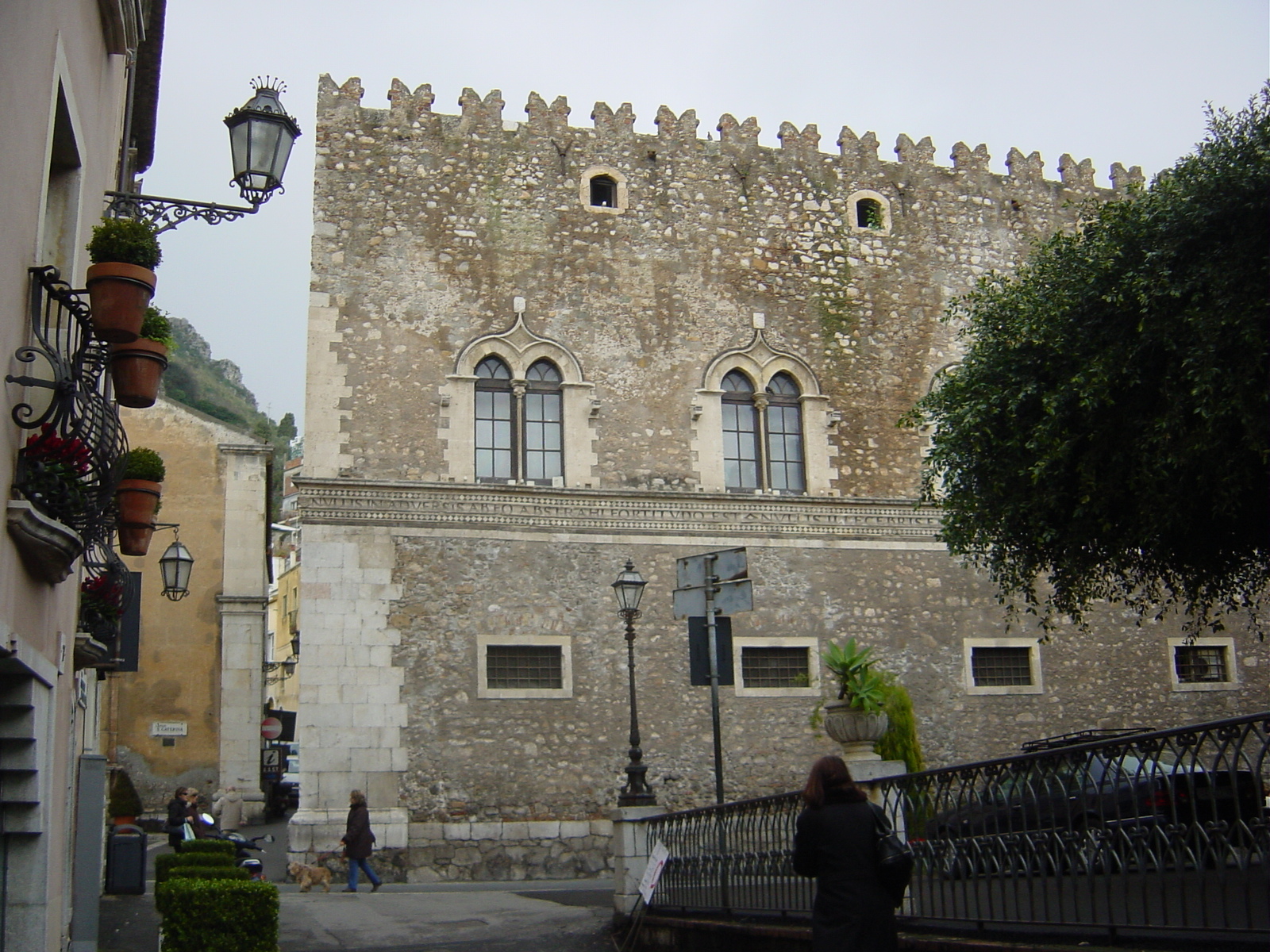
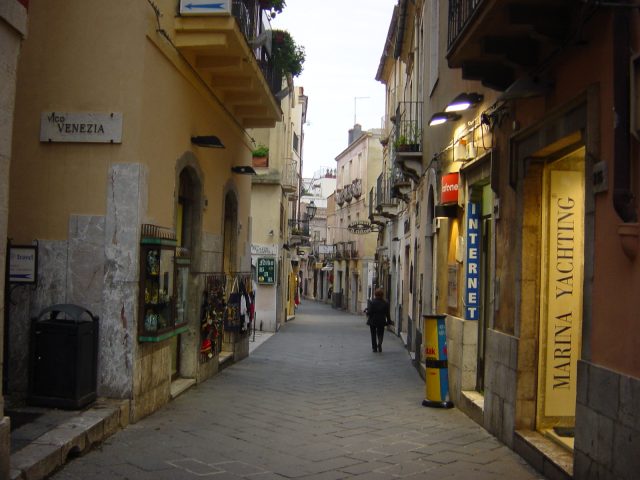
Palazzo Corvaja sits along Taormina’s main street, Corso Umberto. Built in the eighteenth century, the palace is one of those rare places where the past lingers in the details. The façade, with its baroque flourishes and wrought-iron balconies, reflects an era when Taormina was a retreat for European aristocracy.
The Corvaja family, who commissioned the palace, were among Sicily’s prominent landowners in the eighteenth and nineteenth centuries. They hosted writers, musicians, and thinkers within these walls. Goethe passed through Taormina during his Italian journey; though there’s no record of him visiting Palazzo Corvaja, it’s easy to imagine him strolling past, struck by the same blend of elegance and decay that still defines the place.
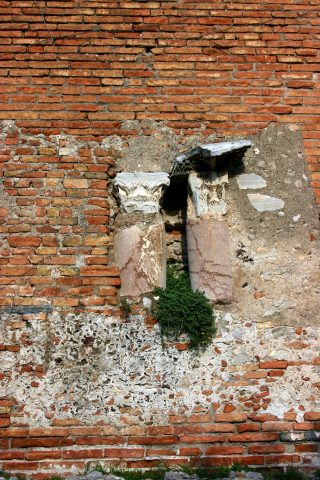
The architecture reflects Sicily’s layered history. Baroque curves meet neoclassical restraint, mirroring the island’s Greek, Roman, Arab, and Norman influences. The palace wasn’t built all at once but evolved over time, with each generation adding something new. The inner courtyard, now a quiet space, was once the heart of the home, where guests gathered for evening receptions. The way light falls through the tall windows frames views of the street and the hills beyond.
Today, Palazzo Corvaja functions as a cultural space. Exhibitions, concerts, and literary events take place in its rooms. The same walls that once echoed with the conversations of Sicilian nobility now host discussions about contemporary art or local poets. The atmosphere shifts with the time of day—morning brings stillness, while evenings soften the edges of the past, the streetlamps making the old stone glow.
What makes Palazzo Corvaja special is the way it fits into Taormina’s rhythm. The city is famous for its Greek Theatre and views of Mount Etna, but smaller places give it depth. This palace doesn’t demand attention; it earns it. There are no crowds, no guided tours. Visitors can wander, pausing to study the stucco work or sitting in the courtyard, listening to the street.
The palace reveals itself slowly. The worn marble steps, the creaking floorboards, the scent of old wood and stone—all of it feels like a conversation with the past. There’s no need for explanations; the building speaks for itself. You might imagine the clink of glasses during a ball or the murmur of voices in a salon where ideas were debated centuries ago.
Taormina has always been a place of contrasts—ancient and modern, grand and intimate. Palazzo Corvaja embodies that duality. It’s not a monument but a living part of the city’s fabric. Locals pass by it daily, while visitors who venture inside often leave with a quiet sense of having touched something real.
If you find yourself in Taormina, step inside. Let the cool stone and the play of light settle over you. The palace doesn’t tell you how to feel about history. It simply lets you stand inside it.