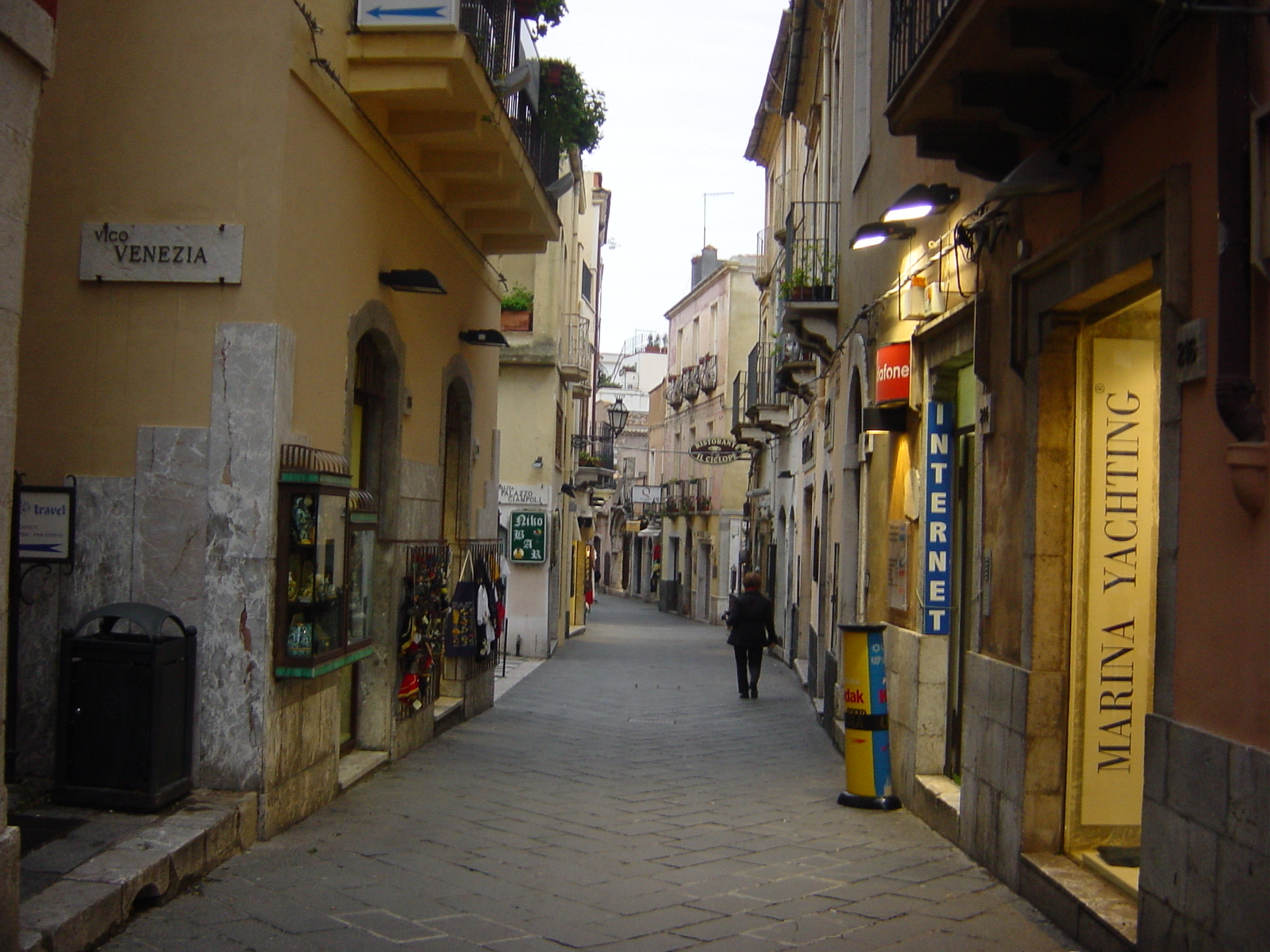
Corso Umberto is the kind of street that doesn’t just run through a town—it holds it together. Stretching from Porta Messina in the east to Porta Catania in the west, it cuts across Taormina’s historic center, linking two of its most important squares, Piazza IX Aprile and Piazza Duomo. Unlike the frenetic thoroughfares of bigger tourist hubs, this one moves to a slower rhythm, shaped by locals who stroll its length at all hours, cafés where espresso is served without hurry, and shops selling everything from lemons grown on nearby hillsides to hand-painted ceramics. It’s a place where the past isn’t just preserved in stone but woven into the daily life of the city.
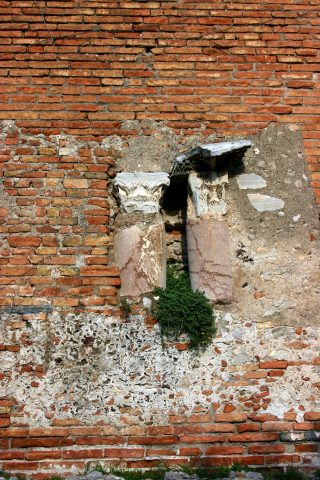
The street’s origins trace back to antiquity, when Taormina was the Greek colony of Tauromenium. Back then, it was one of the main routes leading to the theater and acropolis, a vital artery for trade and movement. In the Middle Ages, it became a key commercial path connecting the port to the island’s interior. The Corso Umberto we see today took shape mostly in the 18th and 19th centuries, when Taormina flourished as a retreat for European aristocracy. That era left behind the elegant palazzi with their carved balconies, arched galleries, and hidden courtyards—details that still peek out from behind modern storefronts, hinting at the layers of history beneath.
Walking along Corso Umberto feels like flipping through the pages of a living history book. The narrow sidewalks, laid with black-and-white mosaic tiles, guide you past buildings where each floor tells its own story. The ground level is all about commerce—shops and cafés with windows displaying cannoli dusted in powdered sugar or bottles of local wine. Above them, residential apartments with wooden shutters that open and close at the whim of their owners. Higher still, roofs covered in mossy terracotta tiles, where laundry dries in the sun and herbs hang from antennae. It’s a scene that feels lived-in, not staged, as if the city exists for its own sake as much as for visitors.
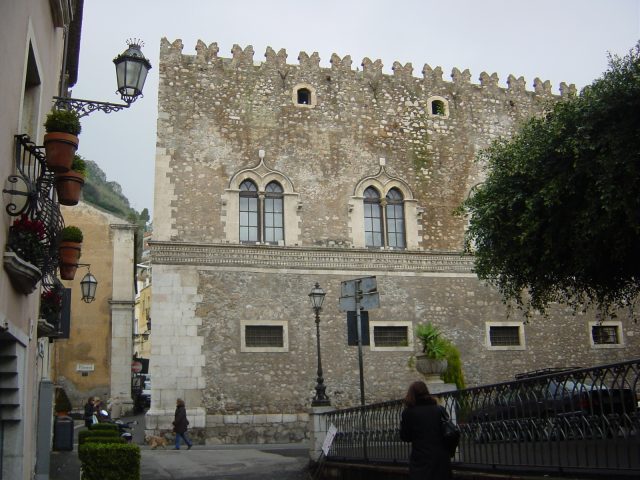
What makes the street truly special are the small architectural details that reward a closer look. Baroque doorways with intricate scrollwork, stone balconies adorned with wrought-iron railings, and old-fashioned streetlamps that flicker to life as dusk falls. One of the most striking buildings is Palazzo Corvaja, built in the 16th century. Its facade is decorated with coats of arms and bas-reliefs, a reminder of the grand balls once held inside for Sicily’s nobility. Today, it houses the town hall, though its doors occasionally open for exhibitions or concerts, offering a glimpse into its storied past.
Corso Umberto isn’t just about what you see—it’s about what you hear and smell. In the morning, the air carries the chime of bells from the nearby Church of San Giuseppe. By midday, the sounds of vendors at the market in Piazza Duomo fill the street, their voices rising above the clatter of plates from nearby trattorias. As evening falls, music spills out from bars where guitars play or old Italian records spin on turntables. In summer, the scent of jasmine and citrus hangs in the air; in winter, the aroma of freshly baked bread drifts from bakeries. No matter the season, there’s always a corner where you can sit with a coffee and watch the city breathe.
One of the street’s highlights is Piazza IX Aprile, where Corso Umberto opens up like a stage. This small square, perched above the sea, offers one of the most iconic views in Sicily—Etna’s snow-capped peak looming in the distance, framed by the deep blue of the Ionian Sea. The piazza is always alive with people: couples sitting on benches, tourists flipping through guidebooks, and street musicians playing as the sun sets. It’s a place where time seems to pause, especially when the volcano disappears into the clouds only to reappear moments later, as if putting on a show just for those watching.
Food is another reason to linger on Corso Umberto. The street is lined with restaurants and trattorias where recipes have been passed down through generations. Here, you can try pasta alla norma, a dish of noodles with eggplant and ricotta cheese, or fresh fish roasted with lemon and olives. For dessert, there’s cassata, a layered cake filled with sweetened ricotta and candied fruit. Many places stay open late, especially in summer, when the town pulses with energy long after midnight. Even if you’re not hungry, the smells alone are enough to draw you in.
Despite Taormina’s popularity with tourists, Corso Umberto has managed to retain its authenticity. There are no sprawling malls or shops selling mass-produced souvenirs. Instead, you’ll find small, family-run businesses selling olive oil from local farms, wine made from indigenous grapes, and ceramics painted by hand. The street doesn’t feel like a theme park version of Sicily—it feels real, because its life isn’t just for visitors. Locals still shop here, meet friends at cafés, and go about their daily routines, giving the place a rhythm that doesn’t depend on the tourist season.
A walk along Corso Umberto isn’t just about ticking off sights—it’s about stepping into the flow of the city. You could spend an hour here or an entire day, ducking into side streets, pausing by fountains, or eavesdropping on conversations in Sicilian dialect. The street changes with the time of day: sleepy and quiet in the morning, bustling at midday, and romantic as evening falls. In each of these moments, it remains the heart of Taormina, a place where the past and present coexist effortlessly, and where every step feels like a discovery.