Bergamo is a city suspended between two eras, where the past lingers in the air like the scent of old stone. The upper town, Città Alta, feels untouched by time, its narrow streets winding between medieval houses and quiet piazzas. At its heart stand the Venetian Walls, a six-kilometer ring of fortifications that encircle the historic center, separating it from the modern lower city below. More than just a defensive structure, these walls are a bridge between centuries, a reminder of when Bergamo was a strategic stronghold on the edge of the Venetian Republic.
Construction began in the mid-16th century, after Bergamo came under Venetian rule. The republic, known for its military engineering, transformed the city into an impregnable fortress, designed to guard its northern borders. Built from local stone, the walls have a warm, golden hue that deepens at sunset, blending seamlessly with the surrounding landscape. Four massive bastions anchor the corners of the fortifications, while deep ditches—never filled with water—made the walls nearly impossible to breach. Unlike many fortresses of the time, Bergamo’s defenses relied on sheer height and steep slopes rather than moats, a testament to Venetian ingenuity.
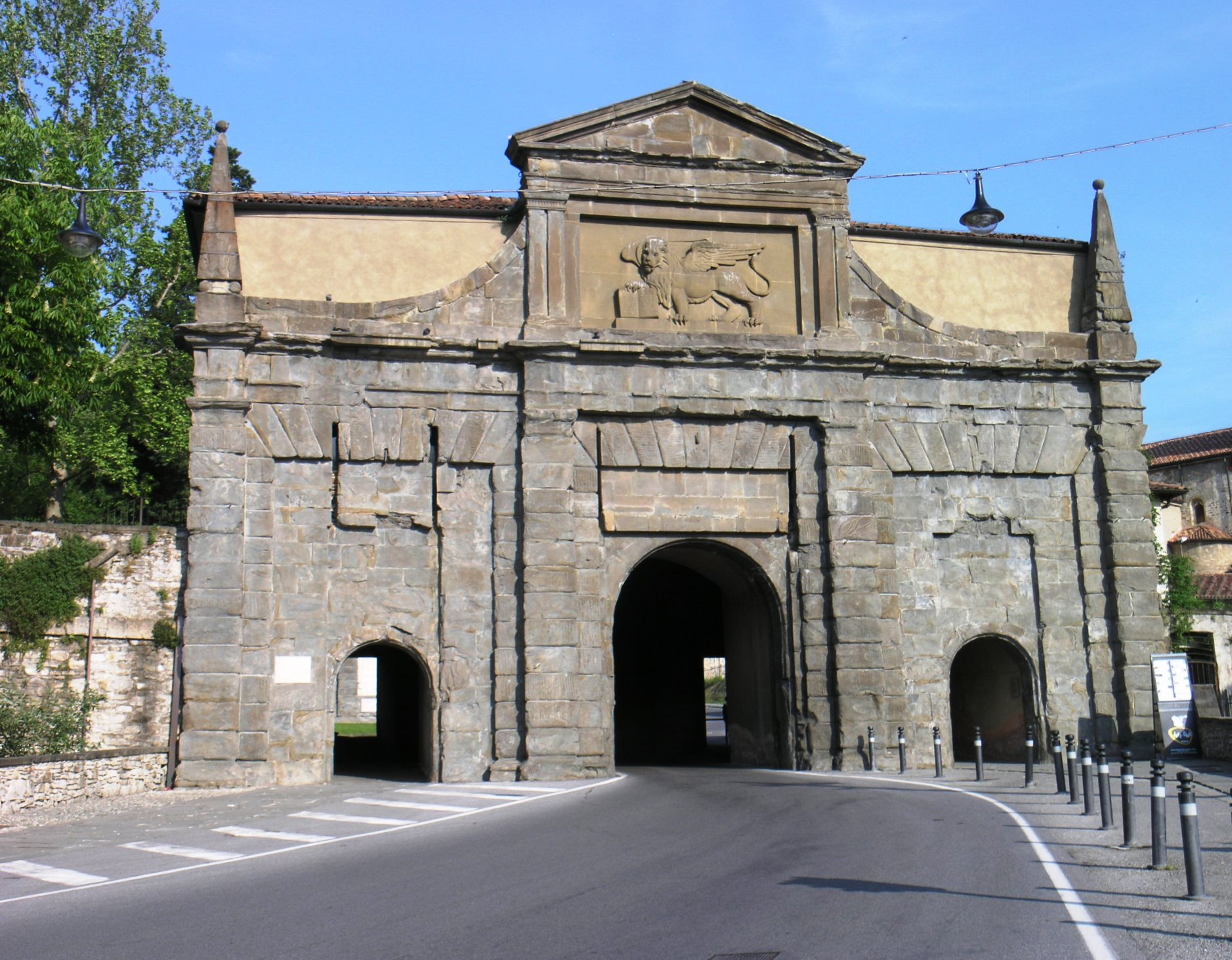
Walking along the walls offers more than just a glimpse into military history; it’s a chance to see the city from unexpected angles. From the top, the rooftops of Città Alta stretch out below, punctuated by church bell towers and the distant silhouette of the Alps. On clear days, the skyline of Milan shimmers on the horizon. The most striking sections are near the old gates—San Giacomo, San Lorenzo, and Sant’Agostino—each with its own story. Some were grand entrances, others discreet exits for soldiers, but all bear the marks of a city that once stood as a guardian of Venetian power.
The walls weren’t always a peaceful place for strolls. In the 17th and 18th centuries, they withstood sieges during conflicts like the War of Spanish Succession, when Bergamo found itself caught between French and Austrian forces. Though the fortress held firm, its military importance faded after the fall of the Venetian Republic in the late 1700s. By the 19th century, the walls were no longer a barrier but a monument, a relic of a time when cities were built to last.
Today, the walls are a public space where locals and visitors alike come to walk, run, or simply sit on benches, soaking in the views. In summer, the grassy slopes host concerts and festivals, while in winter, children sled down the gentle inclines of the old ditches. One of the most popular routes starts at Porta San Giacomo and winds toward the San Marco bastion, covering nearly half the perimeter. Along the way, informational plaques offer snippets of history, though the walls speak for themselves—each stone a silent witness to centuries of change.
The architecture of the walls is as much about beauty as it is about function. The Venetians, who built them, understood that even fortifications could be elegant. Bastions are adorned with subtle decorative details, and some sections curve like sculptures. The San Giovanni bastion, in particular, still holds traces of old casemates—underground chambers where ammunition was stored and soldiers took shelter. Now, it serves as a viewpoint, offering one of the best panoramas of the city below.
What makes Bergamo’s walls special is how they’ve become part of everyday life. They’re not just a historical landmark but a place where people gather, where couples walk at dusk, and where the past feels alive. In the evening, the setting sun turns the stone a soft gold, and the air fills with the scent of chestnut blossoms. For visitors, the walls offer a way to experience Bergamo beyond its museums and churches—as a city where history isn’t confined to plaques but woven into the fabric of daily life.
Few fortifications of this scale remain intact in northern Italy. Many were dismantled or repurposed over the centuries, but Bergamo’s walls survived nearly untouched, a rare example of Venetian military architecture. In 2017, they were recognized as a UNESCO World Heritage Site, along with the historic center, for their exceptional preservation. For historians and architects, they’re a living textbook; for everyone else, they’re a reminder that some things are built to endure.
A walk along the walls can take an hour or an entire afternoon, depending on how deeply you want to explore. You can stick to the upper path, where the views are best, or descend into the ditches to appreciate the sheer scale of the fortifications from below. Either way, the experience leaves a lasting impression—not just of Bergamo’s history, but of how a city can grow around its past without losing touch with it. The walls don’t just encircle Città Alta; they hold its stories, its quiet moments, and the echoes of the people who have walked here before.