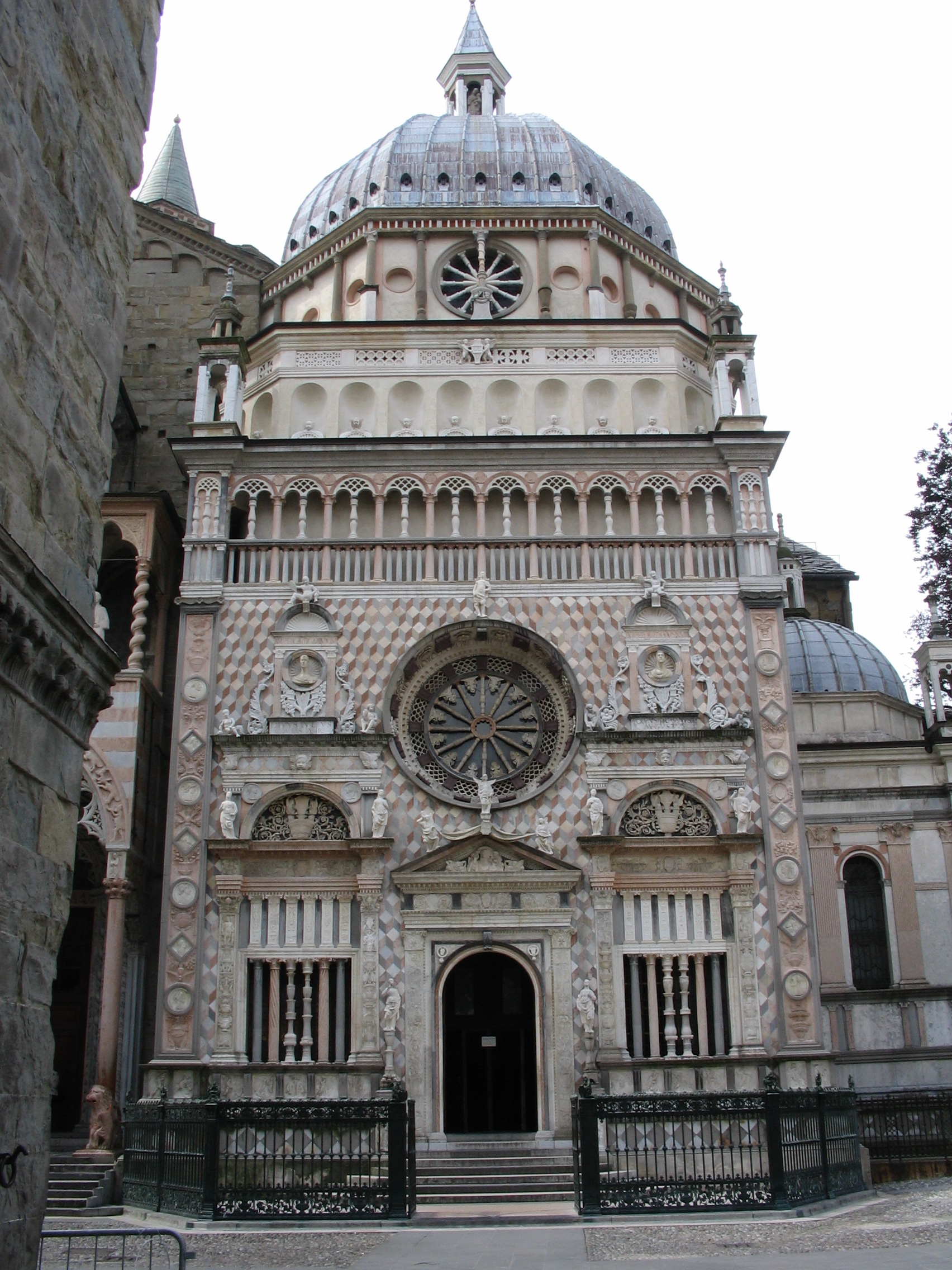
The Colleoni Chapel in Bergamo is one of those rare places where history doesn’t just linger in stone—it breathes. Built in the fifteenth century, it stands in the square before the Basilica of Santa Maria Maggiore, as if deliberately positioned to remind visitors of a time when art and power were inseparable. Though dedicated to Saint Bartholomew, the chapel is first and foremost a monument to the ambition and vision of one man: Bartolomeo Colleoni, the condottiero whose name remains forever tied to this city.
From the outside, the chapel is striking. Its facade, clad in white, pink, and black marble, resembles a jewel box rather than a place of worship. Geometric patterns, columns, arches, and medallions create an illusion of lightness despite the structure’s solidity. The portal is particularly impressive, adorned with sculptures and reliefs, including the Colleoni coat of arms—three pairs of eggs, a symbol of his lineage and authority. This emblem appears throughout the chapel, a constant reminder of the man who commissioned it.
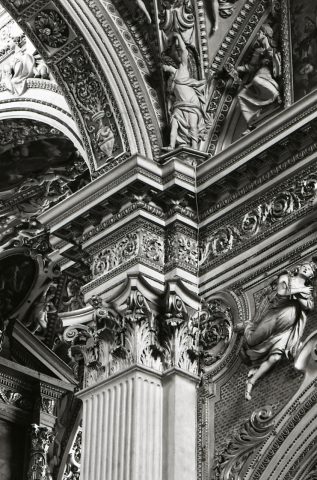
Inside, the space feels intimate yet grand, thanks to the interplay of light and shadow and the refined decoration. The walls and vaults are covered in frescoes by Giovanni Battista Tiepolo, one of the greatest masters of the eighteenth-century Venetian school. His work here isn’t mere ornamentation; it’s a narrative told through allegory and symbolism. The scenes depict saints, but they also carry the opulence of the Baroque era, blending religious reverence with worldly splendor.
The chapel’s greatest treasure is the tomb of Bartolomeo Colleoni himself, crafted from marble and bronze by the sculptor Andrea del Verrocchio. The monument is imposing, every detail meticulously rendered. Colleoni is depicted in armor, sword in hand, as if ready to rise and resume his military campaigns. Surrounding him are figures representing virtues, symbolizing his contributions to the city and the Church. This tomb isn’t just a memorial to a man—it’s a tribute to an entire era when condottieri were not only warriors but also patrons of the arts.
The Colleoni Chapel is a place where different eras and styles converge. The facade’s clean lines reflect the early Renaissance, while Tiepolo’s frescoes embody the Baroque. Even traces of Gothic influences appear in some decorative elements. This blend makes the chapel unique; it doesn’t adhere to a single aesthetic but exists as a living entity shaped by the spirit of different times.
Bergamo, like many Italian cities, is rich in stories, but the Colleoni Chapel stands out as one of its most vivid. It serves as a reminder that behind every great structure lies not just an architect or artist, but a person whose will and ambition turned a vision into stone. Colleoni wasn’t merely a military leader; he was a man determined to leave his mark on history, and he succeeded. Today, the chapel isn’t just a tourist attraction—it’s a corner of the city where the past feels tangible.
Visiting the chapel isn’t just about seeing a landmark; it’s about stepping into an atmosphere where art and history merge. There’s no hustle here, no crowds—just quiet and light filtering through the stained glass, reflecting off the marble. Time seems to move differently within these walls, offering a moment to pause and reflect on how much a single building can reveal about the people who created it.
The Colleoni Chapel isn’t just part of Bergamo’s cultural heritage; it’s a symbol of how art can endure across centuries. It has stood in the same place for over five hundred years, witnessing countless changes. Yet through it all, it remains unchanged—a reminder that true art is timeless. For those who visit Bergamo, the chapel isn’t just another sight to see; it’s a place where history comes alive.