Piazza Vecchia in Bergamo is where the city reveals its medieval soul without apology or pretense. Tucked within the walls of Città Alta, the upper town, it feels like stepping into a different era—one where time moves slower, where the clatter of footsteps on cobblestones blends with the murmur of conversations and the occasional chime of a distant bell. You can reach it by funicular, winding up through the hillside, or on foot, following the narrow, sloping streets that have carried generations of locals and visitors alike. The air here carries the scent of fresh bread from nearby bakeries and the faint herbal notes drifting down from the surrounding hills, a reminder that the countryside is never far away.
The square’s architecture tells the story of Bergamo in layers of stone and mortar. The most imposing presence is the Palazzo della Ragione, built in the 12th century as the seat of the city’s government. Its sturdy arches and open loggia once hosted public gatherings and legal proceedings, and even now, it feels like a place where history lingers in the shadows. Today, the space beneath its vaulted ceilings occasionally hosts exhibitions or concerts, but the building doesn’t need events to feel alive—it’s as if the voices of medieval citizens still echo in its halls. Beside it stands the Torre dei Caduti, or Campanone, a towering clocktower that offers sweeping views of the city. In centuries past, its bell marked the hours and sounded alarms for fires or invasions, a constant presence in the daily rhythm of Bergamo.
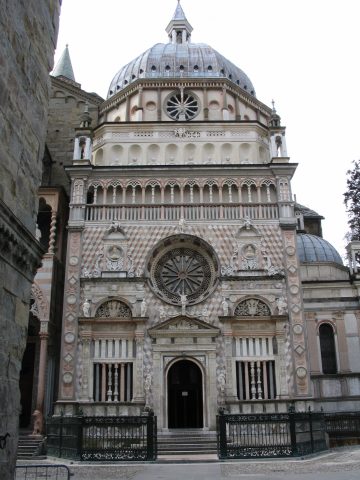
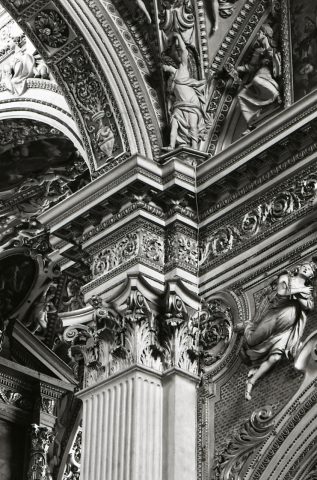
Across from the Palazzo della Ragione, the Colleoni Chapel stands as a striking contrast—small but impossibly elegant. Commissioned in the 15th century by Bartolomeo Colleoni, a mercenary captain whose name still carries weight in Italian history, the chapel was meant to serve as his personal mausoleum. Colleoni was a man of contradictions: feared on the battlefield, yet a patron of the arts who wanted to be remembered for more than his military prowess. The chapel’s facade, adorned with intricate marble inlays in shades of pink, white, and green, reflects that ambition. Inside, the frescoes and sculptures are a testament to the skill of Renaissance artisans, their details still sharp despite the passage of centuries.
The square hasn’t always looked as it does today. In the Middle Ages, it was a bustling marketplace, surrounded by the homes and workshops of craftsmen and traders. The transformation into the open, airy space we see now came much later, in the 19th century, when some of the older buildings were cleared to make way for the Contarini Fountain. The fountain, crowned with statues and the coats of arms of Bergamo’s noble families, was once a vital water source for the city. These days, it’s purely decorative, though no less charming—a quiet centerpiece around which the life of the square unfolds.
There’s no rush here, no pressure to move on to the next attraction. You could easily spend an afternoon doing nothing more than watching the world go by. In summer, the square hosts open-air concerts, the notes of classical music drifting through the evening air. In winter, it becomes the heart of Bergamo’s Christmas market, with stalls selling handmade crafts and steaming cups of mulled wine. But even on an ordinary day, Piazza Vecchia is never empty. Locals sip espresso at café tables tucked beneath the arches of the Palazzo della Ragione, students sprawl on the steps with books, and tourists wander slowly, pausing to admire the details of the buildings. The square has a way of making time feel elastic, as if an hour could stretch into an afternoon without anyone noticing.
Bergamo is often described as a city of two halves: the lower town, modern and bustling, and the upper town, where the past feels tangible. Piazza Vecchia is the soul of Città Alta, the reason many visitors make the journey up the hill. There’s no frenetic energy here, no jostling crowds—just the quiet, unhurried pace of a place that has seen centuries come and go. It’s the kind of square that invites you to linger, to sit on a bench and let the atmosphere seep in. Maybe that’s why it feels so magnetic: it offers a glimpse of the past without asking you to leave the present behind.
If you climb the Campanone, the view from the top is worth the effort. On a clear day, the rooftops of Città Alta stretch out below, a patchwork of terracotta and stone, while beyond them, the rolling hills of Lombardy fade into the distance. In the farthest reaches, the jagged peaks of the Alps rise like a distant backdrop. From up here, the square looks almost like a stage set, its buildings arranged with the precision of a painting. But the illusion fades as soon as you descend. Back on the ground, the sounds of the square return—the laughter of children, the clink of cups, the shuffle of feet on cobblestones—and you’re reminded that this is a place where life, not just history, happens.
What makes Piazza Vecchia special is the way it balances the old and the new without forcing the point. There are no museum ropes here, no signs admonishing visitors to keep their distance. The past isn’t preserved behind glass; it’s woven into the fabric of everyday life. The square doesn’t try to impress or perform for tourists. It simply exists, as it has for centuries, a quiet witness to the comings and goings of the city. That authenticity is what draws people back, time and again. Bergamo doesn’t need to shout to be heard—it just is, and that’s enough.