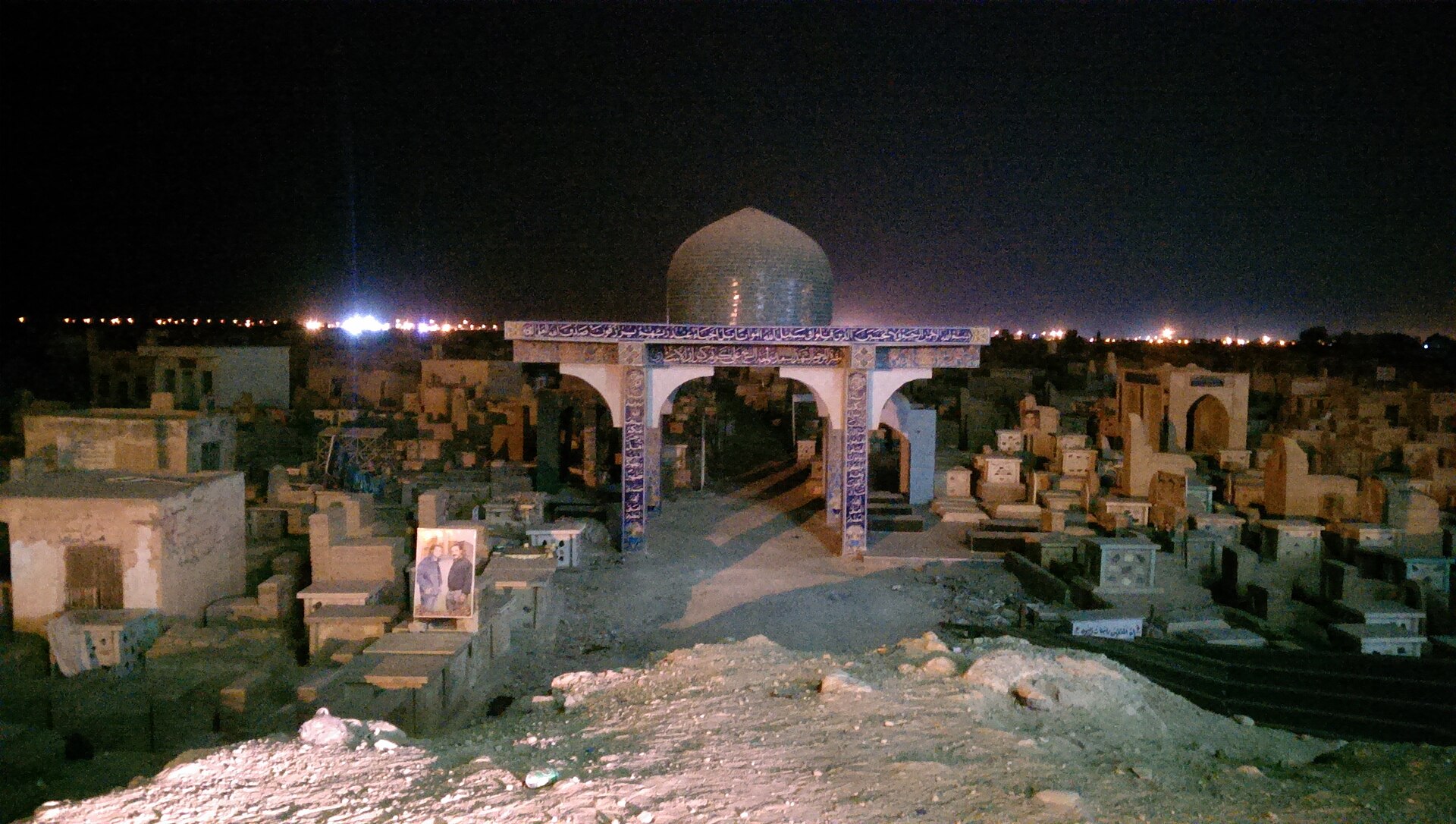
Wadi-us-Salaam lies on the outskirts of Najaf, a city sacred to Shia Muslims. This vast cemetery holds the remains of millions—believers, scholars, rulers, and saints. Its name means Valley of Peace. The endless rows of graves don’t overwhelm; instead, the place asks for quiet attention. Every stone marks a life.
Najaf is the spiritual heart of the Shia world, and Wadi-us-Salaam is its core. The city grew around the shrine of Imam Ali, cousin and son-in-law of the Prophet Muhammad. Over centuries, burial near Ali became the highest honor. Today, the cemetery covers more than ten square kilometers. Graves are packed so tightly that walking between them feels like moving through a maze. Each generation has left its mark here.
The graves are simple. Most are marked by stone slabs or brick structures. A few belong to prominent families or religious leaders and stand out with mausoleums. Tombstones carry Arabic calligraphy—Quran verses, names, or prayers. Time has worn them, leaving cracks and fading letters. There’s no grandeur, just memory carved into stone.
Wadi-us-Salaam is still growing. New burials happen every day. Workers, often from families who have tended the cemetery for generations, find space for each new grave.
Funerals follow ancient rituals. The body is washed, wrapped in a shroud, and carried through the city in procession. Relatives and mourners recite prayers. Strangers sometimes join—participating in a funeral is considered virtuous in Najaf. The cemetery is always alive, a place where the living and the dead stay connected.
For Shia Muslims, Wadi-us-Salaam matters deeply. Their beliefs say the Mahdi, the hidden messiah, will return here on the Day of Judgment. Those buried in this valley will be the first to rise. This belief turns the cemetery into a pilgrimage site. Visitors come to bury loved ones, pray for ancestors, or seek blessings at the graves of saints. During religious festivals, pilgrims from Iran, Pakistan, India, and Azerbaijan fill the valley, turning it into a sea of devotion.
The air shimmers on hot days. A few trees offer sparse shade. In the evenings, families gather at gravesites. They spread rugs, drink tea, and read the Quran. Sometimes, soft weeping or whispered prayers break the silence. More often, it lingers, punctuated by birds or distant vendors selling water and sweets near the entrance.
Wadi-us-Salaam is tied to Iraq’s history. It has seen wars, invasions, and upheavals but remains a symbol of continuity. During the Ottoman era, Christians and Jews were buried in designated sections. In the 20th century, during the Iran-Iraq War, it became a site of mass burials. Rows of identical government-issued tombstones mark the graves of fallen soldiers. These sections stand apart from the rest of the cemetery, where graves are arranged without order, each one different.
This is not a museum. There are no signs explaining tombs, no guided tours pointing out notable graves. Visitors wander narrow paths between graves, reading inscriptions and imagining the lives behind the names. Some graves are fresh, the earth still unsettled, flowers bright. Others are old and crumbling, their occupants forgotten. Yet all share the same space, bound by the quiet permanence of the place.
In Najaf, those buried in Wadi-us-Salaam are said to be remembered forever. The cemetery preserves memory in a way that outlasts time. Past and present coexist here. The famous and the unknown lie side by side. Everyone is equal in the face of eternity. Visitors reflect on their own place in this endless procession. Wadi-us-Salaam reminds us that life endures, even after it ends.