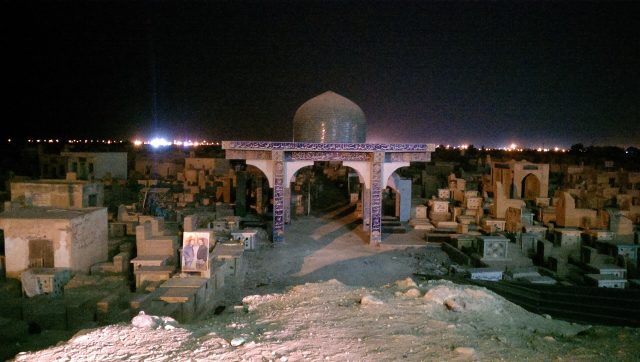
Al-Saray Market in Najaf is one of those rare places where time seems to slow, and the rhythm of city life takes on a different pace. Tucked within the old quarter, not far from the revered Imam Ali Mosque, it has long been the heartbeat of the city. The market isn’t just a place to buy and sell—it’s a living entity, shaped by centuries of trade, faith, and daily life. Walking through its narrow lanes, past low-slung clay buildings, you can almost feel the weight of history pressing against the present.
The market sprawls like a labyrinth, a network of alleys where each section has its own purpose. One corner is thick with the scent of spices—cumin, cardamom, saffron—ground fresh and piled high in sacks. Nearby, vendors sell sweets like knafeh and baklava, their syrup glistening under the heat of open flames. You’ll find everything here: produce from nearby farms, bolts of fabric, jewelry, household goods. But what sets Al-Saray apart is its connection to faith. Najaf is a city of pilgrims, and the market reflects that—stalls overflow with prayer beads, rugs, and religious texts, their presence as natural as the fruit stands beside them.
The architecture is simple but effective. The passageways are narrow, roofed with clay and brick vaults that shield shoppers from the harsh sun, keeping the air cool even in the peak of summer. Some structures have stood for generations, their original forms intact, while others have been patched or rebuilt over time. Modern touches—fluorescent lights, plastic awnings—don’t disrupt the atmosphere; they’re just part of the market’s evolution. Everything is designed for function, yet there’s an unmistakable sense of age here, a quiet persistence of the past.
Najaf has always been a spiritual center, and Al-Saray has mirrored its fortunes. In medieval times, it was a stop for caravans traveling between Baghdad and Mecca, a place where merchants from across the Islamic world traded goods and stories. Over the centuries, the market became woven into the city’s identity, a space where commerce and culture intersected. Even during wars and upheavals, it never fully closed. Trade here isn’t just business—it’s a tradition, a way of life that refuses to fade.
Today, the market remains one of Najaf’s liveliest spots. Mornings bring locals stocking up on daily necessities, while afternoons see pilgrims browsing for souvenirs. By evening, the pace slows. Lanterns cast a warm glow over the stalls, and vendors sip tea with customers, bargaining unhurriedly. There’s no rush, no pressure—just the steady hum of conversation and the occasional clink of coins. It’s a far cry from the sterile efficiency of modern malls. Here, commerce is personal.
What makes Al-Saray special are the people. Many vendors are artisans, their skills passed down through generations. They’ll proudly explain the origins of their spices, the craftsmanship behind their textiles, or the secrets of their recipes. Customers take their time, examining goods, haggling, catching up on news. The market is a crossroads of languages—Arabic, Persian, Urdu—spoken by pilgrims from across the globe. Even if you don’t understand the words, the gestures and smiles bridge the gap.
Beyond shopping, the market is a living museum. Watch a craftsman embroider gold thread into fabric for religious garments, or another stringing prayer beads from semiprecious stones. Nearby, a vendor might fry falafel or knead dough for fresh bread, the scent mingling with the aroma of spices. It’s a sensory overload, but in the best way—every corner offers something new, a glimpse into a way of life that has endured for centuries.
Of course, it’s not always comfortable. Summer heat can be stifling, and the narrow alleys can feel crowded. But that’s part of the charm. Al-Saray isn’t for those seeking convenience or predictability. It’s for those who want to experience life as it’s lived, unfiltered and unpolished. There are no tourist traps here, no scripted performances—just the raw, unvarnished reality of a market that has seen empires rise and fall.
Visiting Al-Saray isn’t just about buying things. It’s about stepping into a story that began long before you arrived and will continue long after you leave. It’s a place where the past and present coexist, where every stall holds echoes of the generations who came before. If you find yourself in Najaf, take the time to wander its lanes. Even if you don’t buy a thing, you’ll leave with something far more valuable: a sense of the city’s soul.