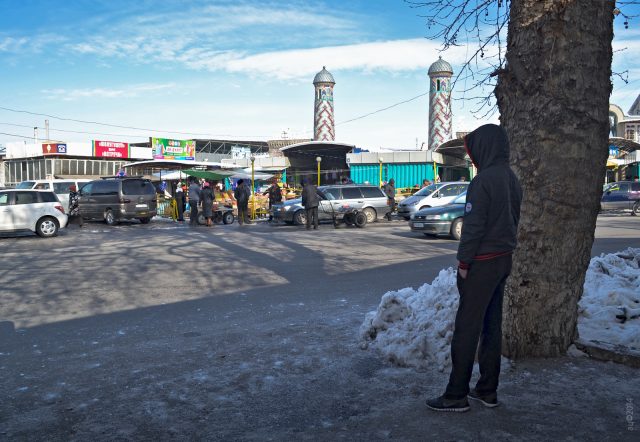
The Uzgen mausoleums stand quietly on the edge of a small town, where the past lingers in the air like dust settling after a long journey. This place was once a crossroads of empires, a stop along the Silk Road where merchants, scholars, and warriors passed through, leaving behind traces of their stories. Today, the mausoleums are all that remain of the Karakhanid dynasty’s grandeur, their weathered walls holding the echoes of a time when Uzgen was more than just a quiet settlement—it was a center of power, faith, and culture.
Built between the 11th and 12th centuries, the mausoleums were commissioned by the Karakhanid rulers, who sought to immortalize their legacy in stone. The dynasty, which once stretched across Central Asia, was known for its military conquests, but it was also a patron of architecture, blending Turkic, Persian, and local traditions into a style that was uniquely its own. The complex consists of three mausoleums arranged in a row, with a minaret rising beside them, its slender form a silent witness to centuries of change. Each structure tells a different part of the story, from the intricate carvings of the earliest tomb to the more subdued lines of the later ones.
The northern mausoleum is the oldest, dating back to the 11th century. Its facade is adorned with terracotta patterns, their delicate lines still visible despite the wear of time. These aren’t just decorative flourishes—they carry meaning, weaving together Islamic symbolism with the motifs of nomadic cultures. Inside, the empty niches where bodies once lay serve as a reminder of impermanence, a theme that runs through the entire complex. The craftsmanship here is precise, almost defiant in its attention to detail, as if the builders knew their work would outlast the rulers it was meant to honor.
The central mausoleum, built slightly later, is more elaborate. Its portal features stalactite-like muqarnas, a design element that plays with light and shadow, giving the structure a sense of depth and solemnity. Arabic inscriptions once covered its walls, praising the virtues of those buried within, but time has erased much of the text. Only fragments remain, hinting at the identities of the deceased—perhaps a ruler, a scholar, or a warrior whose name history has nearly forgotten. The craftsmanship here is more refined, suggesting a shift in artistic tastes or perhaps the influence of different artisans.
The southern mausoleum, the youngest of the three, was completed in the 12th century. It stands in contrast to its predecessors, with thicker walls and simpler decoration. This change might reflect the political upheavals of the time or a deliberate move toward a more austere aesthetic. Yet even in its simplicity, there’s a strength to the design, a sense that the builders were less concerned with ornamentation and more with creating something that would endure. The mausoleum feels almost utilitarian compared to the others, but that only makes it more intriguing—what stories might it hold if its walls could speak?
Beside the mausoleums, the minaret rises modestly, its height barely reaching twenty meters. In its time, it would have been a landmark for travelers and a call to prayer for the faithful. Now, it leans slightly, as if bowing under the weight of centuries, but this only adds to its character. A narrow spiral staircase winds up inside, leading to a platform that once offered views of Uzgen and the surrounding landscape. Climbing it today, you can almost imagine the town as it was—bustling with traders, scholars, and artisans, all under the watchful gaze of the Karakhanid rulers.
The mausoleums are more than just relics of the past; they’re a bridge between eras. For locals, they’re a point of pride, a tangible connection to a history that might otherwise feel distant. For visitors, they offer a moment of quiet reflection, a chance to step away from the noise of modern life and consider the passage of time. There’s no grand museum here, no crowds of tourists—just the stillness of the stones and the occasional whisper of the wind through the ruins.
Uzgen itself is a town that moves at its own pace. The streets are narrow, lined with clay houses that have stood for generations. The bazaar, with its scent of spices and fresh bread, is a reminder of the town’s enduring role as a trading hub. Life here feels unhurried, as if the town has decided to let the rest of the world rush by while it holds onto its own rhythm. The mausoleums, standing apart from the daily bustle, seem to watch over it all, a silent testament to the idea that some things—faith, art, memory—are meant to last.
Visiting the Uzgen mausoleums isn’t about ticking off a tourist attraction. It’s about slowing down, about letting the weight of history settle around you. There’s no need for grand narratives or dramatic revelations—just the quiet understanding that you’re standing in a place where people once lived, ruled, and dreamed, just as we do today. The stones don’t offer answers, but they do invite questions, and sometimes, that’s enough.