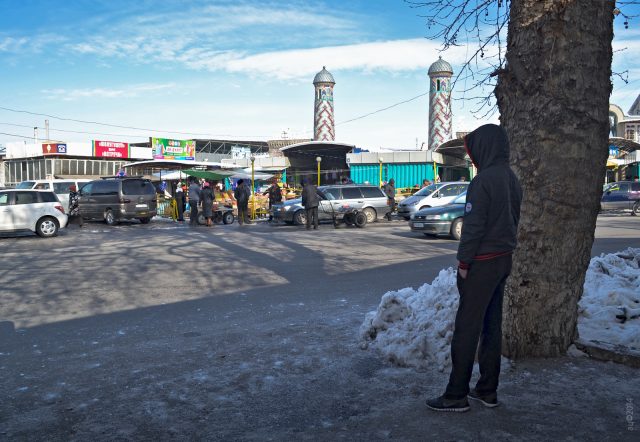
Uzgen is one of those places that slips through the cracks of most travel itineraries. Tucked away in southern Kyrgyzstan, it lacks the bustling bazaars of Bishkek or the dramatic mountain backdrops of Issyk-Kul, yet it holds something far more enduring: the quiet weight of centuries. Once a vital stop on the Silk Road, Uzgen was shaped by the Karakhanid dynasty, which ruled these lands in the 11th and 12th centuries. Their legacy lingers in the form of the Kok-Gumbaz Mosque, a structure whose blue dome still rises above the low-slung rooftops of the old town, a silent witness to the passage of time.
Built in the 12th century, Kok-Gumbaz—meaning "Blue Dome"—was more than just a place of worship. It was part of a larger complex that included a madrasa and mausoleums, though little remains of those today. Unlike many medieval buildings in Central Asia, it survived the Mongol invasions, though earthquakes have left their mark over the centuries. Perhaps its resilience stems from its original purpose: it wasn’t just a mosque but a communal space where people gathered for meetings, legal disputes, and daily life. The building’s endurance feels almost deliberate, as if it refused to fade into history.
The architecture of Kok-Gumbaz reflects the Karakhanid style, though with its own distinct touches. Constructed from fired brick, its facades are adorned with carved terracotta tiles featuring geometric and floral patterns—a hallmark of the era. The main entrance is framed by a deep portal niche, a common feature in Central Asian mosques of the time. Inside, the space is divided into several rooms, with the central hall dominated by the mihrab, the niche pointing toward Mecca. The dome itself, which gives the mosque its name, rests on thick walls and vaults, creating an unexpected sense of lightness within the sturdy structure.
Kok-Gumbaz hasn’t always served as a mosque. During the Soviet era, it was repurposed as a warehouse and later as a workshop. It wasn’t until the late 20th century that the building was returned to its religious function, and today it operates as a place of prayer once again. Yet its significance goes beyond worship. For the people of Uzgen, the mosque is a living link to their ancestors, a symbol of continuity in a town where history isn’t just remembered—it’s still present in the stones and the stories passed down through generations.
Visiting Kok-Gumbaz isn’t like ticking off another tourist attraction. It’s more like stepping into the rhythm of old Uzgen, where life moves at a slower pace. Nearby, the remnants of Karakhanid mausoleums hint at the grandeur of the original complex, though they now stand in quiet decay. These ruins offer a glimpse of Uzgen’s past as a thriving Silk Road hub, where merchants from Persia, China, and India once paused before continuing their journeys through the Fergana Valley. The town’s faded glory is still palpable, even if the crowds and commerce of those days are long gone.
Uzgen itself is a place where time feels suspended. It’s not a city of grand monuments or bustling streets, but that’s part of its charm. Kok-Gumbaz remains its most notable landmark, not because it’s imposing or ornate, but because it embodies something deeper: the persistence of the past. The mosque doesn’t demand attention; it simply exists, its weathered walls and intricate tilework telling stories that don’t need words. If you find yourself here, take a moment to sit on a bench outside, listen to the call to prayer, and imagine the voices that once filled this space—people trading news, settling disputes, or simply resting before the next leg of their journey.
Unlike the grand mosques of Samarkand or Bukhara, Kok-Gumbaz doesn’t try to impress. There’s no gilded opulence, no towering minarets—just a quiet dignity that comes from having stood in the same place for nearly a thousand years. That’s what makes it special. It’s not a relic to be admired from a distance but a living part of the landscape, a reminder that history isn’t just something you read about in books. For travelers weary of polished tourist sites, Uzgen offers something rare: a sense of authenticity, a place where the past isn’t staged but simply endures. There are no crowds here, no scripted tours, just the stillness of ancient walls and the same sky that has watched over them for centuries.