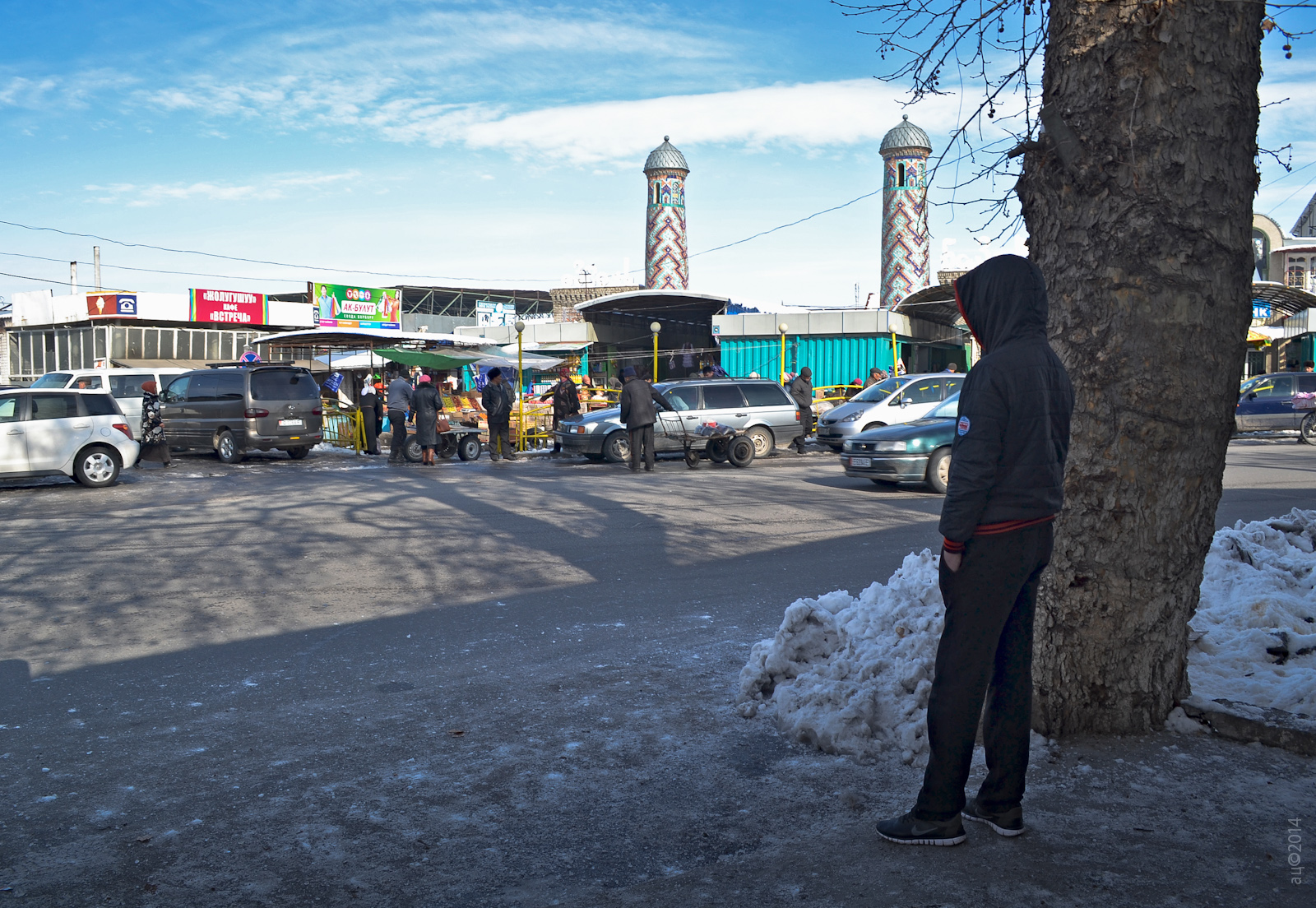
Uzgen’s bazaar sits on the edge of a quiet town in southern Kyrgyzstan, where life moves at its own unhurried pace. The city feels like a place where time has settled into the cracks of its old mosques and dusty streets, and the bazaar is the heartbeat of it all—a place where trade, tradition, and daily life intertwine without pretense.
This has always been a town shaped by movement. Centuries ago, caravans passed through Uzgen on their way between China and Central Asia, and the bazaar grew from that same rhythm of exchange. Today, it still carries that legacy, though in a quieter, more local way. There are no grand facades or polished storefronts here. Instead, the market is a collection of low stalls under corrugated metal roofs, wooden counters, and the occasional patch of shade from a tree. The architecture is simple, almost makeshift, because the real purpose isn’t spectacle—it’s the steady flow of goods and conversations that keep the town connected.
The day begins before dawn. Farmers from nearby villages arrive with carts of vegetables, fruits, and dairy, their produce still damp with morning dew. In summer, the air is thick with the scent of ripe apricots, melons, and fresh herbs. Winter brings the sharp tang of smoked meat and dried fruits. Bargaining is expected, but it’s never rushed. A deal isn’t just about price—it’s about trust, about knowing the person on the other side of the transaction. Some trades take minutes; others stretch into long conversations over tea.
Then there are the livestock days, when the market transforms into a different kind of world. Sheep, goats, cows, and horses fill a separate section, their bleats and snorts mixing with the shouts of traders. Men with weathered hands run their fingers through wool, check teeth, and press their palms against flanks to judge an animal’s health. For many families, this is their livelihood—buying and selling livestock isn’t just commerce, it’s a skill passed down through generations.
But the bazaar is more than just a place to buy and sell. It’s where the town gathers. Old men sit on benches, sipping tea and debating politics. Women exchange news while sorting through bolts of fabric. Strangers become acquaintances over shared meals of samsa or bowls of laghman. For outsiders, it’s a rare glimpse into the rhythms of life beyond the usual tourist stops. You won’t find postcard-perfect scenes here, but you will find the kind of authenticity that comes from a place that has existed for centuries, adapting but never losing its essence.
The market also serves as a crossroads for goods moving between countries. Chinese electronics, Uzbek spices, Tajik dried fruits, and Kyrgyz wool all pass through Uzgen’s stalls. Local farmers bring their harvests—apricots, walnuts, honey—to be sold in cities farther north. The bazaar isn’t just a local affair; it’s part of a larger network, a quiet but vital thread in the region’s economy.
Uzgen itself has always been a place of passage. Long before it was a town in Kyrgyzstan, it was a stop on the Silk Road, a place where merchants from distant lands would rest, trade, and move on. The bazaar has been here in some form for just as long. It may not look like the grand caravanserais of the past, but its purpose remains the same—to keep the town connected to the world beyond its borders.
Visiting the bazaar isn’t about checking off a sightseeing list. There are no guided tours or souvenir stands. Instead, it’s an invitation to step into the flow of daily life. You can buy a loaf of fresh bread, share a pot of tea with a vendor, or simply watch as the market wakes up and settles into its familiar rhythm. For those willing to wander a little off the usual path, it’s a chance to see Kyrgyzstan not as a destination, but as a place where people live, work, and carry on traditions that have endured for generations.