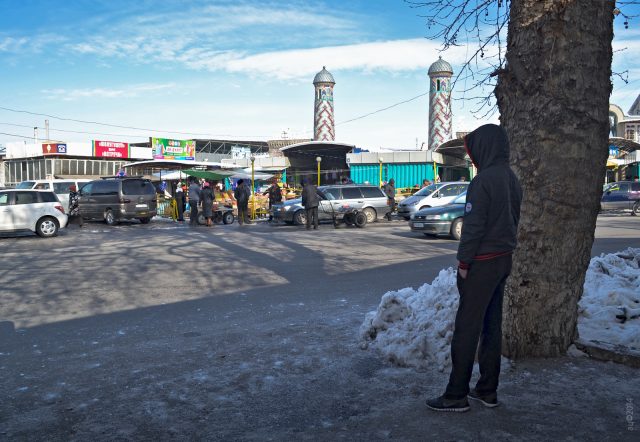
Uzgen is one of those places that rarely makes it onto the usual tourist maps. Tucked away in southern Kyrgyzstan, where the foothills of the Tian Shan give way to the fertile Fergana Valley, the city moves at its own unhurried pace. There are no flashy signs or souvenir stalls here—just the quiet rhythm of daily life, where history lingers in the architecture and the stories people tell. Lenin Square sits at the heart of this understated charm, a place where the past and present coexist without fanfare.
The square isn’t just an administrative hub; it’s where the pulse of Uzgen is most visible. Surrounded by narrow streets lined with adobe houses and Soviet-era buildings, it serves as a natural gathering point. From here, paths lead to the bustling bazaar, the local mosque, and the ancient Karakhanid mausoleums that stand as silent witnesses to the city’s medieval glory. In Soviet times, this was the center of public life, and even now, it remains a place where people meet, chat, and while away the hours.
At the center of the square stands one of the few remaining Lenin statues in Kyrgyzstan, a relic of a bygone era. The monument, set on a pedestal and framed by flowerbeds and trees, is surrounded by mid-20th-century buildings—two-story structures with columns, light stone facades, and large windows. They may look worn, but there’s a certain dignity in their simplicity, a reminder of the city’s more recent history.
Just a short walk away, the Karakhanid mausoleums rise on a small hill, their intricate terracotta carvings hinting at Uzgen’s past as a thriving center of the Karakhanid state in the 11th and 12th centuries. The contrast between these medieval tombs and the Soviet-era square is striking—a tangible link between two very different chapters of the city’s story. From the mausoleums, the view stretches over Uzgen, where the old and the new coexist in quiet harmony.
Mornings on Lenin Square are lively. The local bazaar spills into the area, filling the air with the scent of fresh bread, spices, and ripe fruit. There are no supermarkets here, so the market remains the heart of commerce, where vendors sell everything from handwoven textiles to homemade cheese and fermented mare’s milk. Elderly men gather under the trees to play backgammon, while women haggle over prices for vegetables. The square becomes a social hub, a place where deals are made and news is shared over steaming cups of tea.
By evening, the atmosphere shifts. The heat of the day fades, and the square fills with people seeking respite. Children kick balls across the pavement, teenagers cluster in small groups, and older men sip tea from thermoses. There are no trendy cafes or noisy bars in Uzgen, so the square becomes an informal meeting place, a spot to unwind. Occasionally, local musicians perform or festivals are held, but more often than not, it’s just a quiet corner where the city breathes.
For travelers, Lenin Square offers a rare glimpse into the everyday life of Uzgen. There are no guided tours or crowds of tourists—just the chance to sit on a bench, order a cup of tea from a street vendor, and watch the city go by. It’s not a place that tries to impress; it simply exists, and that’s what makes it memorable.
Uzgen has seen empires rise and fall, caravans pass through, and borders shift. Today, its history is etched into the architecture, the names of its streets, and the stories of its people. Lenin Square is where these layers of time intersect—a place where the past isn’t just preserved in monuments but lived in the daily routines of those who call this city home. If you ever find yourself in Uzgen, take a moment to linger here. Sit, listen, and let the city reveal itself in its own quiet way.