Standing in the heart of Utrecht, the Dom Tower rises abruptly from the city’s medieval streets, as if the old town itself has made way for its presence. This is not just a monument but a living piece of history, one that has witnessed centuries of change while remaining a constant in the life of the city. The cathedral and its tower have seen markets, processions, and quiet moments of reflection, and today, they stand surrounded by the hum of bicycles, the chatter of café-goers, and the occasional organ music drifting from within.
Construction of the cathedral began in the 13th century, a project that would span nearly three hundred years. Over that time, architectural styles shifted, rulers came and went, and even the faith of the people changed. Originally built as a Catholic church dedicated to Saint Martin of Tours, it became a Protestant place of worship after the Reformation. Now, it serves as an active church, where services are held on Sundays and visitors can wander in during the week. The interior is quiet, almost austere—a reflection of Protestant simplicity—with high white walls, wooden pews, and large windows that let in streams of light. The choir, once filled with the voices of monks, now occasionally hosts organ concerts, the music echoing through the vast space.
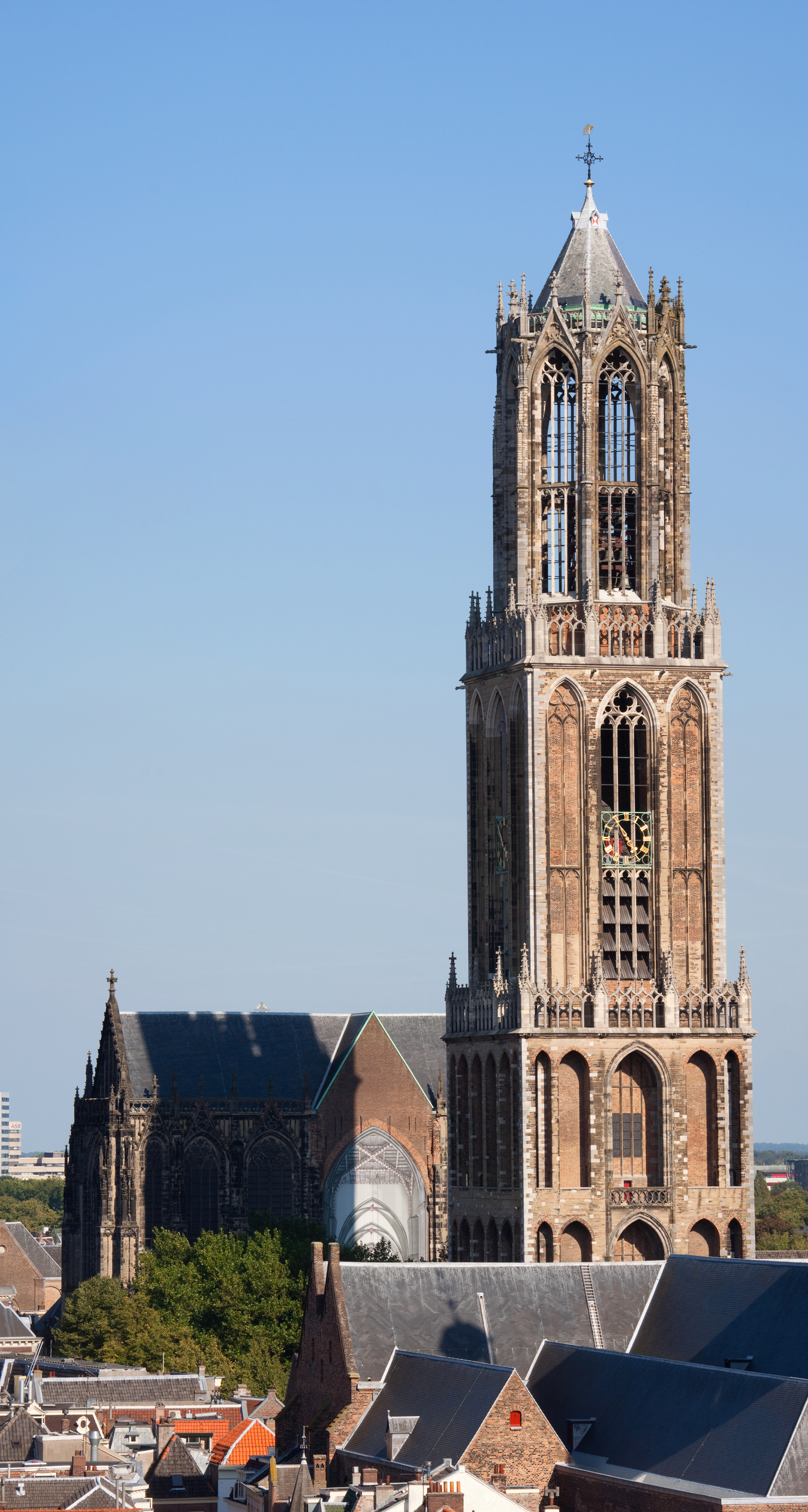
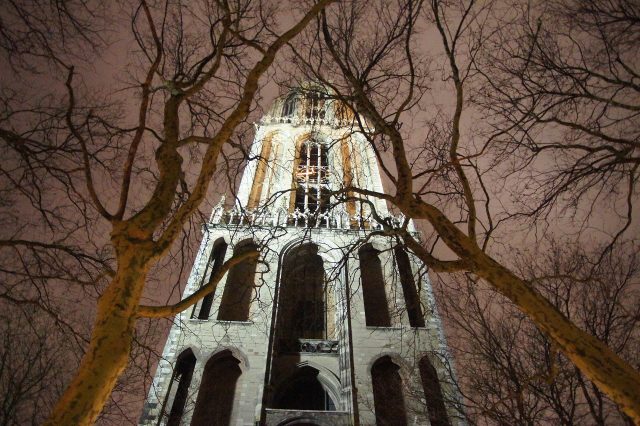
The Dom Tower is the most striking feature of the cathedral, and in many ways, its own story. It is the tallest church tower in the Netherlands and the only part of the original structure that remains fully intact. In 1674, a violent storm destroyed the nave, leaving the tower standing alone, separated from the rest of the building by a street now bustling with cyclists and pedestrians. This unusual gap has become one of Utrecht’s most recognizable sights, a reminder of how even the most enduring structures can be shaped by time and chance.
Inside the cathedral, the atmosphere is one of quiet dignity. Unlike the ornate Catholic churches found elsewhere in Europe, this space is restrained, with little in the way of gilded altars or elaborate frescoes. The focus is on the architecture itself—the soaring ceilings, the play of light through the windows, and the sense of history embedded in every stone. The organ, one of the oldest in the country, fills the air with deep, resonant notes that seem to vibrate through the very bones of the building. On certain days, the sound of rehearsals or concerts spills out into the square, drawing in passersby.
The cathedral is more than just a historical site; it is a place where the city’s past and present intersect. Throughout the year, it hosts exhibitions, lectures, and seasonal events, from Christmas markets to open-air film screenings in the summer. Locals come here not just to admire the architecture but to meet friends, enjoy a coffee at a nearby café, or skate on the ice rink that appears in winter. It is woven into the fabric of daily life in Utrecht, a gathering point that feels as much a part of the city as the canals or the cobblestone streets.
Climbing the 465 steps to the top of the Dom Tower is a challenge, but the view from the summit is worth the effort. From this height, Utrecht unfolds in all directions—red-tiled roofs, winding canals, and the endless network of bicycle paths that crisscross the city. The old and the new stand side by side here, with medieval spires rising near modern office buildings and new neighborhoods stretching toward the horizon. The tower remains a fixed point in this ever-changing landscape, a landmark that orients not just in space but in time.
The cathedral’s history is deeply entwined with that of the Netherlands itself. It has been a site of coronations, political decisions, and moments of refuge, including during World War II, when it sheltered those fleeing persecution. Today, memorial plaques on its walls honor those who fought and died in conflicts, as well as those who resisted oppression. The building is not just a relic of the past but an active participant in the present, hosting ceremonies like the graduation of students from Utrecht University, one of the oldest in the country.
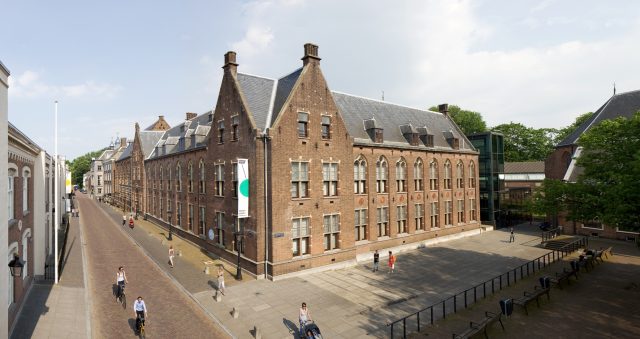
A walk through the cathedral and its surroundings is like stepping into different eras. Nearby, the former monastery now houses a museum, while the canals that encircle the old town offer a glimpse of Utrecht’s medieval layout. Unlike Amsterdam, Utrecht is not overrun with tourists, and the pace here is slower. People linger in small shops, sit by the water, and take their time exploring. The cathedral fits naturally into this rhythm, offering a place to pause, reflect, and absorb the city’s quiet charm.
In the end, the Dom Cathedral is more than just a building. It is a testament to the resilience of history, with all its fractures and imperfections. The tower stands apart from the nave, the walls bear the marks of time, and the interior lacks the grandeur of other European cathedrals. Yet it is these very flaws that make it compelling. Here, history is not polished or sanitized but presented as it is—raw, enduring, and deeply human. That authenticity is what makes it a place worth visiting, not just for its architecture, but for the stories it holds within its walls.