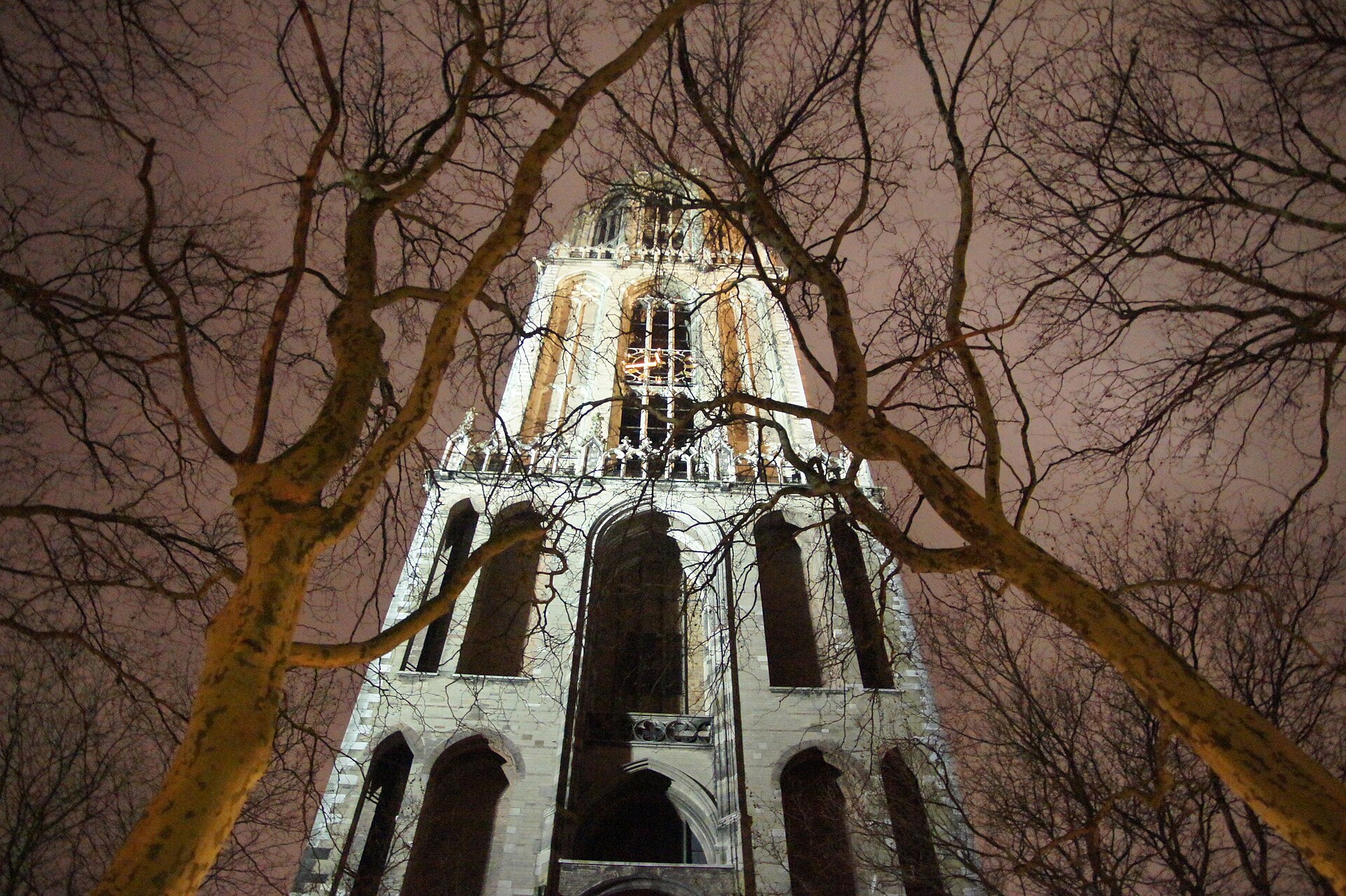
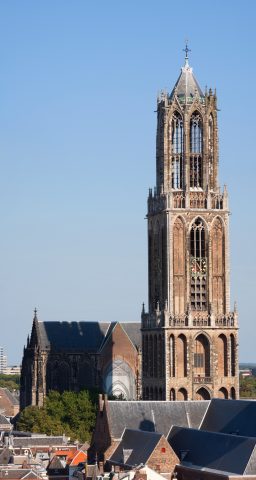
The Dom Tower isn’t just a landmark in Utrecht—it’s the city’s defining feature. From a distance, its silhouette cuts through the skyline, a familiar presence that feels as if it has always been there. Yet its history is far more complicated than its steadfast appearance suggests. The tower stands where the medieval Cathedral of Saint Martin once rose, though little remains of the original structure today. Construction began in the 13th century, but the cathedral was never completed. In 1674, a violent storm tore through the nave, leaving only the tower and the choir intact. Since then, the tower has stood alone, separated from the surviving parts of the cathedral by a broad square that now draws both locals and visitors.
At 112 meters tall, the Dom Tower was once the tallest building in the Netherlands, and even now, its scale is striking. Built from brick and pale stone, its architecture blends Gothic elements with later additions. The lower levels feature pointed arches and narrow windows typical of medieval church design, while the upper sections adopt a simpler, almost austere style. Inside, the original mechanisms remain, including the bells that still ring on special occasions. Climbing the narrow spiral staircase to the top is no easy feat, but the view from the summit makes the effort worthwhile.
The tower is deeply woven into Utrecht’s history. During the Middle Ages, the city was a major religious center, and Saint Martin’s Cathedral served as both a place of worship and a symbol of the bishops’ authority, who governed the region for centuries. After the Reformation, the cathedral passed into Protestant hands, but its significance endured. The tower, left standing without its nave, became a kind of beacon around which the city’s life revolved. Today, it remains a focal point for tours that explore Utrecht’s evolution and the tower’s role in shaping its identity.
Inside, visitors can see more than just the bells. A small museum within the tower offers a modest but intriguing look at its past, with displays of historical documents, models of the cathedral at different stages, and tools used by its builders. The centerpiece is the carillon, a musical instrument made up of dozens of bells installed in the 17th century. It still plays on Sundays and holidays, its music drifting over the city, a reminder that the tower is far from a relic—it’s a living part of Utrecht.
From the observation deck, the city unfolds in all directions. The view captures not just the historic streets and canals but also the modern districts beyond the old center. Utrecht is a city of contrasts, where medieval churches stand alongside sleek office buildings, quiet courtyards give way to bustling shopping streets, and the past and present coexist seamlessly. The Dom Tower is where these contrasts meet, a place where history is always in conversation with the present.
The tower hasn’t always looked as it does today. After the 1674 storm, it underwent several restorations, each altering its appearance. In the 19th century, the upper section was rebuilt to give it a more finished look, and the current clock face was added. Though it now appears as if it were designed all at once, the tower is really the result of centuries of change, shaped by architectural trends, engineering advancements, and the lives of those who built and maintained it.
Life around the tower never slows down. In summer, open-air concerts fill the square; in winter, an ice rink draws crowds. Year-round, artists set up easels to capture the tower from different angles. The square itself is one of the city’s most popular gathering spots, not just for the view but for the atmosphere—a mix of grandeur and everyday life. It’s a place to sit on a bench and watch the world go by or duck into a nearby café for a break after exploring the city.
More than just a tourist attraction, the Dom Tower is part of Utrecht’s soul. It serves as a reminder that the city’s history runs deeper than its postcard-perfect scenes. Every stone here holds a story, and the tower is one of the most vivid examples. Whether climbing its stairs, listening to the bells, or simply gazing at it from afar, it’s easy to see why Utrecht means so much to those who live here—and why it draws visitors looking for something beyond the surface. This is a place where history isn’t just remembered; it’s felt.