The Dormition Cathedral in Sergiyev Posad is one of those rare places where history isn’t just remembered—it lingers in the air, in the worn stone underfoot, in the way light filters through ancient windows. It stands at the heart of the Trinity Lavra of St. Sergius, surrounded by fortress walls that have witnessed centuries of Russian life. The cathedral wasn’t built in haste; its construction stretched over nearly two decades in the 16th century, commissioned by Ivan the Terrible to mark Russia’s victory over the Kazan Khanate. More than a church, it became a symbol of unity for a land still finding its identity, a physical manifestation of faith and power intertwined.
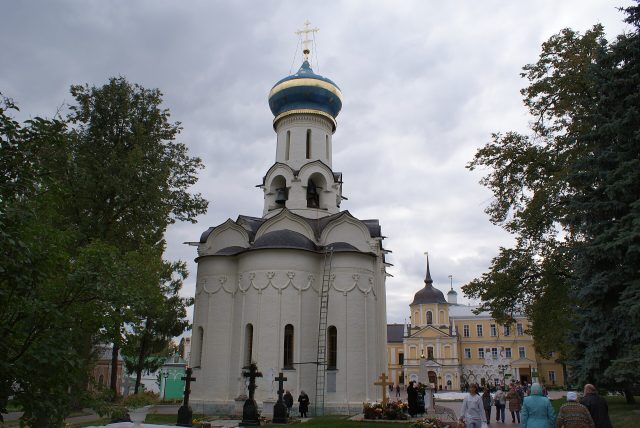
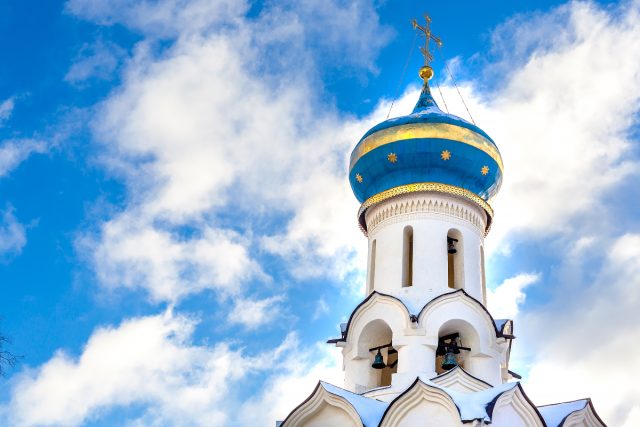
From the outside, the cathedral is imposing in its simplicity. Its white-stone walls rise with a quiet strength, crowned by five golden domes that catch the sunlight like beacons. The architecture is a study in contrasts—massive yet balanced, austere yet rich in detail. Inside, the space feels vast despite the thick pillars supporting the vaulted ceilings. The walls are alive with frescoes, their colors still vivid after centuries, depicting biblical scenes with a depth that draws even the casual observer in. The central dome is particularly striking, its ceiling a swirling vision of heavenly hosts, their faces serene yet full of motion, as if caught mid-prayer.
The cathedral has always been more than a place of worship. In its early years, it served as a repository for some of Russia’s most precious manuscripts and icons, many of which now reside in museums. It was here that tsars were crowned, their reigns consecrated within these walls, and where noble families laid their dead to rest. Beneath the cathedral, in the crypt, lies the relics of Maximus the Greek, a scholar and translator whose work helped shape Russian literature and thought. His presence is a reminder of the cathedral’s role not just in spiritual life, but in the intellectual and cultural currents of the time.
Like many religious sites in Russia, the Dormition Cathedral endured hardship during the Soviet era. Services were halted, and parts of its interior suffered damage or neglect. Yet in the late 20th century, restoration efforts began to peel back the layers of time, revealing the cathedral’s former glory. Today, the frescoes have been painstakingly cleaned, the iconostasis gleams with gold leaf, and the flicker of candlelight once again dances across the walls. The cathedral is active again, its doors open to both worshippers and visitors, though the atmosphere inside remains one of reverence, as if the centuries of prayer have seeped into the very stones.
Visiting the cathedral is less about ticking off a landmark and more about stepping into a living story. There’s no rush here—no guided tour can capture the way the light shifts in the late afternoon, or how the acoustics carry the faintest whisper of a hymn. Some come to decipher the symbolism in the frescoes, tracing the stories of saints and sinners with their eyes. Others simply stand in silence, listening to the echoes of footsteps and prayers long past. The cathedral doesn’t demand attention; it earns it, quietly, through the weight of its history.
Beyond the cathedral’s walls, the Lavra hums with activity. Monks move between buildings, pilgrims light candles at smaller chapels, and tourists wander the grounds, cameras in hand. But the moment you cross the threshold of the Dormition Cathedral, the noise fades. The air is cooler, the light softer, and the sense of time stretches out like an unbroken thread. It’s a place where the past isn’t just preserved—it’s still alive, breathing through the rituals of daily services, the murmur of prayers, the occasional toll of a bell.
What makes the cathedral endure isn’t just its age or its beauty, but the way it holds contradictions. It’s a monument to power and humility, to grandeur and simplicity, to the fleeting nature of human life and the persistence of faith. People return to it not because it’s famous, but because it feels necessary—a place where the weight of history and the lightness of belief exist side by side. In a world that moves too quickly, the Dormition Cathedral remains a rare stillness, a reminder that some things are meant to last.