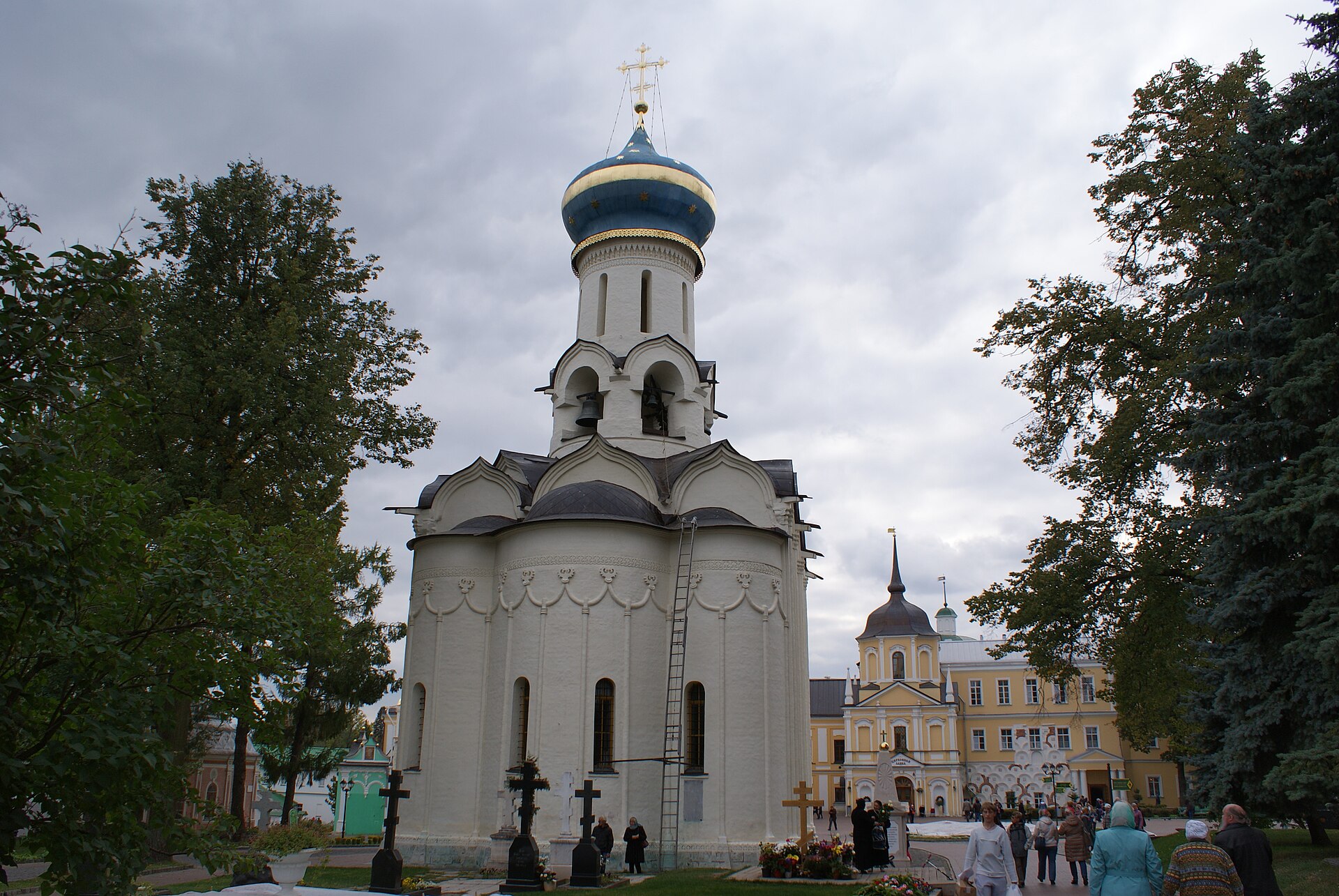
Tucked away within the sprawling grounds of the Trinity Lavra of St. Sergius in Sergiyev Posad, the Church of the Descent of the Holy Spirit is one of those quiet places that often escape the notice of hurried visitors. Yet its unassuming presence holds layers of history and meaning, woven into the very fabric of this ancient monastic complex. Built in the mid-16th century, it stands as one of the earliest stone churches in the lavra, a testament to the monastery’s growing influence during a time when Sergiyev Posad was not just a spiritual hub but a political stronghold of medieval Russia. Every structure here carried weight, and this small church, though modest in scale, played its part in shaping the harmony of the ensemble.
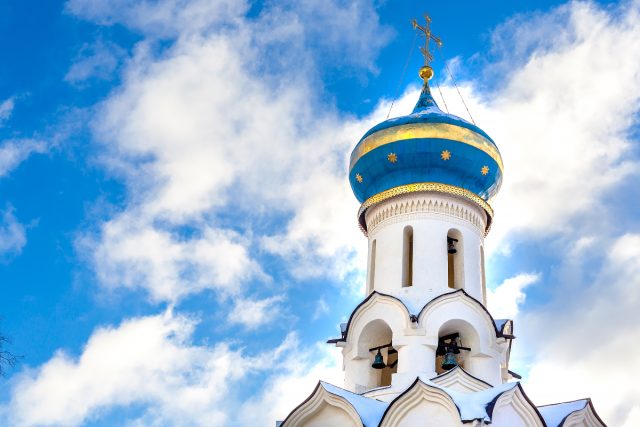
The architecture of the church reflects the restrained elegance of early Russian ecclesiastical design, with a few distinctive touches that set it apart. Its white-stone walls, narrow windows, and the slender spire of its bell tower give it a sense of lightness, as if reaching toward the sky. Inside, the simplicity is striking—no gilded excess, no overwhelming grandeur, just the quiet dignity of a space meant for prayer rather than spectacle. The surviving frescoes and icons, though less celebrated than those in the lavra’s main cathedral, offer a glimpse into the artistic traditions of the time, their muted tones and delicate lines speaking of a different kind of beauty.
The church’s history is deeply intertwined with that of the lavra itself. By the 16th century, the monastery was flourishing, and new buildings were erected to accommodate the growing number of pilgrims drawn to this sacred site. The Church of the Descent of the Holy Spirit replaced an older wooden structure, which had long since become too small for the crowds seeking solace and blessing. For centuries, it served as one more place of worship in a complex that was already a beacon of faith, its walls witnessing countless prayers and rituals.
A particular chapter in its story unfolded in the 17th century, when a side chapel was added in honor of St. Sergius of Radonezh, the monastery’s revered founder. According to local tradition, this was the very spot where the saint’s cell once stood, though no definitive evidence confirms the legend. Still, the belief took root, and the chapel became a focal point for pilgrims eager to pay their respects. Today, it remains one of the most venerated corners of the church, a quiet space where visitors can reflect on the legacy of a man who shaped the spiritual identity of an entire nation.
Like many religious sites in Russia, the church endured a difficult period during the Soviet era. It was closed, its interior altered, its purpose forgotten. But as the 20th century drew to a close, the building was returned to the faithful, and painstaking restoration work began. Now, it stands once again as an active place of worship, though it has never regained the same level of attention as the lavra’s more famous landmarks. That, perhaps, is part of its charm—it exists outside the usual tourist circuits, offering a respite from the crowds and a chance to experience something more intimate.
Stepping inside feels like entering a different rhythm of time. The creak of wooden floors, the flicker of candlelight, the murmur of prayers—these small details create an atmosphere that is both timeless and deeply personal. There are no guided tours here, no jostling for the best view. Instead, there is space to pause, to breathe, to let the weight of centuries settle around you. For many, these moments of quiet reflection become the most memorable part of their visit, a counterpoint to the grandeur of the lavra’s more celebrated structures.
The Church of the Descent of the Holy Spirit is more than just a historical monument; it is a living thread in the tapestry of Sergiyev Posad’s past. It tells of a monastery that grew from a humble hermitage into a spiritual powerhouse, of a town that became a crossroads of faith and politics, of people who sought meaning within these walls. Today, as the lavra reclaims its place as one of Russia’s most important religious centers, this unassuming church continues to fulfill its role—not with fanfare, but with quiet persistence. It does not demand admiration, yet its very existence invites contemplation, a reminder that some of the most profound stories are written in the simplest of places.