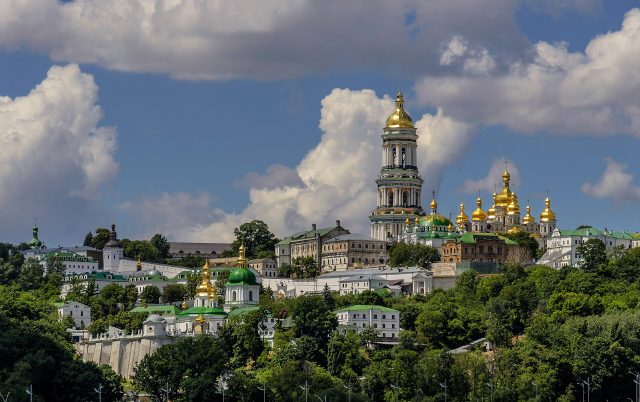
The Dormition Cathedral stands at the heart of Kyiv Pechersk Lavra, a place where the layers of history feel almost tangible. Built in the late 11th century, it was the first stone church of the monastery and quickly became a spiritual anchor for Kyivan Rus. The cathedral’s origins are tied to Prince Sviatoslav Yaroslavich and Saint Theodosius of the Caves, who envisioned it as a grand sanctuary for the relics of the monastery’s revered saints. Construction moved swiftly for its time, a rarity in an era when such projects often stretched over decades. The original structure followed the cross-domed Byzantine style typical of early Rus architecture, its walls adorned with frescoes and floors laid with intricate mosaics—techniques still new to the region.
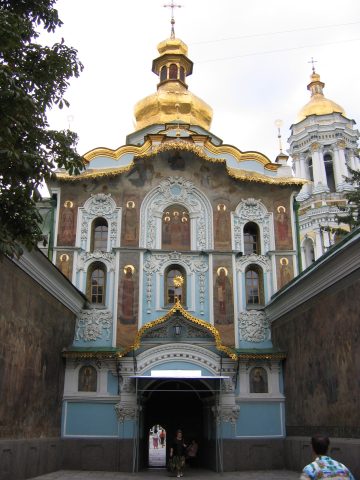
Over the centuries, the cathedral endured repeated trials. Mongol forces sacked it in the 13th century, yet the monastery was rebuilt, and the church regained its role as a place of worship. By the 17th century, the cathedral had been transformed in the Ukrainian Baroque style, its exterior now marked by ornate details, pear-shaped domes, and tall, arched windows. Inside, fragments of ancient frescoes survived, though much of the original artwork was lost or altered in later renovations. The building became a palimpsest of architectural eras, each layer telling its own story.
The 20th century brought the cathedral’s darkest hour. In 1941, during World War II, it was destroyed by an explosion. For decades, the ruins stood as a silent witness to the violence of war, with debates lingering over who was responsible—Soviet troops retreating or German occupiers advancing. The cathedral remained in ruins until the late 1990s, when Ukraine’s independence sparked a painstaking restoration. Using old photographs, architectural plans, and historical records, restorers sought to recreate the cathedral as it had been before its destruction. In 2000, it was reconsecrated, returning to the Lavra as its central spiritual landmark.
Today, the cathedral’s exterior commands attention without overwhelming the senses. Its towering walls and domes strike a balance between grandeur and grace, while the interior feels expansive yet intimate. Modern frescoes, painted in the style of ancient Rus masters, line the central nave, and the iconostasis, reconstructed from historical models, serves as a bridge between past and present. One of the most revered features is the reliquary of Saint Theodosius, a founder of the monastery, where pilgrims still come to pay their respects.
The cathedral is more than a monument; it’s a living connection to history. Stepping inside, you can almost hear the echoes of monks’ footsteps, the chanting of ancient hymns, the quiet murmurs of prayer. Yet it’s not frozen in time—it remains an active place of worship, where people seek solace, reflection, and a sense of continuity. The real power of the Dormition Cathedral lies in this duality: it preserves the memory of those who built and protected it while offering a space for new generations to find meaning.
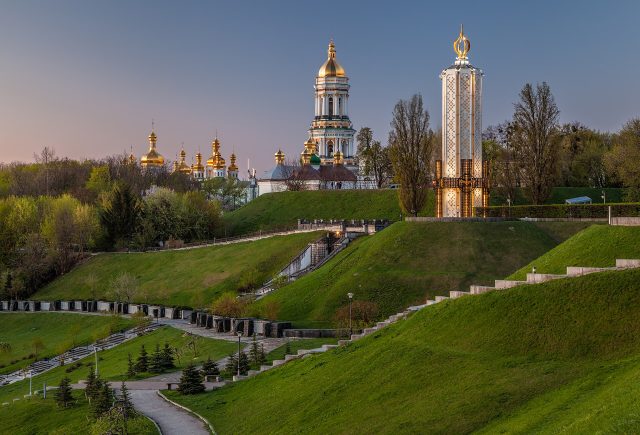
Visitors often overlook the small details that make the cathedral special. In the side chapels, faint traces of 11th-century frescoes remain, their faded faces a testament to the skill of long-forgotten artists. The acoustics are another subtle marvel—even a whisper carries clearly, as if the vaulted ceilings amplify every sound. For a broader perspective, the viewing platform offers a sweeping view of the Dnipro River and Kyiv’s skyline, a landscape that has changed little over the centuries. It’s easy to imagine how medieval monks, princes, and pilgrims once gazed upon the same scene.
The cathedral follows the rhythms of monastic life, with services held according to Orthodox traditions. Early liturgies, evening prayers, and festive ceremonies create an atmosphere of solemn tranquility. Even those who don’t consider themselves religious may find something profound in attending a service, where the rituals unfold with a timeless dignity. On weekdays, when the cathedral is open to visitors, there’s no rush—you can linger by the icons, sit in quiet contemplation, or simply watch how light filters through the high windows, shifting with the hours.
What makes the Dormition Cathedral enduring is its ability to hold the past and present in the same space. Every stone bears the imprint of the hands that shaped it, every icon carries the prayers of those who stood before it, and every sound echoes with the voices of centuries. Though it has known destruction and neglect, the cathedral stands once more, a reminder that some things transcend time. A visit here isn’t just about seeing a historic site; it’s about touching something deeper—a place where history isn’t just remembered, but still alive.