Batna’s University of Hadj Lakhdar is the kind of place that rarely makes it into travel guides, yet it’s impossible to imagine the city without it. Unlike the grand, centuries-old universities of Europe with their towering spires and storied halls, this institution has its own quiet significance—a place shaped by history, necessity, and the rhythms of daily life in eastern Algeria. Batna itself sits in the foothills of the Aurès Mountains, a region where layers of history overlap: Roman ruins lie just beyond the city limits, French colonial architecture lingers in the streets, and the legacy of Algeria’s struggle for independence still resonates. The university is part of that continuum, a modern institution where knowledge has been passed down through generations, adapting to the needs of a changing country.
Founded in 1977 as a branch of Constantine’s larger university, it quickly gained independence, becoming one of the most important educational centers in eastern Algeria. Today, it draws thousands of students from across the country, many of whom arrive with the weight of family expectations and the hope of a better future. The university is named after Hadj Lakhdar, a revolutionary figure whose life embodied the connection between education and the fight for Algeria’s sovereignty. There’s a certain symbolism in that choice—this isn’t just a place where degrees are earned, but where the ideals of the nation’s founders are quietly upheld.
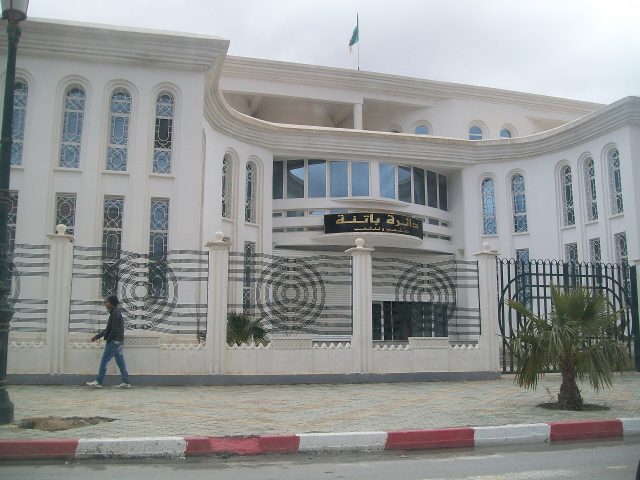
The campus architecture reflects the pragmatic spirit of post-independence Algeria. Built during a time when the country was rapidly expanding its educational infrastructure, the buildings prioritize function over form. The main structure stretches along a wide avenue, its utilitarian design more reminiscent of a government office than a traditional seat of learning. This wasn’t an oversight but a necessity: Algeria needed schools, and it needed them quickly. The result is a no-frills environment where every detail serves a purpose. That said, newer additions to the campus show a shift toward contemporary design—glass facades, open courtyards, and spaces that feel more inviting, if still modest compared to universities elsewhere.
Student life here unfolds differently than in Western campuses. There are no raucous parties, no sprawling sports complexes, no festivals that spill into the streets. Instead, the rhythm is quieter, more introspective. Students gather in the university’s small cafés, linger under the shade of trees between classes, or debate ideas in the courtyards. Many come from other regions of Algeria, and for them, the university is more than just a place of study—it’s a temporary home, a bridge between their past and their future. The fields of study are practical: medicine, engineering, education, law. These are the professions that will shape Algeria in the decades to come, and the students here know it.
Beyond academics, the university plays a vital role in Batna’s cultural life. It hosts lectures, exhibitions, and occasional concerts, offering a rare intellectual hub in a city that lacks the entertainment options of Algiers or the coastal resorts. For locals, these events provide a chance to engage with ideas, history, and art in a way that’s otherwise hard to come by. The university’s library, though not vast, is a quiet refuge, while its lecture halls have heard discussions on everything from Algerian literature to the challenges of modern governance. In a region where opportunities for cultural enrichment are limited, the university fills a gap.
The campus itself is a self-contained world, with its own routines and rituals. Between classes, students retreat to the green spaces that dot the grounds, spreading out notebooks or simply enjoying the breeze. In the summer, the shade of the trees is a necessity, offering relief from the relentless sun. By evening, as the heat subsides, small groups gather on benches, talking about everything from exam stress to national politics. There’s a sense of purpose here, a shared understanding that this place exists to serve a larger goal. It’s not glamorous, but that’s part of its appeal—this is a university that values substance over spectacle.
For those interested in Algeria’s modern history, the university offers a glimpse into the country’s post-independence era. The 1970s were a time of ambitious nation-building, and Algeria looked to socialist models for inspiration, particularly in education. That influence is still visible in the way the university is organized, from its curriculum to its architecture. Yet there’s also a strong thread of Algerian tradition here, especially in the reverence for learning. Education has always been more than just a path to a career in Algeria—it’s a means of transformation, a way to honor one’s family and contribute to the nation’s progress.
Of course, the University of Hadj Lakhdar isn’t a tourist attraction in the traditional sense. There are no grand monuments to photograph, no legendary tales to recount. But that’s precisely what makes it worth visiting. It’s a place where the ordinary and the essential intersect—where students cram for exams in the library, where professors debate the future of their fields, where the quiet determination of a city is on full display. If you find yourself in Batna, take a walk through the campus. Stop by one of the small cafés, sit on a bench under the trees, or simply watch the students as they come and go. In these unassuming moments, you might just catch a sense of what makes this place, and this city, tick.