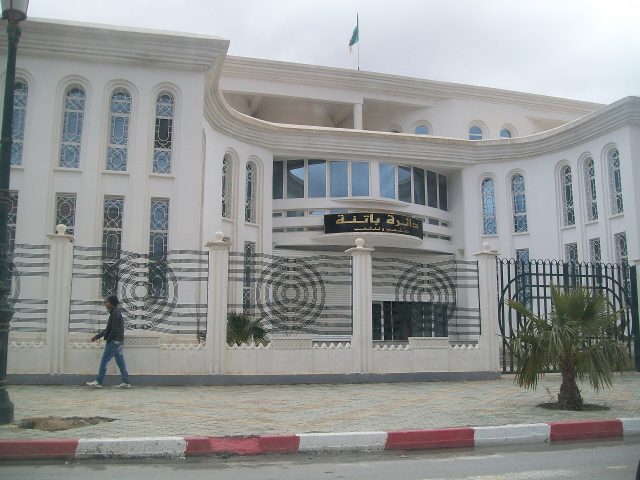
The Emir Abdelkader Mosque in Batna is one of those places that doesn’t immediately reveal itself to travelers, yet leaves behind a quiet sense of depth and presence. It stands on the edge of the city, where the hum of the streets gradually gives way to open squares and the low-rise buildings typical of this part of Algeria. Unlike many other mosques in the country, it doesn’t impose itself with grandiosity or an urge to impress with scale. Its architecture is restrained, almost modest, and it’s this simplicity that makes it stand out.
Completed in the late twentieth century, the mosque doesn’t boast centuries of history, but its significance to the local community is profound. It’s named after Emir Abdelkader, Algeria’s national hero, who led the resistance against French colonization in the nineteenth century. His name is spoken here with respect, as he embodies not just the struggle for independence but also ideals of justice, wisdom, and faith. The mosque serves as a kind of monument to his legacy, a place where history and the present intersect.
From the outside, the building follows the familiar lines of Algerian architecture: its minarets are unassuming, the domes gently curved, and the walls clad in light stone that takes on a golden hue under the sun. The entrance is framed by an arch with traditional patterns, though without excessive ornamentation. Inside, the space is designed to evoke tranquility. The prayer hall is spacious, with high ceilings supported by columns, and light filters through narrow windows, casting soft reflections across the walls. The floors are covered in carpets, and even when the mosque is empty, the silence feels enveloping rather than oppressive.
This isn’t a tourist attraction in the usual sense. You won’t find groups of foreigners with guides here, and locals don’t come for photographs—they come to pray, to reflect, or simply to be alone. That’s perhaps its greatest value: it’s alive, authentic, and hasn’t been turned into a museum piece. In Batna, as in many Algerian cities, mosques serve not just as religious centers but as hubs of community life. People gather to discuss news, meet friends, or while away the hours in unhurried conversation.
The mosque is situated in a part of the city where different eras and influences blend. Nearby, you’ll find old quarters with narrow streets alongside more modern buildings constructed after Algeria’s independence. Batna itself isn’t one of the country’s most famous cities, but it’s in places like this that you sense the true rhythm of Algerian life. There’s no tourist hustle, just the quiet reality of people for whom the mosque is not just a structure but a part of daily existence.
If you ever find yourself in Batna, it’s worth visiting not just to see the building but to experience the atmosphere. Late afternoon is the best time, when the heat subsides and the light softens. The mosque is especially beautiful then, with the minarets casting long shadows and the call to prayer drifting over the city. Even if you don’t understand Arabic, the words aren’t the point—it’s the sense of connection to something larger that lingers.
The Emir Abdelkader Mosque isn’t as ancient as the great mosques of Algiers or Constantine, nor does it boast the intricate mosaics or carved wood found in other religious sites across the country. But that’s precisely what makes it feel approachable. It doesn’t try to astonish; it simply exists, woven into the fabric of the city and its people. Maybe that’s why it leaves a deeper impression than many more famous places. There’s nothing superfluous here, and in that quietness lies its wisdom.