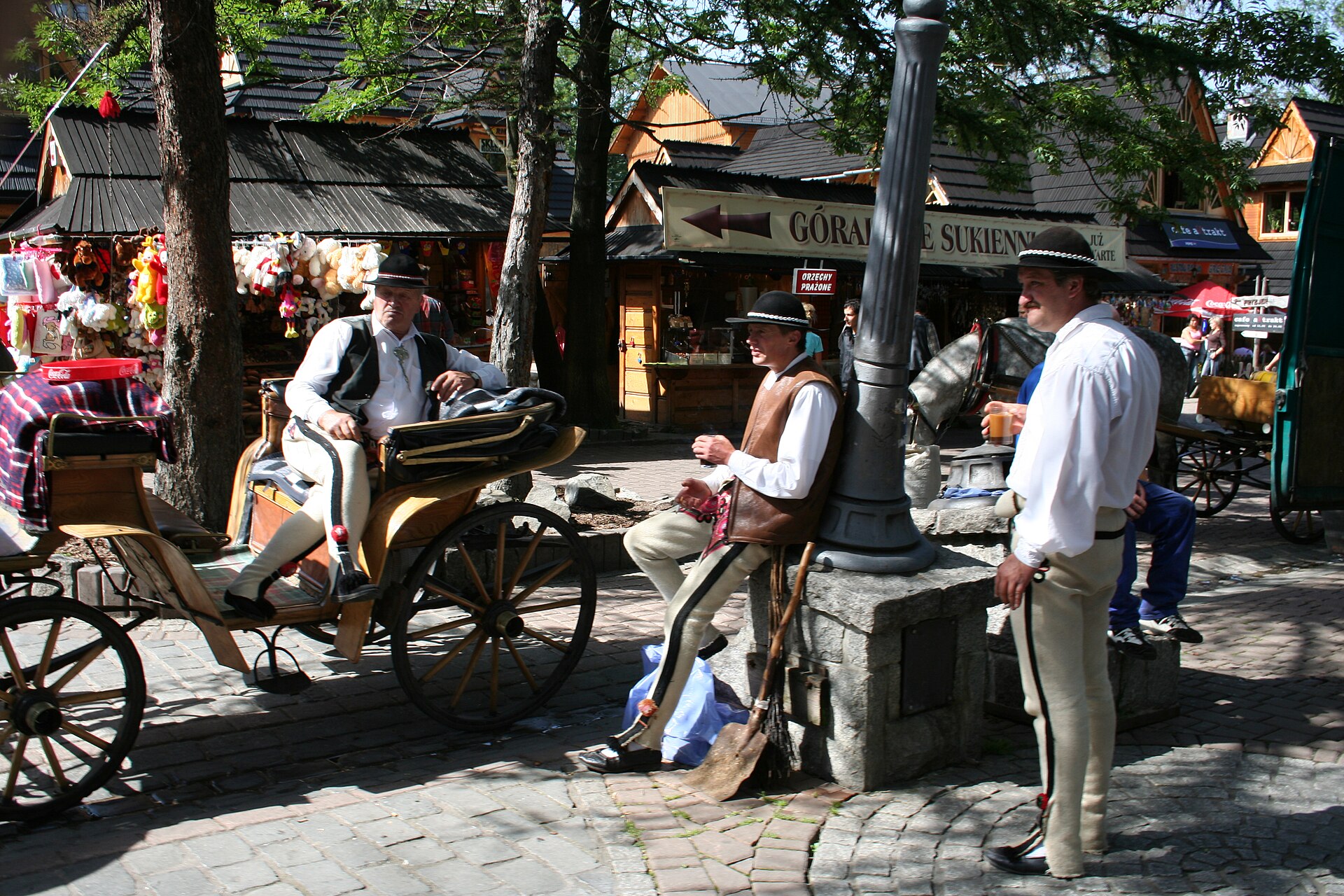
Photo: Aga Viburno, CC BY-SA 3.0
Krupówki Street
out of 5 0 ratingsKrupówki Street isn’t just the main thoroughfare of Zakopane—it’s the heartbeat of the entire Podhale region. Walking here feels less like visiting a tourist spot and more like stepping into a living story, one that unfolds naturally with every step. The street stretches nearly two kilometers through the valley, beginning at the foot of the mountains and weaving together different eras: the weathered wooden houses of the past stand alongside modern cafés and shops, yet the place never loses its rhythm. Even in the quieter months, when fewer visitors come, Krupówki retains its energy—the murmur of conversations, the clatter of hooves from horse-drawn carriages, the occasional burst of laughter from a nearby tavern. It’s a street that refuses to stand still.
The history of Krupówki dates back to the late 19th century, when Zakopane was transforming from a small mountain village into a fashionable resort. Artists, writers, and aristocrats flocked here, drawn by the crisp air and the dramatic beauty of the Tatra Mountains. The street became their gathering place, a stage for cultural life where ideas were exchanged over cups of tea and walks along the wooden boardwalks. Over time, legends grew around it. Stanisław Witkiewicz, the architect who defined the Zakopane style, strolled these same paths, as did composer Karol Szymanowski. Early Polish mountain films were shot here, and even now, traces of that era linger in the faded photographs hanging in cafés or the names of shops that have been around for generations. The past isn’t just preserved here—it’s still alive, woven into the daily fabric of the street.
Architecture along Krupówki tells its own story, one of harmony between human craftsmanship and the rugged landscape. The dominant style is distinctly Zakopane: wooden houses with steep, shingled roofs that echo the slopes of the mountains, intricately carved balconies, and heavy stone foundations that anchor them to the earth. Some buildings have stood since the early 1900s, their timber darkened by time, while others are newer but designed to blend seamlessly with the old. Even modern structures use local materials—wood, stone, wrought iron—to maintain the street’s character. The details are what make it special: the hand-painted signs, the lace-like fretwork on window frames, the way some houses seem to lean slightly, as if bowing to the mountains in the distance. Each building feels like a chapter in a longer narrative, one that unfolds slowly for those who take the time to look.
Shopping here is less about transactions and more about immersion. The street is lined with stalls and shops selling everything from hand-carved wooden spoons to thick wool blankets, their patterns inspired by traditional Highland designs. There are cheese vendors grilling oscypek over open flames, the smoky scent mingling with the sharp tang of juniper berries and dried herbs sold in small bundles. Markets spill onto the sidewalks, offering smoked meats, jars of wild honey, and bottles of homemade nalewka, fruit liqueurs steeped in local berries. The vendors aren’t just selling goods—they’re sharing stories. A woman might explain how her family has been making the same sheep’s cheese for generations, or a craftsman might demonstrate how he carves a single wooden bowl from a piece of beech. The pace is unhurried, almost ceremonial, and every purchase feels like a small connection to the place.
Krupówki changes with the seasons, each one revealing a different side of its character. In winter, the street hums with anticipation as skiers and snowboarders make their way to the cable cars, their boots crunching in the snow. By evening, the air is filled with the scent of mulled wine and roasted chestnuts, and the glow of lanterns reflects off the icy pavement. Summer brings a slower rhythm: street musicians play folk tunes on fiddles and accordions, children chase each other past flower-laden balconies, and impromptu markets pop up in the squares. Spring and autumn are quieter, the perfect times to experience the street’s soul. Without the crowds, the pace softens, and the locals—shopkeepers, carriage drivers, the elderly men playing chess outside cafés—become the main characters in the scene. It’s then that Krupówki feels most like itself, a place where time moves differently.
Food is another way to understand the street. The restaurants and taverns here serve up dishes that have been passed down for generations, hearty and unpretentious. Żurek, a sour rye soup with sausage and egg, is a staple, as is bigos, a rich hunter’s stew of sauerkraut and meat. But the real star is oscypek, the smoked sheep’s cheese that’s grilled until it’s golden and slightly crisp at the edges, then served with a dollop of lingonberry jam. You’ll find it everywhere—from street vendors to upscale restaurants—each place claiming their version is the best. Many eateries have live music in the evenings, the plucked strings of a basolia or the mournful notes of a wooden flute adding to the atmosphere. Eating here isn’t just about the food; it’s about the experience, the way the flavors and sounds and stories all come together.
Krupówki is also a place where people gather. Couples stroll arm in arm, families stop to watch a street performer, groups of friends linger outside cafés, debating where to go next. The street has a way of bringing people together, regardless of where they’re from or why they’re here. Locals chat with tourists, sharing recommendations or a bit of gossip, while children dart between the stalls, their laughter blending with the clatter of dishes from nearby restaurants. There’s no sense of division here—just a shared appreciation for the moment, whether it’s the first sip of hot chocolate on a cold day or the way the evening light catches the peaks of the Tatras in the distance.
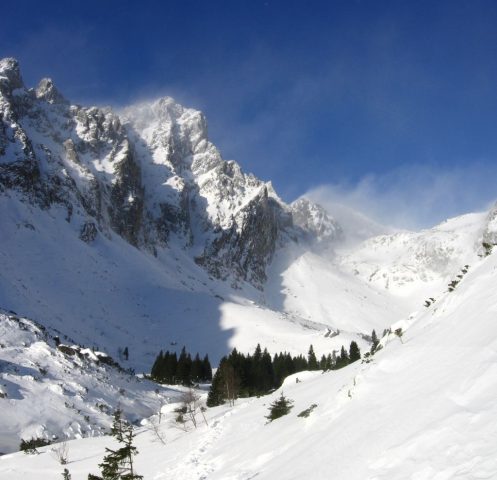
What truly sets Krupówki apart, though, is its relationship with the mountains. The street acts as a threshold, a place where the town ends and the wilderness begins. Look up at any point, and the jagged silhouette of the Tatras is there, a constant reminder of what lies beyond. The shops, the cafés, the crowds—they’re all just a prelude to the real reason most people come to Zakopane. Yet Krupówki has a way of making even a short visit feel meaningful. It’s where you first taste the local cheese, where you hear the stories that make the place come alive, where you realize that the mountains aren’t just a backdrop but a living part of the culture. The street bridges the gap between the comforts of civilization and the raw beauty of nature, between the past and the present, between the rush of travel and the quiet of reflection.
A walk down Krupówki isn’t just about seeing—it’s about feeling. The street shifts with the time of day: sleepy in the early morning, bustling by noon, romantic as the sun sets and the lanterns flicker to life. You might duck into a café that’s been serving the same pastries since the 1920s, or strike up a conversation with an elderly woman selling dried herbs she foraged in the mountains. There’s a sense of continuity here, a feeling that the street has always been this way and always will be. It’s not just a place to pass through; it’s a place to linger, to let the rhythm of the town seep into your bones. And that’s why, long after you’ve left, Krupówki stays with you—not as a memory of a street, but as a sense of something larger, something timeless.
Day around this place
Where else to go on the same day
Building the day…
Where it is
49.29293, 19.95634