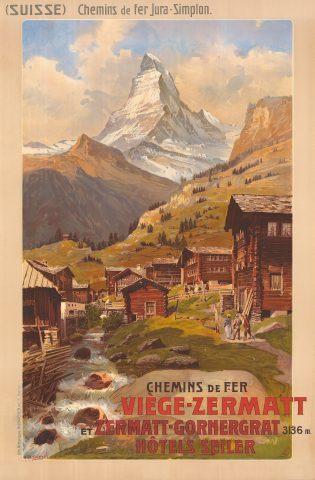
Zermatt’s Bahnhofstrasse is one of those rare streets that doesn’t just lead somewhere—it invites you to slow down. Stretching from the railway station into the heart of the village, it feels like a quiet threshold between the outside world and the timeless rhythm of the Alps. There are no neon signs or crowded souvenir shops here, just a gentle slope lined with wooden chalets, their dark beams weathered by decades of mountain winds. The air carries the scent of fresh bread from a nearby bakery, and the only sounds are the occasional chime of a shop door or the murmur of voices from a café. It’s the kind of place where you instinctively lower your voice, as if speaking too loudly might disturb something fragile.
Unlike the grand boulevards of other European cities, Bahnhofstrasse doesn’t announce its history with monuments or ornate facades. Instead, it whispers it through small, practical details. The houses here were built for survival, not spectacle. Low doorways and small windows were designed to keep out the cold, while thick wooden walls stored heat in winter and kept interiors cool in summer. Even the balconies, often carved with simple geometric patterns, serve a purpose—they’re just wide enough to dry herbs or store firewood. This isn’t architecture meant to impress; it’s architecture that has endured.
The street begins at the railway station, where the modern world briefly intrudes before fading away. The station itself is unassuming, but it’s the gateway to Zermatt’s higher reaches—the Gornergrat Railway climbs to over 3,000 meters, and cable cars ascend toward the Theodul Glacier. Yet before rushing off to the peaks, many visitors linger on Bahnhofstrasse, adjusting to the altitude or simply savoring the moment. The first steps can feel disorienting, not just because of the thin air, but because the pace here is different. There’s no hurry, no agenda—just the quiet certainty that whatever you came for can wait.
Walking along Bahnhofstrasse is like flipping through the pages of a book where every chapter is about stillness. The sidewalks are narrow, forcing you to step aside for others, and the benches along the way are often occupied by people doing nothing in particular—watching the street, sipping coffee, or simply staring at the Matterhorn, which looms in the distance like a silent guardian. The shops here don’t compete for attention. Their windows display hand-knit wool blankets, Swiss Army knives with polished handles, or wheels of cheese aged in local cellars. There’s no pressure to buy, just the quiet understanding that these things are meant to be taken home as small pieces of Zermatt.
The cafés are where Bahnhofstrasse truly comes alive, though "alive" might not be the right word—they hum with a gentle, steady energy. Inside, the air is warm with the smell of roasted coffee and cinnamon, and the tables are arranged so that no one feels rushed. In winter, a fire crackles in the hearth; in summer, chairs spill onto the sidewalk, turning the street into an extension of the café itself. Locals stop by after work, skiers warm up with hot chocolate, and hikers linger over beer, their boots still dusted with trail dirt. Conversations drift between German, English, and French, and no one seems to mind if someone orders mulled wine in July. The only rule is that there are no rules—just the unspoken agreement that this is a place to stay awhile.
By evening, Bahnhofstrasse softens into something even more intimate. The streetlights flicker on one by one, as if someone is lighting them by hand, and the glow from the windows spills onto the cobblestones. Behind lace curtains, you can make out the silhouettes of families at dinner or friends gathered around a table. Occasionally, music drifts from an open door—a guitar, a piano, something slow and unobtrusive. There are no nightclubs here, no late-night crowds. Zermatt has long chosen tranquility over noise, and Bahnhofstrasse is where that choice is most evident. It’s the kind of place where you might find yourself sitting on a bench at dusk, realizing you’ve lost track of time.
Winter transforms the street into a scene from a postcard. Snow blankets the rooftops, dusts the wooden railings of the footbridges, and clings to the branches of the pines that line the sidewalk. The air is crisp, and the only sound is the crunch of boots on packed snow. Even the shops seem quieter, their displays softened by the white light. Most skiers rush past on their way to the slopes, but those who stay in Zermatt for more than a few days eventually find their way here. It’s where you go when you need to remember that the village isn’t just a backdrop for adventure—it’s a place with its own quiet heartbeat.
In summer, Bahnhofstrasse takes on a different kind of life. The alpine meadows bloom, filling the air with the scent of wildflowers and pine, and hikers return from the trails with sunburned faces and stories to tell. The street is busier now, but never crowded. People sit on benches with books, photograph the carved shutters on the chalets, or simply gaze at the mountains, which seem closer in the clear air. The cafés are full, but the mood is relaxed—no one is in a hurry to leave. It’s as if the street itself is breathing, slow and deep.
Bahnhofstrasse isn’t just a street; it’s a distillation of everything Zermatt stands for. There’s nothing here that doesn’t belong, and yet nothing feels missing. It’s a place where time doesn’t so much pass as settle, like snow on a windowsill. You could walk its length in ten minutes, but that’s not the point. The point is to pause, to look around, and to realize that sometimes the journey isn’t about where you’re going—it’s about where you are. And if you’re lucky, you’ll leave with the same feeling you get after the last sip of a perfect cup of hot chocolate: warm, content, and already missing it.