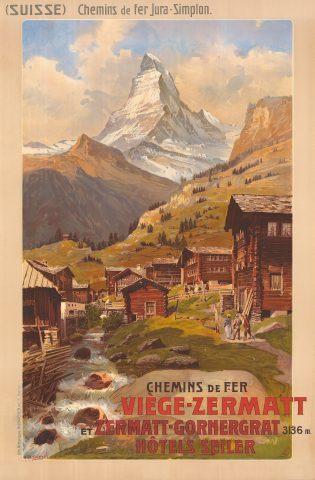
Deep within the Gorner Glacier, high above the car-free village of Zermatt, lies a world where time moves differently. The Matterhorn Glacier Palace isn’t just a tourist attraction—it’s a fragile, shifting realm of ice and light, carved into the heart of a living glacier. At nearly 3,900 meters above sea level, it feels like stepping into another dimension, where the air is thin, the silence is profound, and the walls around you breathe.
The palace began as a modest idea in the mid-20th century, when local mountain guides decided to transform a natural ice cave into something more. What started as a few hand-chiseled tunnels and simple sculptures has grown into an intricate network of chambers, all shaped by the slow, relentless movement of the glacier itself. Every year, artists descend into the ice to carve new figures—mythical creatures, alpine animals, abstract forms—each one destined to melt and reform with the seasons. The work is grueling, done in subzero temperatures, but the result is a place that feels both ancient and ever-changing.
What makes the palace unique is its impermanence. The glacier shifts constantly, though so slowly that the movement is invisible to the naked eye. Tunnels narrow, ceilings sag, and entire sections must be reworked to keep the palace accessible. The ice here isn’t just a backdrop—it’s alive, filled with trapped air bubbles that have been frozen for millennia. When sunlight filters through the glacier’s surface, it bathes the walls in an ethereal blue glow, as if the ice itself is glowing from within. In some places, the transparency is so perfect that you can see straight through the walls, watching the light refract like a prism.
Walking through the palace is less like visiting a museum and more like exploring a hidden world. Narrow passageways open into vast chambers where the floor crunches underfoot, and the air carries the faint scent of cold. One hall might feature an ice throne, another a life-sized sculpture of a chamois or ibex, while a third could hold a miniature replica of the Matterhorn itself, carved entirely from ice. The most striking details are often the smallest—the way frost clings to the edges of doorways, or how the artificial lights make the ice shimmer like scattered diamonds. There are no barriers here, no glass cases separating you from the art. The palace invites you to touch, to listen, to lose yourself in its quiet grandeur.
The glacier is more than just the palace’s home—it’s an active force shaping the experience. In warmer months, the ice becomes unstable, and parts of the palace may close for safety. Even in winter, when the cold is at its most intense, the interior remains just above freezing, a reminder that this is a place of delicate balance. Visitors are advised to dress warmly, though the chill inside is nothing compared to the biting wind outside. The palace’s very existence is a testament to the glacier’s power, but also to its vulnerability. Like all alpine glaciers, the Gorner is shrinking, its retreat a quiet but undeniable sign of a changing climate.
For many, the palace is the highlight of a trip to Zermatt, not because it’s flashy or crowded, but because it offers something rare: stillness. There are no loud tour groups here, no souvenir shops, no distractions. Just the sound of your own footsteps on the snow, the occasional creak of shifting ice, and the hush of a place that feels untouched by time. Some chambers have benches where you can sit and watch the light play across the walls, listening to guides share stories of how the palace has evolved over the decades. Their knowledge runs deep—they’re often locals whose families have lived in the valley for generations, and their pride in the place is palpable.
The palace is also a reminder of how fleeting beauty can be. Switzerland’s glaciers are disappearing, their retreat documented in old photographs and fading memories. What remains of the Gorner Glacier today is a fraction of what it once was, and the palace inside it may not exist in its current form for much longer. That awareness adds a layer of poignancy to the visit. It’s not just a chance to marvel at the ice—it’s an opportunity to witness something that may soon be gone. The experience lingers long after you’ve left, the memory of that blue glow staying with you like a half-remembered dream.
When you finally emerge from the palace, the world outside feels different. The sunlight is almost blinding after the dim, blue-tinted corridors, and the air tastes sharper. It’s hard to shake the feeling that you’ve just glimpsed something extraordinary, something that most people will never see. The palace doesn’t just show you a place—it changes how you see the world. Maybe that’s why people return, year after year, drawn back to the quiet magic of the ice and the way it makes everything else feel a little less ordinary.