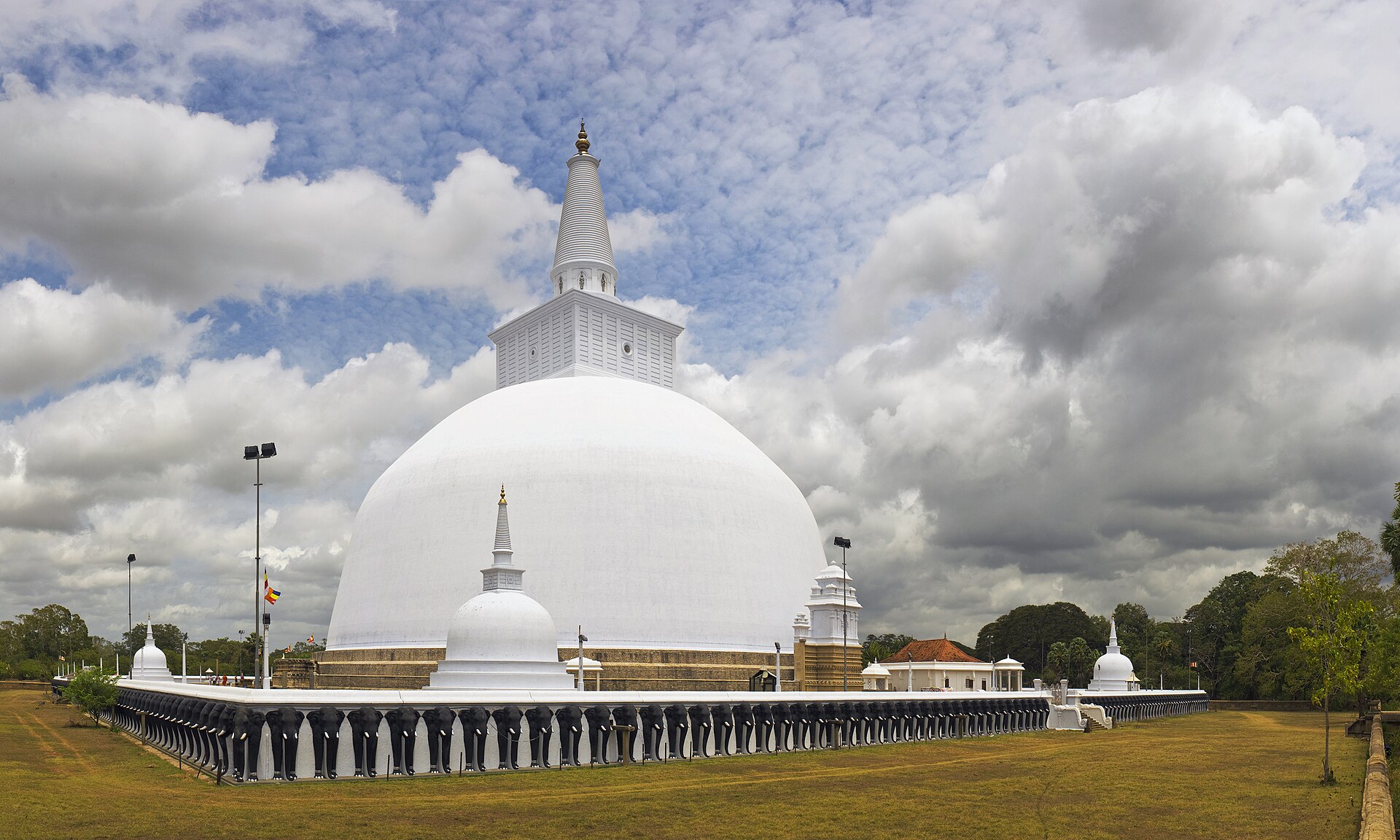
Thuparama Dagaba stands among the oldest stupas in Anuradhapura, a city that once served as the heart of Sinhalese civilization. Built in the early days of Buddhism’s arrival on the island, it carries the weight of history—of a faith taking root in a land where kings and monks shaped its destiny. The stupa’s presence is quiet but unmistakable, a reminder of the time when Anuradhapura was not just a city but a spiritual beacon for an entire region.
Commissioned by King Devanampiya Tissa in the third century BCE, Thuparama was one of the first Buddhist monuments in Sri Lanka. According to tradition, it enshrined sacred relics—a fragment of the Buddha’s collarbone and a tooth—making it a focal point for devotion. More than a place of worship, it symbolized the unity of a kingdom embracing a new religion. Its design reflects the early Buddhist aesthetic: unadorned yet powerful, with a hemispherical dome rising from a square base, embodying the ideals of simplicity and transcendence.
Over the centuries, Thuparama has weathered time in ways both subtle and profound. Once clad in gleaming white limestone, its surface now bears the marks of erosion, the golden accents long faded. The massive stone slabs at its base remain, as do the remnants of the surrounding colonnade, where intricately carved pillars once supported a roof. These details hint at the craftsmanship of ancient builders, who shaped stone with precision and reverence.
Pilgrims still come here, circling the stupa in a slow, deliberate walk—a practice meant to mirror the path to enlightenment. The ritual is quiet, the atmosphere one of reflection. In the early morning or late afternoon, when the heat recedes, the air feels lighter. The rustling of leaves and the distant calls of birds blend into the stillness, creating a space where time seems to pause.
Thuparama is part of Anuradhapura’s vast archaeological landscape, a UNESCO World Heritage site where history lies scattered across the land. The city was once the largest Buddhist center in South Asia, its influence stretching far beyond Sri Lanka’s shores. Today, its ruins—stupas, palaces, monasteries—stand half-swallowed by jungle, each telling a fragment of a larger story. But Thuparama holds a unique place among them. It is not just a relic of the past but a living connection to the faith that has shaped the island for over two millennia.
Beyond the stupa, the remnants of monastic life linger in the quiet corners of the site. Crumbling cells where monks once lived, ancient reservoirs used for ritual purification—these details offer glimpses into a world where spirituality was woven into daily existence. Walking among them, it’s easy to imagine Anuradhapura as it once was: a city where scholars, kings, and ordinary people gathered in pursuit of wisdom.
Like many ancient structures, Thuparama has known both destruction and renewal. Over the centuries, rulers restored it, using its preservation as a way to legitimize their rule and affirm their devotion to Buddhism. Yet each restoration returned it to its original form—uncluttered, monumental. Today, it stands much as it did in its earliest days, as if the passage of time has left only the faintest traces.
The best time to visit is at dawn or dusk, when the light is soft and the air cool. There are no grand spectacles here, no vibrant colors or dramatic vistas. The power of Thuparama lies in its quietude, in the way its simple lines and weathered stone evoke a sense of continuity. It is a place where the past feels present, where the act of walking in silence can become a meditation in itself.
For many, Thuparama is more than a historical site. It is a space to pause, to consider what endures. The stupa has stood through centuries of change, wars, and shifting dynasties, yet it remains a symbol of something unshaken. In a world that moves quickly, it offers a rare stillness—a chance to step away from the noise and remember what it means to simply be.