Sigulda is often called the Switzerland of Latvia, and while the comparison might be a stretch, the Gauja River valley does have a way of making the landscape feel grander than it is. The Turaida Museum Reserve sits on a hill above the river, a quiet place where the past lingers in the air like the scent of pine after rain. It’s not just a museum in the usual sense—it’s a sprawling estate where history isn’t confined to glass cases but woven into the very ground, the trees, and the crumbling walls that have stood here for centuries.
The heart of Turaida is its medieval castle, built in the early 13th century by the Archbishop of Riga. The red-brick fortress was part of a network of strongholds meant to secure the region for the Livonian Order, a crusading state that once stretched across what is now Latvia and Estonia. Over the centuries, the castle saw its share of conflict—sieges, fires, and reconstructions—until it was finally abandoned in the 17th century. What remains today is a partial ruin, but one that still commands attention. The main tower, restored in the 20th century, offers a view over the Gauja valley that makes the climb up its narrow staircase worthwhile. From here, the river winds like a silver ribbon through the forest, and on clear days, you can see the spires of Sigulda’s other castles in the distance.
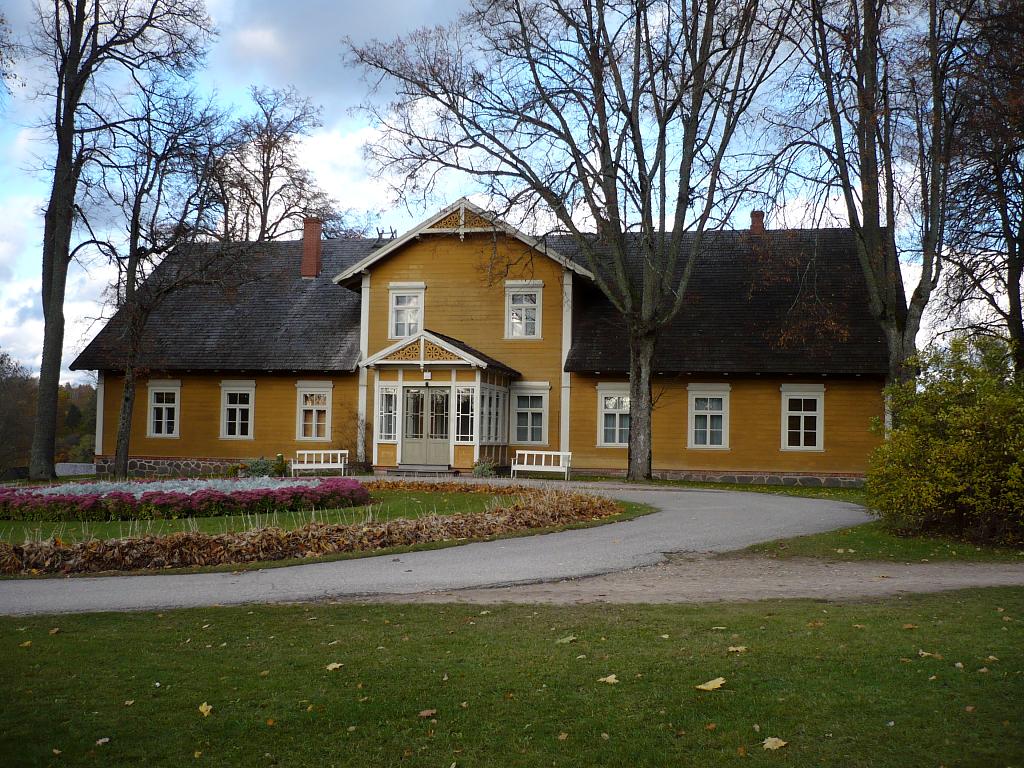
Beyond the castle, the reserve unfolds as a mix of open meadows, dense woods, and carefully preserved buildings that tell the story of the land’s more recent past. The Turaida Estate, which developed around the castle in the 18th and 19th centuries, was once a thriving agricultural and administrative center. The manor house, a modest but elegant wooden building, now serves as a museum displaying artifacts from the estate’s history—tools, furniture, and personal belongings that belonged to the families who lived and worked here. Nearby, the granary and stables have been repurposed into exhibition spaces, their thick walls and heavy beams a reminder of the practical, unglamorous life that once sustained the place.
One of the most striking features of Turaida is the Folk Song Garden, a quiet corner of the reserve dedicated to Latvian dainas—traditional folk songs that have been passed down through generations. The garden is arranged in a spiral, with stones inscribed with verses from these songs. It’s a simple idea, but an effective one: the words, carved into the landscape, feel like they’ve always been there. The dainas themselves are short, often poetic fragments about nature, love, and daily life, and they offer a glimpse into the worldview of the people who once lived in this valley. The garden isn’t just a tribute to folklore; it’s a place where visitors can sit on a bench and listen to the wind rustling through the trees, as if the songs are still being sung somewhere just out of earshot.
Then there’s the Turaida Rose, a legend that has become as much a part of the place as the castle itself. The story goes that in the 17th century, a young woman named Maija, the castle’s caretaker, was falsely accused of betrayal and sentenced to death. As she was led to the execution site, she asked to be buried with a rose from the garden, a symbol of her innocence. The rose, planted on her grave, is said to bloom every year, its petals a deep, velvety red. Whether the story is true or not, the rose has become a symbol of Turaida, and visitors often leave flowers at the small memorial near the castle walls. The tale adds a layer of melancholy to the place, a reminder that history isn’t just about battles and kings, but about ordinary lives and the stories that outlive them.
The reserve isn’t just about looking back, though. It’s a place where the past and present coexist in a way that feels natural, not forced. The forests around the castle are crisscrossed with walking trails, some leading to hidden viewpoints over the river, others winding down to the water’s edge. In summer, the meadows are dotted with wildflowers, and the air hums with the sound of bees. In autumn, the trees turn shades of gold and russet, and the paths are soft underfoot with fallen leaves. Even in winter, when the castle is dusted with snow and the river freezes over, Turaida has a quiet beauty that draws people back year after year.
What makes Turaida special isn’t just its history, but the way it makes you feel. It’s not a place that demands attention with flashy exhibits or dramatic reconstructions. Instead, it invites you to slow down, to wander without a set path, and to let the surroundings speak for themselves. The castle ruins, the wooden manor house, the Folk Song Garden—each part of the reserve has its own rhythm, its own story to tell. And because it’s set apart from the busier parts of Sigulda, it feels like a world of its own, a place where time moves a little differently.
If you visit, don’t rush. Spend an hour or two just walking the grounds, letting the details sink in—the way the light filters through the trees, the sound of the river in the distance, the texture of the old stone walls under your fingertips. Stop by the small café near the entrance for a cup of coffee and a slice of rye bread with honey, a simple pleasure that somehow feels right in a place like this. And if you’re there in the late afternoon, when the crowds have thinned and the shadows grow long, you might catch a moment when the past doesn’t feel so distant after all. That’s when Turaida reveals itself—not as a museum, but as a living piece of the landscape, shaped by centuries of human hands and still holding onto the stories they left behind.